
Catalogue Search | MBRL


Are you sure you want to remove the book from the shelf?

{{itemTitle}}
1,566
result(s) for
"Computer network resources -- Evaluation"
Sort by:

Information crisis
Discusses the scope and types of information available online and teaches readers how to critically assess it and analyze potentially dangerous information.
Book

Finding reliable information online
Our information-saturated environment causes us to spend too much time searching, surfing and organizing the information in our lives. But finding reliable high quality information can be a problem. We are often so buried in information-- and strapped for time-- that we grab the search results without bothering to evaluate its quality. Stebbins shows you how to cut out unreliable information and find online information you can rely on.
eBook

Web of Deceit
Skilled researchers, journalists, and subject experts have come together in this follow-up to Web of Deception to reveal important lessons for staying safe and retaining privacy online. In the wake of the social media popularity boomepitomized by MySpace, eBay, and Craigslist and accelerating with Facebook and Twitterthe success of internet con artists and thieves has been quick to follow. Manipulators have been provided with the tools and targets to perpetrate hoaxes and con games on an ever larger scale. An invaluable guide to safe internet usage, this resource explains the importance of guarding privacy and identity online, spotting misinformation, avoiding charity scams, and evaluating websites.
eBook

Practical corpus linguistics : an introduction to corpus-based language analysis
This is the first book of its kind to provide a practical and student-friendly guide to corpus linguistics that explains the nature of electronic data and how it can be collected and analyzed. * Designed to equip readers with the technical skills necessary to analyze and interpret language data, both written and (orthographically) transcribed * Introduces a number of easy-to-use, yet powerful, free analysis resources consisting of standalone programs and web interfaces for use with Windows, Mac OS X, and Linux * Each section includes practical exercises, a list of sources and further reading, and illustrated step-by-step introductions to analysis tools * Requires only a basic knowledge of computer concepts in order to develop the specific linguistic analysis skills required for understanding/analyzing corpus data
eBook
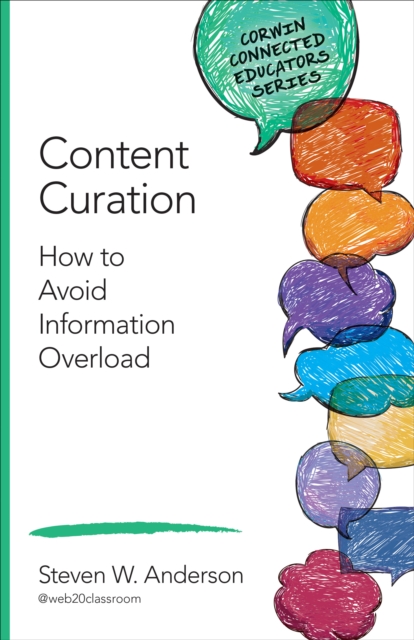
Content curation : how to avoid information overload
Savvy internet consumption starts right here! Teachers and students are constantly inundated with information, yet lack the organizational skill necessary to effectively utilize it. From Twitter hashtags to online communities, this handy guide will help you to find, store, and share the best information and resources found on the web today--and teach your students to do the same. Real-world tips, tools, in-depth examples and lesson plans help you systematically: Understand the curation process Find, collect, and share reliable web-based information Build students' information literacy skills Help students research and organize problem-based learning projects Use cutting-edge curation tools like Evernote, Diigo, and Pocket.
eBook

Getting the buggers to learn
'provides an excellent synopsis of a range of different aspects of student learning ... a thorough and thought-provoking book ...' TES 'If I had to choose just one book to teach best practice for learning across the curriculum, then Getting the Buggers to Learn would be a hot contender. It is also an excellent resource for any thinking skills programme ... I wish I had had access to this book when I developed a research model for students at my school ... The book is clearly structured and sequenced [and] it is easy to navigate your way round and find information quickly ... Don't walk, run to your local bookshop and order a copy of this book immediately.' Teacher review The new edition of this successful book is an invaluable guide for teachers, containing a variety of strategies to develop students' learning skills. Covering everything from traditional learning approaches to more innovative methods, such as how technology and the media can be used to great effect, Duncan Grey writes accessibly and entertainingly. Brimming with top tips and innovative advice, this book will prove extraordinarily helpful to teachers everywhere. This edition features fully-updated sections on assessment, teaching and learning styles and thinking skills.
eBook

Getting the buggers to find out : information skills and learning how to learn
\"There is a necessary balance between knowledge and knowing how to find out - between having the key facts in your head, having the understanding of how to use them, and having the skill to draw on extra resources too.
eBook

CNN-LSTM vs. LSTM-CNN to Predict Power Flow Direction: A Case Study of the High-Voltage Subnet of Northeast Germany
The massive installation of renewable energy sources together with energy storage in the power grid can lead to fluctuating energy consumption when there is a bi-directional power flow due to the surplus of electricity generation. To ensure the security and reliability of the power grid, high-quality bi-directional power flow prediction is required. However, predicting bi-directional power flow remains a challenge due to the ever-changing characteristics of power flow and the influence of weather on renewable power generation. To overcome these challenges, we present two of the most popular hybrid deep learning (HDL) models based on a combination of a convolutional neural network (CNN) and long-term memory (LSTM) to predict the power flow in the investigated network cluster. In our approach, the models CNN-LSTM and LSTM-CNN were trained with two different datasets in terms of size and included parameters. The aim was to see whether the size of the dataset and the additional weather data can affect the performance of the proposed model to predict power flow. The result shows that both proposed models can achieve a small error under certain conditions. While the size and parameters of the dataset can affect the training time and accuracy of the HDL model.
Journal Article

A blockchain-based smart home gateway architecture for preventing data forgery
With the advancement of Information and Communication Technology (ICT) and the proliferation of sensor technologies, the Internet of Things (IoT) is now being widely used in smart home for the purposes of efficient resource management and pervasive sensing. In smart homes, various IoT devices are connected to each other, and these connections are centered on gateways. The role of gateways in the smart homes is significant, however, its centralized structure presents multiple security vulnerabilities such as integrity, certification, and availability. To address these security vulnerabilities, in this paper, we propose a blockchain-based smart home gateway network that counters possible attacks on the gateway of smart homes. The network consists of three layers including device, gateway, and cloud layers. The blockchain technology is employed at the gateway layer wherein data is stored and exchanged in the form blocks of blockchain to support decentralization and overcome the problem from traditional centralized architecture. The blockchain ensures the integrity of the data inside and outside of the smart home and provides availability through authentication and efficient communication between network members. We implemented the proposed network on the Ethereum blockchain technology and evaluated in terms of standard security measures including security response time and accuracy. The evaluation results demonstrate that the proposed security solutions outperforms over the existing solutions.
Journal Article

Updating the neural network sediment load models using different sensitivity analysis methods: a regional application
The amount of transported sediment load by streams is a vital but high nonlinear dynamic process in water resources management. In the current paper, two optimum predictive models subjected to artificial neural network (ANN) were developed. The employed inputs were then prioritized using diverse sensitivity analysis (SA) methods to address new updated but more efficient ANN structures. The models were found through the 263 processed datasets of three rivers in Idaho, USA using nine different measured flow and sediment variables (e.g., channel geometry, geomorphology, hydraulic) for a period of 11 years. The used parameters were selected based on the prior knowledge of the conventional analyses in which the effect of suspended load on bed load was also investigated. Analyzed accuracy performances using different criteria exhibited improved predictability in updated models which can lead to an advanced understanding of used parameters. Despite different SA methods being employed in evaluating model parameters, almost similar results were observed and then verified using relevant sensitivity indices. It was demonstrated that the ranked parameters using SA due to covering more uncertainties can be more reliable. Evaluated models using sensitivity indices showed that contribution of suspended load on predicted bed load is not significant.
Journal Article