
Catalogue Search | MBRL


Are you sure you want to remove the book from the shelf?

{{itemTitle}}
40,283
result(s) for
"Computer science Experiments."
Sort by:

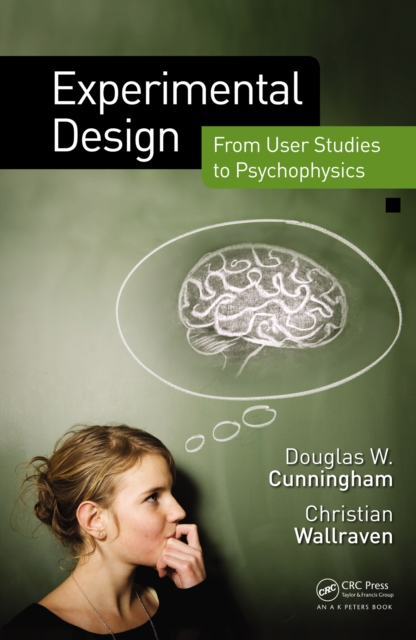
Experimental Design
This book explains the basic terminology used to discuss experiments and takes a brief look at the more than 150 year history of experiments in psychology. It covers how to generalize from a few people to the whole population. The largest part of the book is dedicated to the most flexible, and arguably the most central, aspect of an experiment: What do the participants do? Each chapter follows the same structure and includes two examples, one from traditional psychophysics and one using computer animated facial expressions as stimuli.
eBook

Fade to Blue : a novel
Eighteen-year-old Goth Sophie Blue, sensing that something is awry in her small town, begins to piece together the connections between her missing father, a scientific researcher at a local laboratory, and her high school's football star, Kenny.
Book
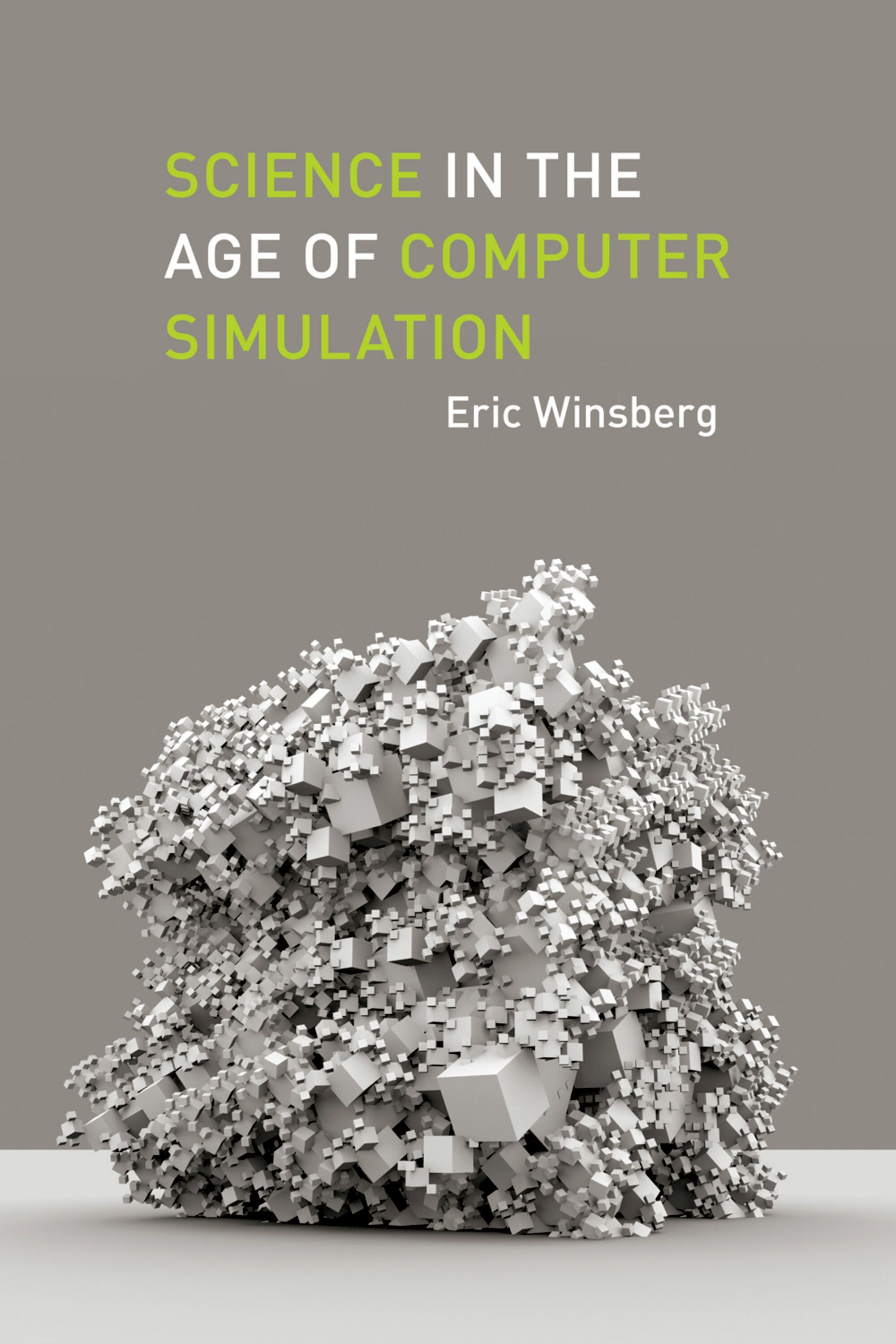
Science in the age of computer simulation
Computer simulation was first pioneered as a scientific tool in meteorology and nuclear physics in the period following World War II, but it has grown rapidly to become indispensible in a wide variety of scientific disciplines, including astrophysics, high-energy physics, climate science, engineering, ecology, and economics. Digital computer simulation helps study phenomena of great complexity, but how much do we know about the limits and possibilities of this new scientific practice? How do simulations compare to traditional experiments? And are they reliable? Eric Winsberg seeks to answer these questions in Science in the Age of Computer Simulation. Scrutinizing these issue with a philosophical lens, Winsberg explores the impact of simulation on such issues as the nature of scientific evidence; the role of values in science; the nature and role of fictions in science; and the relationship between simulation and experiment, theories and data, and theories at different levels of description. Science in the Age of Computer Simulation will transform many of the core issues in philosophy of science, as well as our basic understanding of the role of the digital computer in the sciences.
eBook

Determining an optimal time interval for testing and debugging software
A decision-theoretic procedure for determining an optimal time interval for testing software prior to its release is proposed. The approach is based on the principles of decision-making under uncertainty and involves a maximization of expected utility. Two plausible forms for the utility function, one based on costs and the other involving the realized reliability of the software, are described. Using previous results on probabilistic models for software failure, the ensuing optimization problem (which can be addressed using numerical techniques) is outlined for the case of single-state testing. The sensitivity of the results to the various input parameters is discussed, and some directions for future research are outlined.< >
Journal Article

Hardware-efficient variational quantum eigensolver for small molecules and quantum magnets
The ground-state energy of small molecules is determined efficiently using six qubits of a superconducting quantum processor.
Scalable quantum simulation
Quantum simulation is currently the most promising application of quantum computers. However, only a few quantum simulations of very small systems have been performed experimentally. Here, researchers from IBM present quantum simulations of larger systems using a variational quantum eigenvalue solver (or eigensolver), a previously suggested method for quantum optimization. They perform quantum chemical calculations of LiH and BeH
2
and an energy minimization procedure on a four-qubit Heisenberg model. Their application of the variational quantum eigensolver is hardware-efficient, which means that it is optimized on the given architecture. Noise is a big problem in this implementation, but quantum error correction could eventually help this experimental set-up to yield a quantum simulation of chemically interesting systems on a quantum computer.
Quantum computers can be used to address electronic-structure problems and problems in materials science and condensed matter physics that can be formulated as interacting fermionic problems, problems which stretch the limits of existing high-performance computers
1
. Finding exact solutions to such problems numerically has a computational cost that scales exponentially with the size of the system, and Monte Carlo methods are unsuitable owing to the fermionic sign problem. These limitations of classical computational methods have made solving even few-atom electronic-structure problems interesting for implementation using medium-sized quantum computers. Yet experimental implementations have so far been restricted to molecules involving only hydrogen and helium
2
,
3
,
4
,
5
,
6
,
7
,
8
. Here we demonstrate the experimental optimization of Hamiltonian problems with up to six qubits and more than one hundred Pauli terms, determining the ground-state energy for molecules of increasing size, up to BeH
2
. We achieve this result by using a variational quantum eigenvalue solver (eigensolver) with efficiently prepared trial states that are tailored specifically to the interactions that are available in our quantum processor, combined with a compact encoding of fermionic Hamiltonians
9
and a robust stochastic optimization routine
10
. We demonstrate the flexibility of our approach by applying it to a problem of quantum magnetism, an antiferromagnetic Heisenberg model in an external magnetic field. In all cases, we find agreement between our experiments and numerical simulations using a model of the device with noise. Our results help to elucidate the requirements for scaling the method to larger systems and for bridging the gap between key problems in high-performance computing and their implementation on quantum hardware.
Journal Article
Quantum computational advantage with a programmable photonic processor
A quantum computer attains computational advantage when outperforming the best classical computers running the best-known algorithms on well-defined tasks. No photonic machine offering programmability over all its quantum gates has demonstrated quantum computational advantage: previous machines
1
,
2
were largely restricted to static gate sequences. Earlier photonic demonstrations were also vulnerable to spoofing
3
, in which classical heuristics produce samples, without direct simulation, lying closer to the ideal distribution than do samples from the quantum hardware. Here we report quantum computational advantage using Borealis, a photonic processor offering dynamic programmability on all gates implemented. We carry out Gaussian boson sampling
4
(GBS) on 216 squeezed modes entangled with three-dimensional connectivity
5
, using a time-multiplexed and photon-number-resolving architecture. On average, it would take more than 9,000 years for the best available algorithms and supercomputers to produce, using exact methods, a single sample from the programmed distribution, whereas Borealis requires only 36 μs. This runtime advantage is over 50 million times as extreme as that reported from earlier photonic machines. Ours constitutes a very large GBS experiment, registering events with up to 219 photons and a mean photon number of 125. This work is a critical milestone on the path to a practical quantum computer, validating key technological features of photonics as a platform for this goal.
Gaussian boson sampling is performed on 216 squeezed modes entangled with three-dimensional connectivity
5
, using Borealis, registering events with up to 219 photons and a mean photon number of 125.
Journal Article
Realizing repeated quantum error correction in a distance-three surface code
Quantum computers hold the promise of solving computational problems that are intractable using conventional methods
1
. For fault-tolerant operation, quantum computers must correct errors occurring owing to unavoidable decoherence and limited control accuracy
2
. Here we demonstrate quantum error correction using the surface code, which is known for its exceptionally high tolerance to errors
3
–
6
. Using 17 physical qubits in a superconducting circuit, we encode quantum information in a distance-three logical qubit, building on recent distance-two error-detection experiments
7
–
9
. In an error-correction cycle taking only 1.1 μs, we demonstrate the preservation of four cardinal states of the logical qubit. Repeatedly executing the cycle, we measure and decode both bit-flip and phase-flip error syndromes using a minimum-weight perfect-matching algorithm in an error-model-free approach and apply corrections in post-processing. We find a low logical error probability of 3% per cycle when rejecting experimental runs in which leakage is detected. The measured characteristics of our device agree well with a numerical model. Our demonstration of repeated, fast and high-performance quantum error-correction cycles, together with recent advances in ion traps
10
, support our understanding that fault-tolerant quantum computation will be practically realizable.
By using 17 physical qubits in a superconducting circuit to encode quantum information in a surface-code logical qubit, fast (1.1 μs) and high-performance (logical error probability of 3%) quantum error-correction cycles are demonstrated.
Journal Article

Quantum algorithmic measurement
There has been recent promising experimental and theoretical evidence that quantum computational tools might enhance the precision and efficiency of physical experiments. However, a systematic treatment and comprehensive framework are missing. Here we initiate the systematic study of experimental quantum physics from the perspective of computational complexity. To this end, we define the framework of quantum algorithmic measurements (QUALMs), a hybrid of black box quantum algorithms and interactive protocols. We use the QUALM framework to study two important experimental problems in quantum many-body physics: determining whether a system’s Hamiltonian is time-independent or time-dependent, and determining the symmetry class of the dynamics of the system. We study abstractions of these problems and show for both cases that if the experimentalist can use her experimental samples coherently (in both space and time), a provable exponential speedup is achieved compared to the standard situation in which each experimental sample is accessed separately. Our work suggests that quantum computers can provide a new type of exponential advantage: exponential savings in resources in quantum experiments.
Applying the language of computational complexity to study real-world experiments requires a rigorous framework. Here, the authors provide such a framework and establish that there can be an exponential savings in resources if an experimentalist can entangle apparatuses with experimental samples.
Journal Article
Autonomous chemical research with large language models
Transformer-based large language models are making significant strides in various fields, such as natural language processing
1
–
5
, biology
6
,
7
, chemistry
8
–
10
and computer programming
11
,
12
. Here, we show the development and capabilities of Coscientist, an artificial intelligence system driven by GPT-4 that autonomously designs, plans and performs complex experiments by incorporating large language models empowered by tools such as internet and documentation search, code execution and experimental automation. Coscientist showcases its potential for accelerating research across six diverse tasks, including the successful reaction optimization of palladium-catalysed cross-couplings, while exhibiting advanced capabilities for (semi-)autonomous experimental design and execution. Our findings demonstrate the versatility, efficacy and explainability of artificial intelligence systems like Coscientist in advancing research.
Coscientist is an artificial intelligence system driven by GPT-4 that autonomously designs, plans and performs experiments by incorporating large language models empowered by tools such as internet and documentation search, code execution and experimental automation.
Journal Article