
Catalogue Search | MBRL


Are you sure you want to remove the book from the shelf?

{{itemTitle}}
5,880
result(s) for
"Computer software -- Reliability"
Sort by:


Developing Safety-Critical Software
As the complexity and criticality of software increase and projects are pressed to develop software faster and more cheaply, it becomes even more important to ensure that software-intensive systems are reliable and safe. This book helps you develop, manage, and approve safety-critical software more efficiently and effectively. Although the focus is on aviation software and compliance with RTCA/DO-178C and its supplements, the principles also apply to other safety-critical software. Written by an international authority on the subject, this book brings you a wealth of best practices, real-world examples, and concrete recommendations.
eBook


Software for dependable systems : sufficient evidence?
The focus of Software for Dependable Systemsis a set of fundamental principles that underlie software system dependability and that suggest a different approach to the development and assessment of dependable software.Unfortunately, it is difficult to assess the dependability of software.
eBook

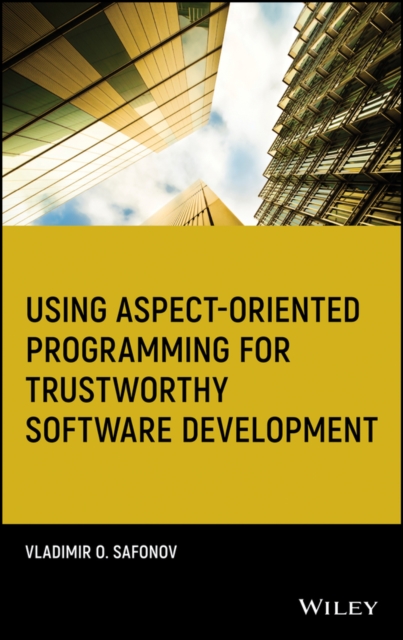
Using aspect-oriented programming for trustworthy software development
Learn how to successfully implement trustworthy computing tasks using aspect-oriented programming This landmark publication fills a gap in the literature by not only describing the basic concepts of trustworthy computing (TWC) and aspect-oriented programming (AOP), but also exploring their critical interrelationships. The author clearly demonstrates how typical TWC tasks such as security checks, in-and-out conditions, and multi-threaded safety can be implemented using AOP. Following an introduction, the book covers: Trustworthy computing, software engineering, and computer science Aspect-oriented programming and Aspect.NET Principles and case studies that apply AOP to TWC Coverage includes Aspect.NET, the AOP framework developed by the author for the Microsoft.NET platform, currently used in seventeen countries. The author discusses the basics of Aspect.NET architecture, its advantages compared to other AOP tools, and its functionality. The book has extensive practical examples and case studies of trustworthy software design and code using the Aspect.NET framework. In addition, the book explores other software technologies and tools for using AOP for trustworthy software development, including Java and AspectJ. This book also includes a valuable chapter dedicated to ERATO, the author's teaching method employed in this book, which has enabled thousands of students to quickly grasp and apply complex concepts in computing and software engineering, while the final chapter presents an overall perspective on the current state of AOP and TWC with a view toward the future. Software engineers, architects, developers, programmers, and students should all turn to this book to learn this tested and proven method to create more secure, private, and reliable computing.
eBook

Secure and Resilient Software Development
Many of the software books available clearly highlight the problems with current software development but don't provide comprehensive, easily actionable, ground-level solutions. Covering the entire secure software development life cycle that ties all development together, this book presents quality software development strategies and practices stressing resilience requirements with precise, actionable, and ground-level inputs that connect directly with their creators. The text helps developers understand fundamental problems and provides them with best practices, principles, design methodology, programming guidance, and testing practices.
eBook
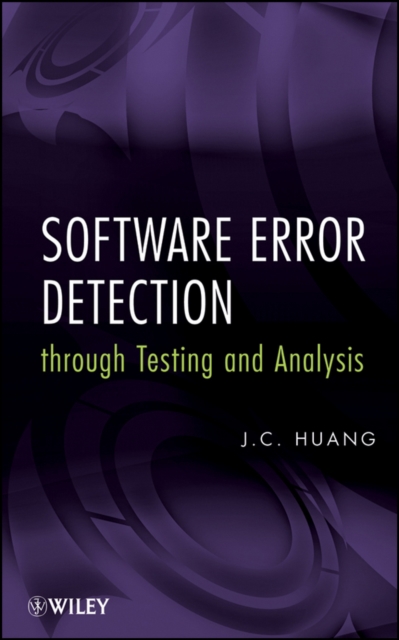
Software error detection
This book looks to maximize the probability of revealing latent errors in programs through effective software testing. It covers the program analysis needed for applying a test-case selection method. It teaches the reader to modify the existing method or devise a new method if there is going to be a change in the language or paradigm used.
eBook

Software system reliability and security
Information security covers the protection of information against unauthorized disclosure, transfer, modification, and destruction, whether accidentally or intentionally. Quality of life in general and of individual citizens, and the effectiveness of the economy critically depends on our ability to build software in a transparent and efficient way. Furthermore, we must be able to enhance the software development process systematically in order to ensure software's safety and security. This, in turn, requires very high software reliability, i.e., an extremely high confidence in the ability of the software to perform flawlessly. Foundations of software technology provide models that enable us to capture application domains and their requirements, but also to understand the structure and working of software systems and software architectures. Based on these foundations tools allow to prove and ensure the correctness of software's functioning. New developments must pay due diligence to the importance of security-related aspects, and align current methods and techniques to information security, integrity, and system reliability. The articles in this book describe the state-of-the-art ideas on how to meet these challenges in software engineering.
eBook