
Catalogue Search | MBRL


Are you sure you want to remove the book from the shelf?

{{itemTitle}}
75
result(s) for
"Computer software-Social aspects"
Sort by:

Code/Space
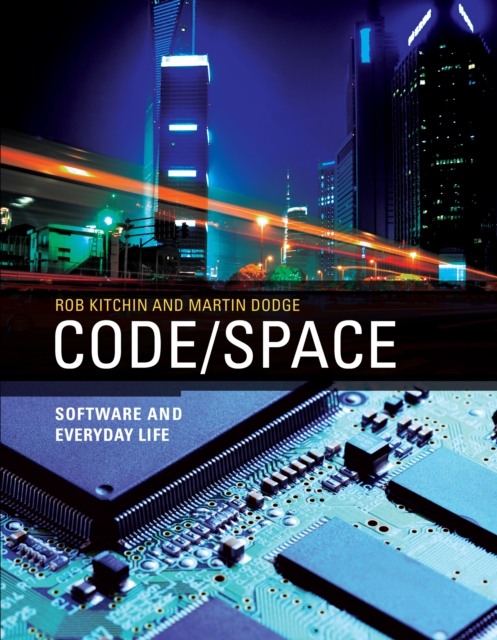
After little more than half a century since its initial development, computer code is extensively and intimately woven into the fabric of our everyday lives. From the digital alarm clock that wakes us to the air traffic control system that guides our plane in for a landing, software is shaping our world: it creates new ways of undertaking tasks, speeds up and automates existing practices, transforms social and economic relations, and offers new forms of cultural activity, personal empowerment, and modes of play. In Code/Space, Rob Kitchin and Martin Dodge examine software from a spatial perspective, analyzing the dyadic relationship of software and space. The production of space, they argue, is increasingly dependent on code, and code is written to produce space. Examples of code/space include airport check-in areas, networked offices, and cafés that are transformed into workspaces by laptops and wireless access. Kitchin and Dodge argue that software, through its ability to do work in the world, transduces space. Then Kitchiun and Dodge develop a set of conceptual tools for identifying and understanding the interrelationship of software, space, and everyday life, and illustrate their arguments with rich empirical material. And, finally, they issue a manifesto, calling for critical scholarship into the production and workings of code rather than simply the technologies it enables--a new kind of social science focused on explaining the social, economic, and spatial contours of software.
eBook


Critical Code Studies
An argument that we must read code for more than what it does—we must consider what it means. Computer source code has become part of popular discourse. Code is read not only by programmers but by lawyers, artists, pundits, reporters, political activists, and literary scholars; it is used in political debate, works of art, popular entertainment, and historical accounts. In this book, Mark Marino argues that code means more than merely what it does; we must also consider what it means. We need to learn to read code critically. Marino presents a series of case studies—ranging from the Climategate scandal to a hactivist art project on the US-Mexico border—as lessons in critical code reading. Marino shows how, in the process of its circulation, the meaning of code changes beyond its functional role to include connotations and implications, opening it up to interpretation and inference—and misinterpretation and reappropriation. The Climategate controversy, for example, stemmed from a misreading of a bit of placeholder code as a “smoking gun” that supposedly proved fabrication of climate data. A poetry generator created by Nick Montfort was remixed and reimagined by other poets, and subject to literary interpretation. Each case study begins by presenting a small and self-contained passage of code—by coders as disparate as programming pioneer Grace Hopper and philosopher Friedrich Kittler—and an accessible explanation of its context and functioning. Marino then explores its extra-functional significance, demonstrating a variety of interpretive approaches.
eBook


Builders of the vision : software and the imagination of design
\"Builders of the Vision traces the intellectual history and contemporary practices of Computer-Aided Design since the years following World War II until today. Drawing from primary archival and ethnographic sources, it identifies the crucial moments shaping digital design technologies since the first numerical control and CAD systems were developed under US Air Force research contracts at MIT between 1949 and 1970: the cybernetic theorization of design as a human-machine endeavor; the vision of computers as \"perfect slaves\" taking care of the drudgery of physical labor; the techno-social utopias of computers as vehicles of democracy and social change; the entrepreneurial urge towards design and construction integration; and the managerial ideologies enabling today's transnational geographies of practice. Examining the contrasting, and often conflicting, sensibilities that converge into CAD and BIM discourses--globalism, utopianism, entrepreneurialism, and architects' desires for aesthetic liberation--Builders of the Vision argues that software systems and numerically controlled machines are not merely \"instruments,\" or \"tools,\" but rather versatile metaphors reconfiguring conceptions of design, materiality, work, and what it means to be creative. Crucially, by revealing software systems as socio-technical infrastructures that mediate the production of our built environments, author Daniel Cardoso Llach builds a strong case for the fields of architecture, media, and science and technology studies to critically engage with both the politics and the poetics of technology in design\"-- Provided by publisher.
Book

The Computer Boys Take Over
This is a book about the computer revolution of the mid-twentieth century and the people who made it possible. Unlike most histories of computing, it is not a book about machines, inventors, or entrepreneurs. Instead, it tells the story of the vast but largely anonymous legions of computer specialists--programmers, systems analysts, and other software developers--who transformed the electronic computer from a scientific curiosity into the defining technology of the modern era. As the systems that they built became increasingly powerful and ubiquitous, these specialists became the focus of a series of critiques of the social and organizational impact of electronic computing. To many of their contemporaries, it seemed the \"computer boys\" were taking over, not just in the corporate setting, but also in government, politics, and society in general. In The Computer Boys Take Over , Nathan Ensmenger traces the rise to power of the computer expert in modern American society. His rich and nuanced portrayal of the men and women (a surprising number of the \"computer boys\" were, in fact, female) who built their careers around the novel technology of electronic computing explores issues of power, identity, and expertise that have only become more significant in our increasingly computerized society. In his recasting of the drama of the computer revolution through the eyes of its principle revolutionaries, Ensmenger reminds us that the computerization of modern society was not an inevitable process driven by impersonal technological or economic imperatives, but was rather a creative, contentious, and above all, fundamentally human development.
eBook

Critical code studies : initial methods
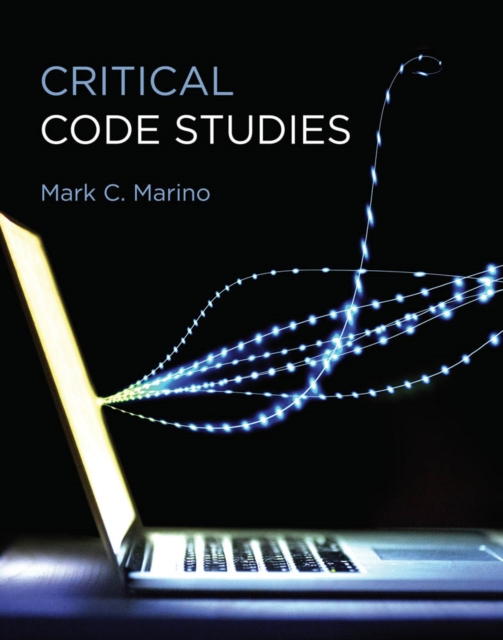
An argument that we must read code for more than what it does-we must consider what it means.Computer source code has become part of popular discourse. Code is read not only by programmers but by lawyers, artists, pundits, reporters, political activists, and literary scholars; it is used in political debate, works of art, popular entertainment, and historical accounts. In this book, Mark Marino argues that code means more than merely what it does; we must also consider what it means. We need to learn to read code critically. Marino presents a series of case studies-ranging from the Climategate scandal to a hactivist art project on the US-Mexico border-as lessons in critical code reading.Marino shows how, in the process of its circulation, the meaning of code changes beyond its functional role to include connotations and implications, opening it up to interpretation and inference-and misinterpretation and reappropriation. The Climategate controversy, for example, stemmed from a misreading of a bit of placeholder code as a \"smoking gun\" that supposedly proved fabrication of climate data. A poetry generator created by Nick Montfort was remixed and reimagined by other poets, and subject to literary interpretation.Each case study begins by presenting a small and self-contained passage of code-by coders as disparate as programming pioneer Grace Hopper and philosopher Friedrich Kittler-and an accessible explanation of its context and functioning. Marino then explores its extra-functional significance, demonstrating a variety of interpretive approaches.
eBook