
Catalogue Search | MBRL


Are you sure you want to remove the book from the shelf?

{{itemTitle}}
32
result(s) for
"Computer sound processing History."
Sort by:


Sonic Technologies
Awarded a Certificate of Merit at the ARSC Awards for Excellence 2018 In the past two decades digital technologies have fundamentally changed the way we think about, make and use popular music. From the production of multimillion selling pop records to the ubiquitous remix that has become a marker of Web 2.0, the emergence of new music production technologies have had a transformative effect upon 21st Century digital culture. Sonic Technologies examines these issues with a specific focus upon the impact of digitization upon creativity; that is, what musicians, cultural producers and prosumers do. For many, music production has moved out of the professional recording studio and into the home. Using a broad range of examples ranging from experimental electronic music to more mainstream genres, the book examines how contemporary creative practice is shaped by the visual and sonic look and feel of recording technologies such as Digital Audio Workstations.
eBook

From artificial neural networks to deep learning for music generation: history, concepts and trends
The current wave of deep learning (the hyper-vitamined return of artificial neural networks) applies not only to traditional statistical machine learning tasks: prediction and classification (e.g., for weather prediction and pattern recognition), but has already conquered other areas, such as translation. A growing area of application is the generation of creative content, notably the case of music, the topic of this article. The motivation is in using the capacity of modern deep learning techniques to automatically learn musical styles from arbitrary musical corpora and then to generate musical samples from the estimated distribution, with some degree of control over the generation. This article provides a tutorial on music generation based on deep learning techniques. After a short introduction to the topic illustrated by a recent example, the article analyzes some early works from the late 1980s using artificial neural networks for music generation and how their pioneering contributions foreshadowed current techniques. Then, we introduce some conceptual framework to analyze various concepts and dimensions involved. Various examples of recent systems are introduced and analyzed to illustrate the variety of concerns and of techniques.
Journal Article

Natural language processing pipeline to extract prostate cancer-related information from clinical notes
Objectives
To develop an automated pipeline for extracting prostate cancer-related information from clinical notes.
Materials and methods
This retrospective study included 23,225 patients who underwent prostate MRI between 2017 and 2022. Cancer risk factors (family history of cancer and digital rectal exam findings), pre-MRI prostate pathology, and treatment history of prostate cancer were extracted from free-text clinical notes in English as binary or multi-class classification tasks. Any sentence containing pre-defined keywords was extracted from clinical notes within one year before the MRI. After manually creating sentence-level datasets with ground truth, Bidirectional Encoder Representations from Transformers (BERT)-based sentence-level models were fine-tuned using the extracted sentence as input and the category as output. The patient-level output was determined by compilation of multiple sentence-level outputs using tree-based models. Sentence-level classification performance was evaluated using the area under the receiver operating characteristic curve (AUC) on 15% of the sentence-level dataset (sentence-level test set). The patient-level classification performance was evaluated on the patient-level test set created by radiologists by reviewing the clinical notes of 603 patients. Accuracy and sensitivity were compared between the pipeline and radiologists.
Results
Sentence-level AUCs were ≥ 0.94. The pipeline showed higher patient-level sensitivity for extracting cancer risk factors (e.g., family history of prostate cancer, 96.5% vs. 77.9%,
p
< 0.001), but lower accuracy in classifying pre-MRI prostate pathology (92.5% vs. 95.9%,
p
= 0.002) and treatment history of prostate cancer (95.5% vs. 97.7%,
p
= 0.03) than radiologists, respectively.
Conclusion
The proposed pipeline showed promising performance, especially for extracting cancer risk factors from patient’s clinical notes.
Clinical relevance statement
The natural language processing pipeline showed a higher sensitivity for extracting prostate cancer risk factors than radiologists and may help efficiently gather relevant text information when interpreting prostate MRI.
Key Points
When interpreting prostate MRI, it is necessary to extract prostate cancer-related information from clinical notes
.
This pipeline extracted the presence of prostate cancer risk factors with higher sensitivity than radiologists
.
Natural language processing may help radiologists efficiently gather relevant prostate cancer-related text information
.
Journal Article
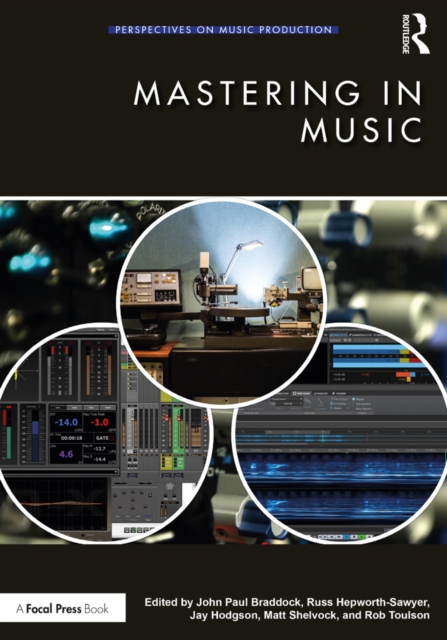
Mastering in Music
Mastering in Music is a cutting-edge edited collection that offers twenty perspectives on the contexts and process of mastering.
This book collects the perspectives of both academics and professionals to discuss recent developments in the field, such as mastering for VR and high resolution mastering, alongside crucial perspectives on fundamental skills, such as the business of mastering, equipment design, and audio processing.
Including a range of detailed case studies and interviews, Mastering in Music offers a comprehensive overview of the foremost hot topics affecting the industry, making it key reading for students and professionals engaged in music production.
eBook

Diagnostic accuracy of magnetic resonance, computed tomography and contrast enhanced ultrasound in radiological multimodality assessment of peribiliary liver metastases
We compared diagnostic performance of Magnetic Resonance (MR), Computed Tomography (CT) and Ultrasound (US) with (CEUS) and without contrast medium to identify peribiliary metastasis.
We identified 35 subjects with histological proven peribiliary metastases who underwent CEUS, CT and MR study. Four radiologists evaluated the presence of peribiliary lesions, using a 4-point confidence scale. Echogenicity, density and T1-Weigthed (T1-W), T2-W and Diffusion Weighted Imaging (DWI) signal intensity as well as the enhancement pattern during contrast studies on CEUS, CT and MR so as hepatobiliary-phase on MRI was assessed.
All lesions were detected by MR. CT detected 8 lesions, while US/CEUS detected one lesion. According to the site of the lesion, respect to the bile duct and hepatic parenchyma: 19 (54.3%) were periductal, 15 (42.8%) were intra-periductal and 1 (2.8%) was periductal-intrahepatic. According to the confidence scale MRI had the best diagnostic performance to assess the lesion. CT obtained lower diagnostic performance. There was no significant difference in MR signal intensity and contrast enhancement among all metastases (p>0.05). There was no significant difference in CT density and contrast enhancement among all metastases (p>0.05).
MRI is the method of choice for biliary tract tumors but it does not allow a correct differential diagnosis among different histological types of metastasis. The presence of biliary tree dilatation without hepatic lesions on CT and US/CEUS study may be an indirect sign of peribiliary metastases and for this reason the patient should be evaluated by MRI.
Journal Article
Automated Sound Recognition Provides Insights into the Behavioral Ecology of a Tropical Bird
Computer-assisted species recognition facilitates the analysis of relevant biological information in continuous audio recordings. In the present study, we assess the suitability of this approach for determining distinct life-cycle phases of the Southern Lapwing Vanellus chilensis lampronotus based on adult vocal activity. For this purpose we use passive 14-min and 30-min soundscape recordings (n = 33 201) collected in 24/7 mode between November 2012 and October 2013 in Brazil's Pantanal wetlands. Time-stamped detections of V. chilensis call events (n = 62 292) were obtained with a species-specific sound recognizer. We demonstrate that the breeding season fell in a three-month period from mid-May to early August 2013, between the end of the flood cycle and the height of the dry season. Several phases of the lapwing's life history were identified with presumed error margins of a few days: pre-breeding, territory establishment and egg-laying, incubation, hatching, parental defense of chicks, and post-breeding. Diurnal time budgets confirm high acoustic activity levels during midday hours in June and July, indicative of adults defending young. By August, activity patterns had reverted to nonbreeding mode, with peaks around dawn and dusk and low call frequency during midday heat. We assess the current technological limitations of the V. chilensis recognizer through a comprehensive performance assessment and scrutinize the usefulness of automated acoustic recognizers in studies on the distribution pattern, ecology, life history, and conservation status of sound-producing animal species.
Journal Article

Electronic and computer music
In this new edition of the classic text on the history and evolution of electronic music, Peter Manning extends the definitive account of the medium from its birth to include key developments from the dawn of the 21st century to the present day. After explaining the antecedents of electronic music from the turn of the 20th century to the Second World War, Manning discusses the emergence of the early ‘classical’ studios of the 1950s, and the subsequent evolution of more advanced analogue technologies during the 1960s and ‘70s, leading in turn to the birth and development of the MIDI synthesizer. Attention then turns to the characteristics of the digital revolution, from the pioneering work of Max Mathews at Bell Telephone Laboratories in the 1950s to the wealth of resources available today, facilitated by the development of the personal computer and allied digital technologies. The scope and extent of the technical and creative developments that have taken place since the late 1990s are considered in an extended series of new and updated chapters. These include topics such as the development of the digital audio workstation, laptop music, the Internet, and the emergence of new performance interfaces. Manning offers a critical perspective of the medium in terms of the philosophical and technical features that have shaped its growth. Emphasizing the functional characteristics of emerging technologies and their influence on the creative development of the medium, Manning covers key developments in both commercial and the non-commercial sectors to provide readers with the most comprehensive resource available on the evolution of this ever-expanding area of creativity.
eBook

Association of reproductive history with breast tissue characteristics and receptor status in the normal breast
IntroductionReproductive history has been associated with breast cancer risk, but more knowledge of the underlying biological mechanisms is needed. Because of limited data on normal breast tissue from healthy women, we examined associations of reproductive history and established breast cancer risk factors with breast tissue composition and markers of hormone receptors and proliferation in a nested study within the Karolinska Mammography project for risk prediction for breast cancer (Karma).Materials and methodsTissues from 153 women were obtained by ultrasound-guided core needle biopsy as part of the Karma project. Immunohistochemical staining was used to assessed histological composition of epithelial, stromal and adipose tissue, epithelial and stromal oestrogen receptor (ER) and progesterone receptor (PR) status, and Ki-67 proliferation status. An individualised reproductive score including parity, number of pregnancies without birth, number of births, age at first birth, and duration of breastfeeding, was calculated based on self-reported reproductive history at the time of the Karma study entry. All analyses were adjusted for age and BMI.ResultsCumulated reproductive score was associated with increased total epithelial content and greater expression of epithelial ER. Parity was associated with greater epithelial area, increased epithelial–stromal ratio, greater epithelial ER expression and a lower extent of stromal proliferation. Increasing numbers of pregnancies and births were associated with a greater epithelial area in the entire study set, which remained significant among postmenopausal women. Increasing numbers of pregnancies and births were also associated with a greater expression of epithelial ER among postmenopausal women. Longer duration of breastfeeding was associated with greater epithelial area and greater expression of epithelial PR both in the entire study set and among postmenopausal women. Breastfeeding was also positively associated with greater epithelial ER expression among postmenopausal women. Prior use of oral contraceptives was associated with lower epithelial–stromal ratio amongst all participants and among pre- and postmenopausal women separately.ConclusionReproductive risk factors significantly influence the epithelial tissue compartment and expression of hormone receptors in later life. These changes remain after menopause. This study provides deeper insights of the biological mechanisms by which reproductive history influences epithelial area and expression of hormone receptors, and as a consequence the risk of breast cancer.
Journal Article

Numerical sound synthesis
Digital sound synthesis has long been approached using standard digital filtering techniques. Newer synthesis strategies, however, make use of physical descriptions of musical instruments, and allow for much more realistic and complex sound production and thereby synthesis becomes a problem of simulation. This book has a special focus on time domain finite difference methods presented within an audio framework. It covers time series and difference operators, and basic tools for the construction and analysis of finite difference schemes, including frequency-domain and energy-based methods, with special attention paid to problems inherent to sound synthesis. Various basic lumped systems and excitation mechanisms are covered, followed by a look at the 1D wave equation, linear bar and string vibration, acoustic tube modelling, and linear membrane and plate vibration. Various advanced topics, such as the nonlinear vibration of strings and plates, are given an elaborate treatment. Key features: Includes a historical overview of digital sound synthesis techniques, highlighting the links between the various physical modelling methodologies. A pedagogical presentation containing over 150 problems and programming exercises, and numerous figures and diagrams, and code fragments in the MATLAB® programming language helps the reader with limited experience of numerical methods reach an understanding of this subject. Offers a complete treatment of all of the major families of musical instruments, including certain audio effects. Numerical Sound Synthesis is suitable for audio and software engineers, and researchers in digital audio, sound synthesis and more general musical acoustics. Graduate students in electrical engineering, mechanical engineering or computer science, working on the more technical side of digital audio and sound synthesis, will also find this book of interest.
eBook