
Catalogue Search | MBRL


هل أنت متأكد أنك تريد إزالة الكتاب من الرف؟

{{itemTitle}}
5,307
نتائج ل
"Computer sound processing."
صنف حسب:

Automated Sound Design
Sound design is a ubiquitous subject for electronic musicians working across a staggering array of contemporary musical styles and practices. There is an extensive literature covering the creation of Foley effects, and another body of literature addressing domain-specific applications of sound design technique, e.g., how to make bass sounds for Dubstep or how to produce drum sounds for Trap. There is also a computer music literature that focuses on the mathematics of digital signal processing as it pertains to implementing classic digital synthesis and processing techniques. Automated Sound Design addresses the topic from a different perspective, demonstrating the power of sound design when enhanced by automated structures implemented with computer programming. Through the techniques and projects developed in this book, the reader will learn how to create sound design scenarios that generate classes of sounds with controlled unpredictability and unlimited variety of output. This adventure will reveal new ways to work with additive synthesis, frequency modulation, analysis-transformation synthesis, drum machines, Black MIDI, and spatialization for binaural listening.
eBook


Real Sound Synthesis for Interactive Applications
Virtual environments such as games and animated and \"real\" movies require realistic sound effects that can be integrated by computer synthesis. The book emphasizes physical modeling of sound and focuses on real-world interactive sound effects. It is intended for game developers, graphics programmers, developers of virtual reality systems and training simulators, and others who want to learn about computational sound. It is written at an introductory level with mathematical foundations provided in appendices.
eBook

Echoes of other worlds : sound in virtual reality : past, present and future
Approaching the subject from a holistic perspective, this book delivers an emergent framework of VR sound. This framework brings together numerous elements that collectively determine the nature of sound in VR; from various aspects of VR technology, to the physiological and psychological complexities of the user, to the wider technological, historical and sociocultural issues. Garner asks, amongst other things: what is the meaning of sound? How have fictional visions of VR shaped our expectations for present technology? How can VR sound hope to evoke the desired responses for such an infinitely heterogeneous user base? This book if for those with an interest in sound and VR, who wish to learn more about the great complexities of the subject and discover the contemporary issues from which future VR will surely advance.
Book

Ways Ahead
The first international Csound conference, held at the Hanover University of Music, Drama and Media (HMTMH) between 30th September and 2nd October 2011, marked the first time that the principal people involved with Csound - in existence since 1986 - met in person. This book documents not only the proceedings of this conference through its inclusion of the featured papers, workshop descriptions and round table summaries, but also includes interviews with developers and musicians, along with se.
eBook


Audio Processes
Audio Processes: Musical Analysis, Modification, Synthesis, and Control describes the practical design of audio processes, with a step-by-step approach from basic concepts all the way to sophisticated effects and synthesizers. Without the need of extensive mathematical skills, the book covers the four main themes of analysis, modification, synthesis, and control in an accessible manner. Author David Creasey’s presentation style enables readers to create their own implementations, whatever their preferred programming language or environment. An extensive companion website provides further material and examples to support the book and aid in process development.
eBook

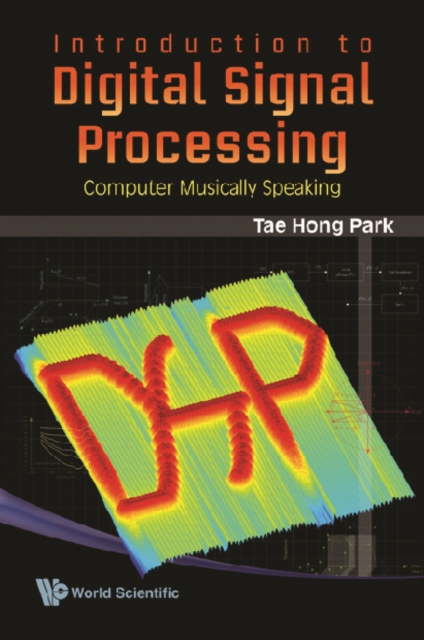
Introduction to digital signal processing
This book offers an introduction to digital signal processing (DSP) with an emphasis on audio signals and computer music. It covers the mathematical foundations of DSP, important DSP theories including sampling, LTI systems, the z-transform, FIR/IIR filters, classic sound synthesis algorithms, various digital effects, topics in time and frequency-domain analysis/synthesis, and associated musical/sound examples. Whenever possible, pictures and graphics are included when presenting DSP concepts of various abstractions. To further facilitate understanding of ideas, a plethora of MATLAB® code examples are provided, allowing the reader tangible means to “connect dots” via mathematics, visuals, as well as aural feedback through synthesis and modulation of sound. This book is designed for both technically and musically inclined readers alike–folks with a common goal of exploring digital signal processing.
eBook