
Catalogue Search | MBRL


Are you sure you want to remove the book from the shelf?

{{itemTitle}}
1,139
result(s) for
"Computer-assisted instruction Social aspects."
Sort by:

Mind, brain and technology : learning in the age of emerging technologies
\"As technology becomes increasingly integrated into our society, cultural expectations and needs are changing. Social understanding, family roles, organizational skills, and daily activities are all adapting to the demands of ever-present technology, causing changes in human brain, emotions, and behaviors. An understanding of the impact of technology upon our lives is essential if we are to adequately educate children for the future and plan for meaningful learning environments for them. Mind, Brain and Technology provides an overview of these changes from a wide variety of perspectives. Designed as a textbook for students in the fields and interdisciplinary areas of psychology, neuroscience, technology, computer science, and education, the book offers insights for researchers, professionals, educators, and anyone interested in learning more about the integration of mind, brain and technology in their lives. The book skilfully guides readers to explore alternatives, generate new ideas, and develop constructive plans both for their own lives and for future educational needs.\" -- Publisher's description
Book

Constructing the Self in a Digital World
It has become popular in recent years to talk about 'identity' as an aspect of engagement with technology - in virtual environments, in games, in social media and in our increasingly digital world. But what do we mean by identity and how do our theories and assumptions about identity affect the kinds of questions we ask about its relationship to technology and learning? Constructing the Self in a Digital World takes up this question explicitly, bringing together authors working from different models of identity but all examining the role of technology in the learning and lives of children and youth.
eBook

Rethinking early literacies : reading and rewriting worlds
\"Rethinking Early Literacies theorizes literacy for young children in a way that invites readers to rethink theoretical constructs framing understandings of literacy in contemporary society. Examples from a variety of sites, involving diverse children ages 3-8 prompt reconceptualizations of children's literate identities, challenge how diverse language learners are defined, and revise and expand the notion of texts to encompass digital tools and popular culture. Issues influencing early childhood education and how young children are positioned given trans/national social and political contexts are considered throughout\" -- Provided by pubisher.
Book

Culture and online learning
Culture plays an overarching role that impacts investment, planning, design, development, delivery, and the learning outcomes of online education. This groundbreaking book remedies a dearth of empirical research on how digital cultures and teaching and learning cultures intersect, and offers grounded theory and practical guidance on how to integrate cultural needs and sensibilities with the innovative opportunities offered by online learning. (HRK / Abstract übernommen).
eBook


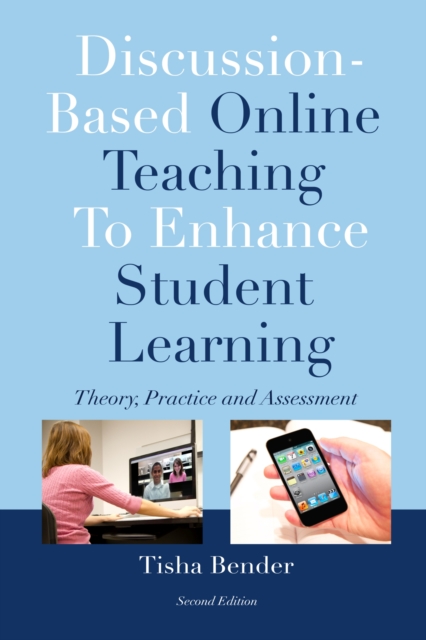
Discussion-Based Online Teaching to Enhance Student Learning
The new edition of what is now considered a classic on online learning has been expanded by about a third to reflect new opportunities offered by social media, new insights and ideas derived from the author's teaching in the eight years since she wrote the first edition, as well as from extensive research in the latest literature. In particular, Tisha Bender investigates whether the existing paradigm of teaching and learning has been changed, not so much because of the advent of the Internet, but because of the potential divide between the expectations and practices of students who are \"digital natives\" of the digital revolution, and those of their teachers who are mostly \"digital immigrants\". She addresses the question: do we need to change the way we teach in order to reach and engage digital natives fruitfully and enjoyably in their education. This accessible and comprehensive book offers an engaging and practical approach to online teaching that is rooted in the author's experience and enthusiasm for creating a virtual environment that engages students and fosters their deep learning. This is a book for all educators and administrators in higher education, in any discipline, engaged in, or contemplating offering, online classes that involve discussion or collaborative learning. It is relevant both to faculty teaching a hybrid and face-to-face classes, and courses conducted entirely online.
eBook

Cyberspace, distance learning, and higher education in developing countries
This resourceful book provides cutting-edge exploration and insightful analysis of educational implications of technology and distance higher education in Africa and Asia, critically examining access, curriculum, pedagogy, externally designed programs, the quest for ownership and strategies for creating a knowledge society.
eBook