
Catalogue Search | MBRL


Are you sure you want to remove the book from the shelf?

{{itemTitle}}
37
result(s) for
"Computerkunst"
Sort by:

Bandaids
Band-Aids' brings together two separately exhibited series of silk-screened paintings with colored sculpted resin frames by New York-based artist Urs Fischer (born 1973), produced in 2018. The artist composed the collective 57 works entirely in an app on his iPhone, a tool always on hand in almost any situation, allowing him to keep creating at any moment. When translated from device to painting medium, the resulting works have a luminous quality. Fischer's process blends drawing, painting and silkscreen to create groupings that react with each other to form dynamic and varied narratives. Echoes of subjects present in Fischer's early works - cats, bread houses, birds - personify romance and playfulness in this highly surreal series.
Book

The gestures of participatory art
The study critically reclaims participatory art beyond its co-option as a fuzzword of neoliberal governance. It examines a range of artistic practices from community theatre, immersive performance and the visual arts in different sites around the world. It offers a refreshing theorisation of participatory art as gesture.
eBook

Aesthetics of interaction in digital art
An art-historical perspective on interactive media art that provides theoretical and methodological tools for understanding and analyzing digital art.Since the 1960s, artworks that involve the participation of the spectator have received extensive scholarly attention. Yet interactive artworks using digital media still present a challenge for academic art history. In this book, Katja Kwastek argues that the particular aesthetic experience enabled by these new media works can open up new perspectives for our understanding of art and media alike. Kwastek, herself an art historian, offers a set of theoretical and methodological tools that are suitable for understanding and analyzing not only new media art but also other contemporary art forms. Addressing both the theoretician and the practitioner, Kwastek provides an introduction to the history and the terminology of interactive art, a theory of the aesthetics of interaction, and exemplary case studies of interactive media art.Kwastek lays the historical and theoretical groundwork and then develops an aesthetics of interaction, discussing such aspects as real space and data space, temporal structures, instrumental and phenomenal perspectives, and the relationship between materiality and interpretability. Finally, she applies her theory to specific works of interactive media art, including narratives in virtual and real space, interactive installations, and performance-with case studies of works by Olia Lialina, Susanne Berkenheger, Stefan Schemat, Teri Rueb, Lynn Hershman, Agnes Hegedüs, Tmema, David Rokeby, Sonia Cillari, and Blast Theory.
eBook

3-D Experimental VR and Art Practices
The book addresses themes such as visual perception, perception of 3-D and stereo. With the event of the stereoscope and the theatre, dioramas and panoramas before it, vision and perception in the eighteenth and nineteenth century is seen to be marketed to a mass audience. As such the spectacle of the stereoscope and other optical devices can be seen as a precursor to mass media dissemination today.
Yet artists use the stereoscope and VR to signify the spectacle, clairvoyance, vision and the mechanism of vision as well as a symbol for the act of looking, being looked at while looking and the gaze within an art new media practice.
Other artists have used 3-D and virtual reality to address themes such as theories of consciousness or embodied consciousness, the human – machine relationship and the idea of mapping reality, alternative networked realities.
The book includes an introduction and summary of chapters, 86 anaglyphic 3-D images and presents a survey of artists working in 3-D and virtual reality, VR art. The convergence of other fields such as new media art, video art and early virtual reality art is described through many examples within the scope of the book.
Artists discussed include Mert Akbal, Zoe Beloff , Geoffrey Berliner, Lygia Clark, Dan Graham, Salvador Dali, Marcel Duchamp, Scott S. Fisher, Rebecca Hackemann, Perry Hoberman, Daniel Iglesia, Ken Jacobs, William Kentridge, Susan MacWilliam, Patrick Meagher, Rosa Menkman, Jim Naughten, Tony Ousler, Alfons Schilling, Joel Schlemowitz, Christopher Schneberger, Judith Sönniken, Ethan Turpin, Aga Ousseinov, Colleen Woolpert.
3-D glasses included with hardback book.
eBook

A Companion to Digital Art
Reflecting the dynamic creativity of its subject, this definitive guide spans the evolution, aesthetics, and practice of today's digital art, combining fresh, emerging perspectives with the nuanced insights of leading theorists.
* Showcases the critical and theoretical approaches in this fast-moving discipline
* Explores the history and evolution of digital art; its aesthetics and politics; as well as its often turbulent relationships with established institutions
* Provides a platform for the most influential voices shaping the current discourse surrounding digital art, combining fresh, emerging perspectives with the nuanced insights of leading theorists
* Tackles digital art's primary practical challenges – how to present, document, and preserve pieces that could be erased forever by rapidly accelerating technological obsolescence
* Up-to-date, forward-looking, and critically reflective, this authoritative new collection is informed throughout by a deep appreciation of the technical intricacies of digital art
eBook
STATION ROSE 30.0
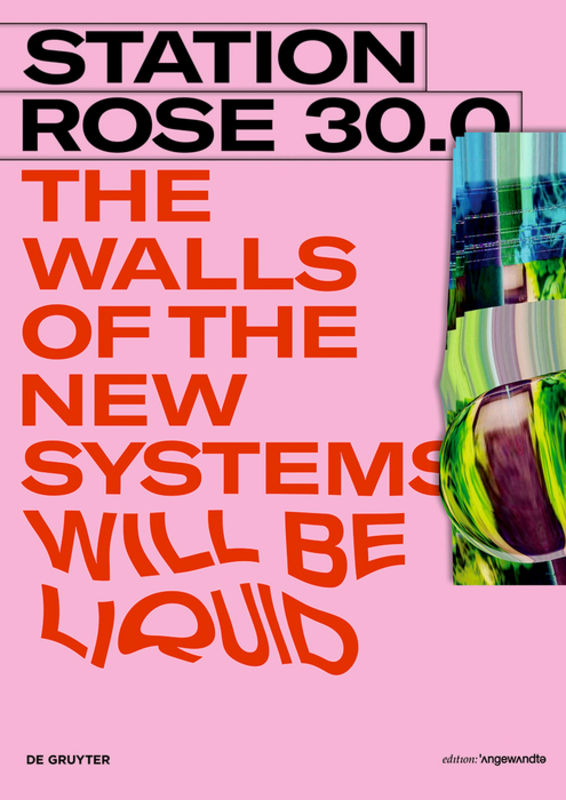
2018 sind die Künstlerin Elisa Rose & der Musiker Gary Danner mit STATION ROSE/STR 30 Jahre im Bereich Digital Art tätig. In der Zeit erfolgte die Transformation einer rein analogen zu einer neuen, untrennbar verschmolzenen digital-analogen Welt. Schon 1988 postulierte STR: „Der Ausgang dieser Geschichte findet überall statt\". Er findet nun tatsächlich überall statt: die Welt ist für immer vernetzt und überwacht, transparenter, aber auch kontrollierter. Wie haben Kunst und Musik sich verändert? Zu \"30.0\" entfaltet STR, nach Jahren im Ausland nun wieder in Wien, ihre Themen der letzten Jahre: Ausstellungen, Installationen, Performances, das Netz, die Natur, Kompositionen, TV- & Radio-Produktionen. STATION ROSE 30.0 enthält AUGMENTED REALITY. Mit Texten von Angela Stief, Katharina Gsöllpointner, Nate Hitchcock, Lucas Gehrmann u.a.
In 2018, the artist Elisa Rose and the musician Gary Danner will have been involved in digital art for 30 years as STATION ROSE/STR. During that time, there was a transformation from a purely analog to a new, irretrievably interwoven digital/analog world. Back in 1988, STR posited: \"The outcome of this history will take place everywhere\". Now it really is taking place everywhere – the world is permanently networked and monitored, it is more transparent, but also more controlled. How have art and music changed? On the subject of \"30.0\", STR – who for years were abroad and are now back in Vienna – unfold their topics of recent years: exhibitions, installations, performances, the Net, nature, compositions, TV and radio productions. STATION ROSE 30.0 is an AUGMENTED BOOK and contains texts by Angela Stief, Katharina Gsöllpointner, Nate Hitchcock, Lucas Gehrmann, and others.
eBook

Electronic and Computer Music
In this new edition of the classic text on the history and evolution of electronic music, Peter Manning extends the definitive account of the medium from its birth to include key developments from the dawn of the 21st century to the present day. After explaining the antecedents of electronic music from the turn of the 20th century to the Second World War, Manning discusses the emergence of the early ‘classical’ studios of the 1950s, and the subsequent evolution of more advanced analogue technologies during the 1960s and ‘70s, leading in turn to the birth and development of the MIDI synthesizer. Attention then turns to the characteristics of the digital revolution, from the pioneering work of Max Mathews at Bell Telephone Laboratories in the 1950s to the wealth of resources available today, facilitated by the development of the personal computer and allied digital technologies. The scope and extent of the technical and creative developments that have taken place since the late 1990s are considered in an extended series of new and updated chapters. These include topics such as the development of the digital audio workstation, laptop music, the Internet, and the emergence of new performance interfaces. Manning offers a critical perspective of the medium in terms of the philosophical and technical features that have shaped its growth. Emphasizing the functional characteristics of emerging technologies and their influence on the creative development of the medium, Manning covers key developments in both commercial and the non-commercial sectors to provide readers with the most comprehensive resource available on the evolution of this ever-expanding area of creativity.
eBook

A Philosophy of Computer Art
What is computer art? Do the concepts we usually employ to talk about art, such as ‘meaning’, ‘form’ or ‘expression’ apply to computer art?
A Philosophy of Computer Art is the first book to explore these questions. Dominic Lopes argues that computer art challenges some of the basic tenets of traditional ways of thinking about and making art and that to understand computer art we need to place particular emphasis on terms such as ‘interactivity’ and ‘user’.
Drawing on a wealth of examples he also explains how the roles of the computer artist and computer art user distinguishes them from makers and spectators of traditional art forms and argues that computer art allows us to understand better the role of technology as an art medium.
'Every art student enrolled in a Digital 101 course should read this book. Summing Up: Essential. Lower-level undergraduates and above; general readers.' - CHOICE
Winner of the American Society for Aesthetics Outstanding Monograph Prize, 2010
‘In this groundbreaking book, Dominic McIver Lopes offers a rigorously argued, tightly formulated and highly original account of computer art. Rich in examples and brimming with insights, it will provide everyone interested in computer art with a deeper understanding and appreciation of this fascinating art form.’ - Berys Gaut, University of St. Andrews, UK
‘This book argues that computers provide a new medium for art, rather than simply being a new vehicle for displaying art. This raises a host of intriguing questions, forcing us to think again about what we thought we knew about art. Lopes is the ideal guide; being one of our leading philosophers of art, and also completely at home in the world of computing. This is a very good book which considers genuinely interesting issues in an accessible and enlightening way.’ – Derek Matravers, The Open University, UK
Dominic McIver Lopes is Associate Dean in the Faculty of Arts and Distinguished University Scholar and Professor in the Department of Philosophy at the University of British Columbia. He is the author of two books on the philosophy of art, and editor (with Berys Gaut) of The Routledge Companion to Aesthetics .
1. The machine in the ghost 2. A computer art form 3. Live wires: computing interaction 4. Work to rule 5. Artist to audience 6. Computer art poetics 7. Atari to art Envoi: a new Laocoön. Notes. Bibliography. Index
eBook
Digital Synesthesia
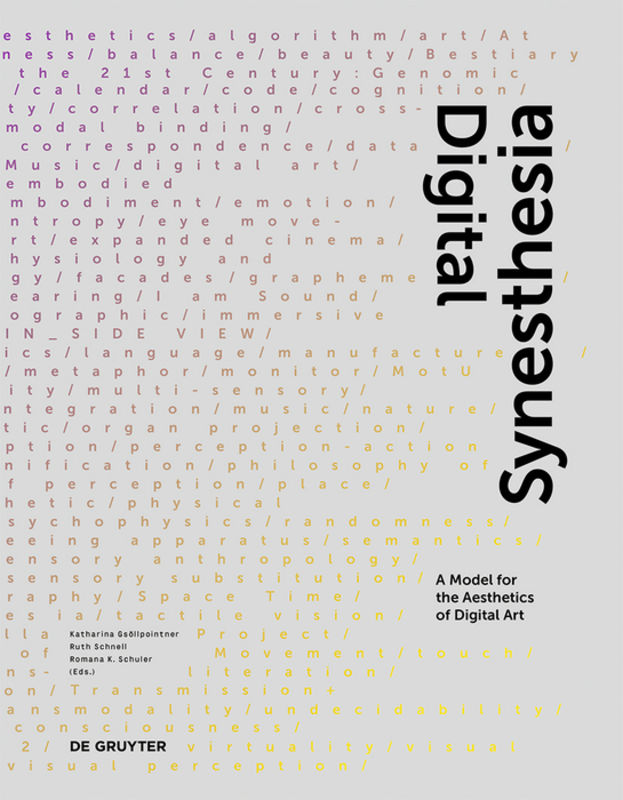
Die Publikation versammelt die Ergebnisse des künstlerischen Forschungsprojekts DIGITAL SYNESTHESIA (2013-2016) und stellt erstmals ein umfassendes Kompendium zum Begriff der \"Digitalen Synästhesie\" dar. \"Digitale Synästhesie\" umfasst ein völlig neues Konzept der digitalen Künste im 21. Jahrhundert, das die multimediale, auf dem binären Code basierende Ästhetik der digitalen Kunst mit der Multimodalität von Synästhesie als Wahrnehmungsform verbindet. Unter dem Begriff \"Digital Synesthesia\" geben die Herausgeberinnen diesem neuen Phänomen nicht nur einen Namen. Texte renommierter Medien- und Kunsttheoretiker, Medienkünstler und Neurowissenschaftler vermitteln spannende Einsichten in die Erforschung der synästhetischen Wahrnehmungsmöglichkeiten von multimedialen digitalen Kunstwerken.
eBook
Neuerfindung der Fotografie: Hans Danuser - Gesprache, Materialien, Analysen
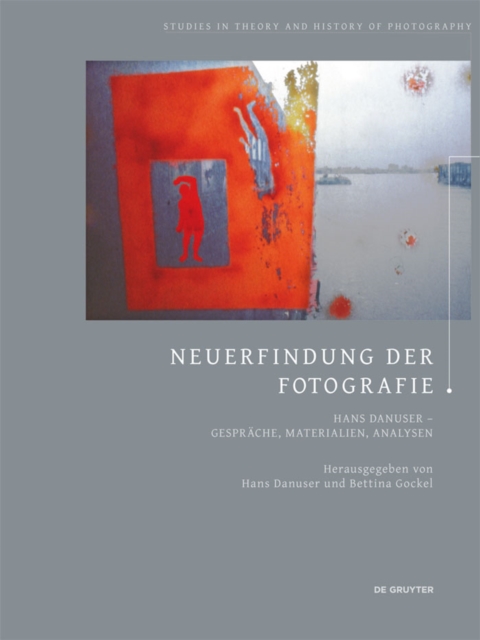
Based on the work of the Swiss photographer Hans Danuser and on his conversations with Peter Zumthor, Reto Hänny, Bettina Gockel, and Philip Ursprung, this book analyzes a previously undocumented segment of Swiss photographic history in the context of the international upheaval of the 1970s and 80s. Includes previously unpublished photographs by Hans Danuser from the 1980s.
eBook