
Catalogue Search | MBRL


Are you sure you want to remove the book from the shelf?

{{itemTitle}}
6,247
result(s) for
"Computers -- Psychological aspects"
Sort by:

Interacting with Presence
The experience of using and interacting with the newest Virtual Reality and computing technologies is profoundly affected by the extent to which we feel ourselves to be really ‘present’ in computer-generated and -mediated augmented worlds. This feeling of 'Presence’, of “being inside the mediated world”, is key to understanding developments in applications such as interactive entertainment, gaming, psychotherapy, education, scientific visualisation, sports training and rehabilitation, and many more. This edited volume, featuring contributions from internationally renowned scholars, provides a comprehensive introduction to and overview of the topic of mediated presence - or ‘tele-presence’ - and of the emerging field of presence research. It is intended for researchers and graduate students in human-computer interaction, cognitive science, psychology, cyberpsychology and computer science, as well as for experienced professionals from the ICT industry. The editors are all well-known professional researchers in the field: Professor Giuseppe Riva from the Catholic University of Milan, Italy; Professor John Waterworth from Umeå University, Sweden; Dianne Murray, an HCI Consultant and editor of the journal “Interacting with Computers”.
eBook

Gameworld Interfaces
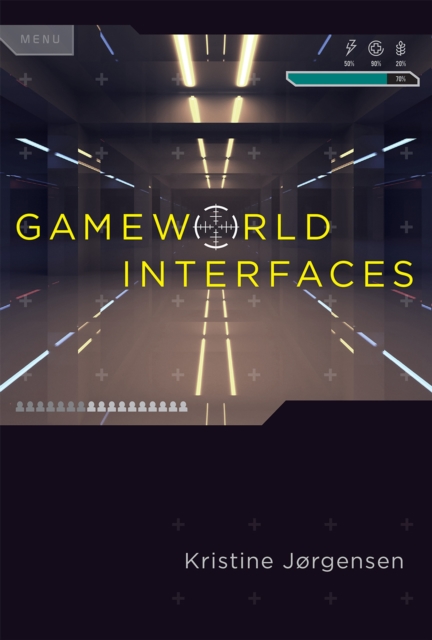
Computer games usually take one of two approaches to presenting game information to players. A game might offer information naturalistically, as part of the game's imaginary universe; or it might augment the world of the game with overlays, symbols, and menus. In this book, Kristine Jørgensen investigates both kinds of gameworld interfaces. She shows that although the naturalistic approach may appear more integral to the imaginary world of the game, both the invisible and visible interfaces effectively present information that players need in order to interact with the game and its rules. The symbolic, less naturalistic approach would seem to conflict with the idea of a coherent, autonomous fictional universe; but, Jørgensen argues, gameworlds are not governed by the pursuit of fictional coherence but by the logics of game mechanics. This is characteristic of gameworlds and distinguishes them from other traditional fictional worlds. Jørgensen investigates gameworld interfaces from the perspectives of both game designers and players. She draws on interviews with the design teams of Harmonix Music (producer ofRock Bandand other music games) and Turbine Inc. (producer of such massively multiplayer online games asLord of the Rings Online), many hours of gameplay, and extensive interviews and observations of players. The player studies focus on four games representing different genres:Crysis,Command & Conquer 3: Tiberian Wars,The Sims 2, andDiablo 2. Finally, she presents a theory of game user interfaces and considers the implications of this theory for game design.
eBook

Brain, mind and Internet : a deep history and future
\"The 'architecture of the mind' consists of both the biological brain coupled with the technologies that we have developed to extend our cognition. From the moment that we started storing our thoughts in permanent symbolic form outside of our bodies via Venus figures, body paint markings and cave paintings, humans have 'offloaded' cognition onto symbols outside of the brain. These external, materialized symbols have allowed us to extend our cognitive abilities beyond the limits of our biological brains. Far from 'making us stupid', the Internet represents merely the next great extension of this 'external symbolic storage system'. For all the dramatic and disruptive change that the Internet surely represents, placing it in this long term historical context renders this change more familiar, perhaps even less jarring. Understanding that there has been a deep history of intimacy between humans and their cognitive tools provides a framework for thinking about the possible futures of the brain-Internet interface: the future of the architecture of the mind. \"-- Provided by publisher.
Book

The Inner History of Devices
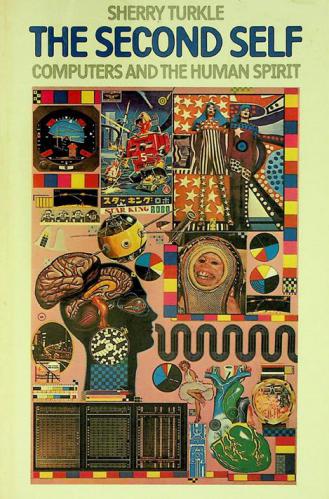
For more than two decades, in such landmark studies asThe Second SelfandLife on the Screen, Sherry Turkle has challenged our collective imagination with her insights about how technology enters our private worlds. InThe Inner History of Devices, she describes her process, an approach that reveals how what we make is woven into our ways of seeing ourselves. She brings together three traditions of listening -- that of the memoirist, the clinician, and the ethnographer. Each informs the others to compose an inner history of devices. We read about objects ranging from cell phones and video poker to prosthetic eyes, from Web sites and television to dialysis machines. In an introductory essay, Turkle makes the case for an \"intimate ethnography\" that challenges conventional wisdom. One personal computer owner tells Turkle: \"This computer means everything to me. It's where I put my hope.\" Turkle explains that she began that conversation thinking she would learn how people put computers to work. By its end, her question has changed: \"What was there about personal computers that offered such deep connection? What did a computer have that offered hope?\"The Inner History of Devicesteaches us to listen for the answer. In the memoirs, ethnographies, and clinical cases collected in this volume, we read about an American student who comes to terms with her conflicting identities as she contemplates a cell phone she used in Japan (\"Tokyo sat trapped inside it\"); a troubled patient who uses email both to criticize her therapist and to be reassured by her; a compulsive gambler who does not want to win steadily at video poker because a pattern of losing and winning keeps her more connected to the body of the machine. In these writings, we hear untold stories. We learn that received wisdom never goes far enough.
eBook

Animation, embodiment, and digital media : human experience of technological liveliness
\"Grounded in ideas of embodiment - that our minds are largely shaped by our perceptual and bodily experiences - Animation, Embodiment and Digital Media discusses the latest interactive animated phenomena enabled by computing and related technologies. Analysed in terms of sensory perception, bodily action and cognitive processes, Kenny Chow formulates a new theoretical framework, exploring a corpus of digital designs including graphical user interfaces of the Macintosh OS X and iOS systems, interactive installations like Text Rain, and video games like the arcade classic Pong and more recently Angry Birds, the animated remake of the canonical Chinese painting Along the River During the Qingming Festival exhibited at the Shanghai Expo in 2010. These analyses simultaneously demonstrate how the proposed perspectives and principles inform possibilities for creating more immersive, affective, and evocative forms of digital designs\"-- Provided by publisher.
Book

The Oxford handbook of cyberpsychology
Humans are becoming increasingly reliant on interconnected technologies to go about their daily lives in the personal and professional spheres. From finding romance, to conducting businesses entirely online, receiving health services, shopping, banking, and gaming, the Internet and World Wide Web open up a world of possibilities to people across the globe. Understanding the psychological processes underlying and influencing the thinking, interpretation, and behavior associated with this online interconnectivity is the core premise of Cyberpsychology. This book explores a wide range of cyberpsychological processes and activities through the research and writings of some of the world’s leading cyberpsychology experts. The book covers a broad range of topics spanning the key areas of research interest in this emerging field of enquiry and will be of interest to those who have only recently discovered the discipline as well as more seasoned cyberpsychology researchers and teachers. The book contains eight sections, and includes contributions spanning the breadth of current academic and public interest. Topics include: online research methods, self-presentation and impression management, technology across the lifespan, interaction and interactivity, online groups and communities, social media, health and technology, video gaming, and cybercrime and cybersecurity.
eBook

Irresistible : the rise of addictive technology and the business of keeping us hooked
\"An ... investigation into behavioral addiction, the dark flipside of today's unavoidable digital technologies, and how we can turn the tide to regain control\"-- Provided by publisher.
Book

Psychology and the internet : intrapersonal, interpersonal, and transpersonal implications
The previous edition provided the first resource for examining how the Internet affects our definition of who we are and our communication and work patterns. It examined how normal behavior differs from the pathological with respect to Internet use. Coverage includes how the internet is used in our social patterns: work, dating, meeting people of similar interests, how we use it to conduct business, how the Internet is used for learning, children and the Internet, what our internet use says about ourselves, and the philosophical ramifications of internet use on our definitions of reality and consciousness. Since its publication in 1998, a slew of other books on the topic have emerged, many speaking solely to internet addiction, learning on the web, or telehealth. There are few competitors that discuss the breadth of impact the internet has had on intrpersonal, interpersonal, and transpersonal psychology. Key Features* Provides the first resource for looking at how the Internet affects our definition of who we are* Examines the philosophical ramifications of Internet use and our definitions of self, reality, and work* Explores how the Internet is used to meet new friends and love interests, as well as to conduct business * Discusses what represents normal behavior with respect to Internet use
eBook