
Catalogue Search | MBRL


Are you sure you want to remove the book from the shelf?

{{itemTitle}}
47,277
result(s) for
"Computing and Processing"
Sort by:

Reflectarray Antennas
<p><b> A comprehensive, practical review of reflectarray theory, design, and state-of-the-art implementations </b> <p> This book provides engineers with a comprehensive review of the state-of-the-art in reflectarray antenna research and development. The authors describe, in detail, design procedures for a wide range of applications, including broadband, multi-band, multi-beam, contour-beam, beam-scanning, and conformal reflectarray antennas. They provide sufficient coverage of basic reflectarray theory to fully understand reflectarray antenna design and analysis such that the readers can pursue reflectarray research on their own. Throughout the book numerous illustrative design examples including numerical and experimental results are provided. <p> The reflectarray antenna is a hybrid design combining many of the best features of reflector antennas and printed arrays, in a low-profile, low-mass, highly cost-effective design. Although the concept of reflectarray antennas was first introduced in the early 1960's, it did not receive serious attention until the advent of printed circuit board technology in the 1990's made it practicable. Since then continuous research on reflectarray antennas has yielded several groundbreaking applications, including multi-beam antennas for point-to-point communication, beam-scanning antennas for radar applications, and spatial power combining reflectarray systems, among others. <p> Featuring in-depth theoretical analysis along with practical design examples, <i>Reflectarray Antennas</i> is an excellent text/reference for engineering graduate students, researchers, and engineers in the field of antennas. It belongs on the bookshelves of university libraries, research institutes, and industrial labs and research facilities. <p> Specifically, the book: <ul> <li>Provides engineers and researchers in electromagnetics, microwaves, and antennas with a systematic overview of reflectarray antenna design and analysis techniques</li> <li>Includes several design examples of reflectarray antennas along with numerical and experimental results</li> <li>Offers detailed design procedures for a wide range of applications, including broadband, multi-band operation, multi-beam scanning, contour-beams, beam-scanning systems, conformal reflectarray antennas, transmitarrays, terahertz reflectarrays, and more</li> <li>Features detailed real-world implementation examples for each design covered</li> </ul> <br>
eBook

Big Data, Little Data, No Data
\"Big Data\" is on the covers ofScience, Nature, theEconomist, andWiredmagazines, on the front pages of theWall Street Journaland theNew York Times.But despite the media hyperbole, as Christine Borgman points out in this examination of data and scholarly research, having the right data is usually better than having more data; little data can be just as valuable as big data. In many cases, there are no data -- because relevant data don't exist, cannot be found, or are not available. Moreover, data sharing is difficult, incentives to do so are minimal, and data practices vary widely across disciplines.Borgman, an often-cited authority on scholarly communication, argues that data have no value or meaning in isolation; they exist within a knowledge infrastructure -- an ecology of people, practices, technologies, institutions, material objects, and relationships. After laying out the premises of her investigation -- six \"provocations\" meant to inspire discussion about the uses of data in scholarship -- Borgman offers case studies of data practices in the sciences, the social sciences, and the humanities, and then considers the implications of her findings for scholarly practice and research policy. To manage and exploit data over the long term, Borgman argues, requires massive investment in knowledge infrastructures; at stake is the future of scholarship.
eBook

Foundations of Probabilistic Logic Programming
Probabilistic Logic Programming extends Logic Programming by enabling the representation of uncertain information by means of probability theory. Probabilistic Logic Programming is at the intersection of two wider research fields: the integration of logic and probability and Probabilistic Programming. Logic enables the representation of complex relations among entities while probability theory is useful for model uncertainty over attributes and relations. Combining the two is a very active field of study. Probabilistic Programming extends programming languages with probabilistic primitives that can be used to write complex probabilistic models. Algorithms for the inference and learning tasks are then provided automatically by the system. Probabilistic Logic programming is at the same time a logic language, with its knowledge representation capabilities, and a Turing complete language, with its computation capabilities, thus providing the best of both worlds. Since its birth, the field of Probabilistic Logic Programming has seen a steady increase of activity, with many proposals for languages and algorithms for inference and learning. Foundations of Probabilistic Logic Programming aims at providing an overview of the field with a special emphasis on languages under the Distribution Semantics, one of the most influential approaches. The book presents the main ideas for semantics, inference, and learning and highlights connections between the methods. Many examples of the book include a link to a page of the web application http://cplint.eu where the code can be run online.
eBook

Customizing ASP.NET Core 5.0
A guide to discovering the hidden behaviors of ASP.NET Core that can be customized to optimize your .NET 5 applications
Key Features
Customize the default behavior of ASP.NET Core to get the most out of the frameworkEnhance the app configuration, change the default dependency injection, and build your own tag helpersDiscover best practices for configuring ASP.NET Core, from user interface design to hosting it on platforms
Book Description
ASP.NET Core is the most powerful Microsoft web framework. Although it’s full of rich features, sometimes the default configurations can be a bottleneck and need to be customized to suit the nature and scale of your app. If you’re an intermediate-level .NET developer who wants to extend .NET Core to multiple use cases, it's important to customize these features so that the framework works for you effectively. Customizing ASP.NET Core 5.0 covers core features that can be customized for developing optimized apps. The customization techniques are also updated to work with the latest .NET 5 framework. You’ll learn essential concepts relating to optimizing the framework such as configuration, dependency injection, routing, action filters, and more. As you progress, you’ll be able to create custom solutions that meet the needs of your use case with ASP.NET Core. Later chapters will cover expert techniques and best practices for using the framework for your app development needs, from UI design to hosting. Finally, you’ll focus on the new endpoint routing in ASP.NET Core to build custom endpoints and add third-party endpoints to your web apps for processing requests faster. By the end of this application development book, you’ll have the skills you need to be able to customize ASP.NET Core to develop robust optimized apps.
What you will learn
Explore various application configurations and providers in ASP.NET Core 5Understand dependency injection in .NET and learn how to add third-party DI containersDiscover the concept of middleware and write your own middleware for ASP.NET Core appsCreate various API output formats in your API-driven projectsGet familiar with different hosting models for your ASP.NET Core appDevelop custom routing endpoints and add third-party endpointsConfigure WebHostBuilder effectively for your web applications
Who this book is for
This .NET 5 book is for .NET developers who need to change the default behaviors of the framework to help improve the performance of their applications. Intermediate-level knowledge of ASP.NET Core and C# is required before getting started with the book.
eBook

Fog and Edge Computing
</P> <b>A comprehensive guide to Fog and Edge applications, architectures, and technologies</b> <p>Recent years have seen the explosive growth of the Internet of Things (IoT): the internet- connected network of devices that includes everything from personal electronics and home appliances to automobiles and industrial machinery. Responding to the ever-increasing bandwidth demands and privacy concerns of the IoT, Fog and Edge computing concepts have developed to collect, analyze, and process data closer to devices and more efficiently than traditional cloud architecture. <p><i>Fog and Edge Computing: Principles and Paradigms</i>provides a comprehensive overview of the state-of-the-art applications and architectures driving this dynamic field of computing while highlighting potential research directions and emerging technologies. <p>Exploring topics such as developing scalable architectures, moving from closed systems to open systems, and ethical issues rising from data sensing, this timely book addresses both the challenges and opportunities that Fog and Edge computing presents. Contributions from leading IoT experts discuss federating Edge resources, middleware design issues, data management and predictive analysis, smart transportation and surveillance applications, and more. A coordinated and integrated presentation of topics helps readers gain thorough knowledge of the foundations, applications, and issues that are central to Fog and Edge computing. This valuable resource: <ul> <li>Discusses IoT and new computing paradigms in the domain such as Fog, Edge and Mist</li> <li>Provides insights on transitioning from current Cloud-centric and 4G/5G wireless environments to Fog computing</li> <li>Examines methods to optimize virtualized, pooled, and shared resources</li> <li>Identifies potential technical challenges and offers suggestions for possible solutions</li> <li>Discusses major components of Fog and Edge computing architectures such as middleware, interaction protocols, and autonomic management</li> <li>Includes access to a website portal for advanced online resources</li> </ul> <p><i>Fog and Edge Computing: Principles and Paradigms</i>is an essential source of up-to-date information for systems architects, developers, researchers, and advanced undergraduate and graduate students in fields of computer science and engineering.
eBook
FinOps Handbook for Microsoft Azure
Establish successful FinOps practice and bring financial visibility to define cost optimization goals and apply learnings to realize savings for your organization.
Key Features
Build a FinOps team and foster cross-organizational collaboration to optimize costsGain a deep insight into resource usage and rates to unlock the secrets of cost optimizationApply your FinOps expertise to run a successful practice, reinvesting savings into new feature development
Book Description
To gain a competitive edge in today's unpredictable economic climate, you’ll need to unravel the mystery of saving costs on Microsoft Azure Cloud. This book helps you do just that with proven strategies for building, running, and sustaining repeated cost optimization initiatives across your organization. You’ll learn how to collaborate with finance, procurement, product, and engineering teams to optimize your cloud spend and achieve cost savings that can make a significant impact on your bottom line. The book begins by showing you how to effectively monitor and manage your cloud usage, identify cost-saving opportunities, and implement changes that’ll reduce your overall spend. Whether you're a small start-up or a large enterprise, this book will equip you with the knowledge and skills needed to achieve cost savings and maintain a lean cloud infrastructure. As you advance, you'll find out how to benchmark your current cloud spend and establish a budget for cloud usage. Throughout the chapters, you’ll learn how to negotiate with your cloud provider to optimize your rate, allocate cost for the container, and gain a solid understanding of metric-driven cost optimization. By the end of this FinOps book, you’ll have become proficient in Azure Cloud financial management with the help of real-world examples, use cases, and scenarios.
What you will learn
Learn FinOps Informe, Optimize and Operate model for Microsoft AzureChoose from Reservations, Savings Plans, and Spot VMs to reduce costDiscover resource waste using provided pre-built workbooksWrite an effective financial business case and build a FinOps strategyRelate what you learned with three real world use caseAccurately forecast future cloud spend and track budgets
Who this book is for
This book is for cloud governance experts, finance managers, procurement specialists, product developers, and engineering teams looking to get clear and actionable guidance needed to implement all the phases of the FinOps life cycle in the Microsoft Azure context. This book is ideal for anyone with a basic understanding of financial terms, analytics tools, and the Azure cloud.
eBook
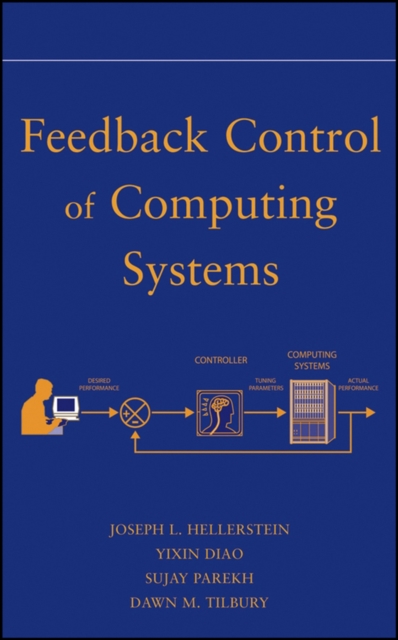
Feedback Control of Computing Systems
This is the first practical treatment of the design and application of feedback control of computing systems. MATLAB files for the solution of problems and case studies accompany the text throughout. The book discusses information technology examples, such as maximizing the efficiency of Lotus Notes. This book results from the authors' research into the use of control theory to model and control computing systems. This has important implications to the way engineers and researchers approach different resource management problems. This guide is well suited for professionals and researchers in information technology and computer science.
eBook

Data Wrangling on AWS
Revamp your data landscape and implement highly effective data pipelines in AWS with this hands-on guide Purchase of the print or Kindle book includes a free PDF eBook
Key Features
Execute extract, transform, and load (ETL) tasks on data lakes, data warehouses, and databasesImplement effective Pandas data operation with data wranglerIntegrate pipelines with AWS data services
Book Description
Data wrangling is the process of cleaning, transforming, and organizing raw, messy, or unstructured data into a structured format. It involves processes such as data cleaning, data integration, data transformation, and data enrichment to ensure that the data is accurate, consistent, and suitable for analysis. Data Wrangling on AWS equips you with the knowledge to reap the full potential of AWS data wrangling tools. First, you’ll be introduced to data wrangling on AWS and will be familiarized with data wrangling services available in AWS. You’ll understand how to work with AWS Glue DataBrew, AWS data wrangler, and AWS Sagemaker. Next, you’ll discover other AWS services like Amazon S3, Redshift, Athena, and Quicksight. Additionally, you’ll explore advanced topics such as performing Pandas data operation with AWS data wrangler, optimizing ML data with AWS SageMaker, building the data warehouse with Glue DataBrew, along with security and monitoring aspects. By the end of this book, you’ll be well-equipped to perform data wrangling using AWS services.
What you will learn
Explore how to write simple to complex transformations using AWS data wranglerUse abstracted functions to extract and load data from and into AWS datastoresConfigure AWS Glue DataBrew for data wranglingDevelop data pipelines using AWS data wranglerIntegrate AWS security features into Data Wrangler using identity and access management (IAM)Optimize your data with AWS SageMaker
Who this book is for
This book is for data engineers, data scientists, and business data analysts looking to explore the capabilities, tools, and services of data wrangling on AWS for their ETL tasks. Basic knowledge of Python, Pandas, and a familiarity with AWS tools such as AWS Glue, Amazon Athena is required to get the most out of this book.
eBook
Virtualizing 5G and Beyond 5G Mobile Network
The fifth generation (5G) mobile network brings significant new capacity and opportunity to network operators while also creating new challenges and additional pressure to build and operate networks differently. The transformation to 5G mobile networks creates the opportunity to virtualize significant portions of the radio access (RAN) and network core, allowing operators to better compete with over-the-top and hyperscaler offerings. This book covers the business and technical areas of virtualization that enable the transformation and innovation that today’s operators are seeking. It identifies forward-looking gaps where the technology continues to develop, specifically packet acceleration and timing requirements, which today are still not fully virtualized. The book shows you the operational and support considerations, development and lifecycle management, business implications, and vendor-team dynamics involved in deploying a virtualized network. Packed with key concepts of virtualization that solve a broad array of problems, this is an essential reference for those entering this technical domain, those that are going to build and operate these networks, and those that are seeking to learn more about the telecom network. It illustrates why you just can’t do it all in the cloud today.
eBook

Practical Computer Architecture with Python and ARM
Learn computer architecture with Python and ARM, simulating assembly program execution and designing a computer simulator Purchase of the print or Kindle book includes a free PDF eBook
Key Features
Build a computer simulator with Python: Learn computer architecture by designing and constructing a simulatorPython for architecture: Use Python to simulate and execute assembly language instructionsARM programming on Raspberry Pi: Explore ARM assembly language and run programs on Raspberry Pi
Book Description
This comprehensive guide offers a unique and immersive learning experience by combining Python programming with ARM architecture. Starting with an introduction to computer architecture and the flow of data within a computer system, you’ll progress to building your own interpreter using Python. You’ll see how this foundation enables the simulation of computer operations and learn ways to enhance a simulator by adding new instructions and displaying improved results. As you advance, you’ll explore the TC1 Assembler and Simulator Program to gain insights into instruction analysis and explore practical examples of simulators. This will help you build essential skills in understanding complex computer instructions, strengthening your grasp of computer architecture. Moreover, you’ll be introduced to the Raspberry Pi operating system, preparing you to delve into the detailed language of the ARM computer. This includes exploring the ARM instruction set architecture, data-processing instructions, subroutines, and the stack. With clear explanations, practical examples, and coding exercises, this resource will enable you to design and construct your own computer simulator, simulate assembly language programs, and leverage the Raspberry Pi for ARM programming.
What you will learn
Master the core principles of computer architectureUnderstand the role of registers, memory, and data flow in computersDiscover how to design and implement a computer simulator using PythonSimulate and execute assembly language programs on the simulatorEnhance the simulator using new instructions for improved outputAnalyze complex computer instructions for deeper architectural understandingExplore the ARM instruction set and data processing on the Raspberry PiDevelop proficiency in writing, assembling, and running ARM code on the Raspberry Pi
Who this book is for
This book is for university students studying computer science, particularly those enrolled in a computer architecture module. With its practical approach and succinct explanations, it is also suitable for hobbyists, enthusiasts, and self-learners seeking a deeper understanding of computer systems. The book assumes foundational knowledge of number bases, binary arithmetic, and Boolean logic concepts. While it primarily caters to the computer science field, this book is less geared toward electrical or electronics engineering.
eBook