
Catalogue Search | MBRL


Are you sure you want to remove the book from the shelf?

{{itemTitle}}
47,235
result(s) for
"Concentration camps"
Sort by:

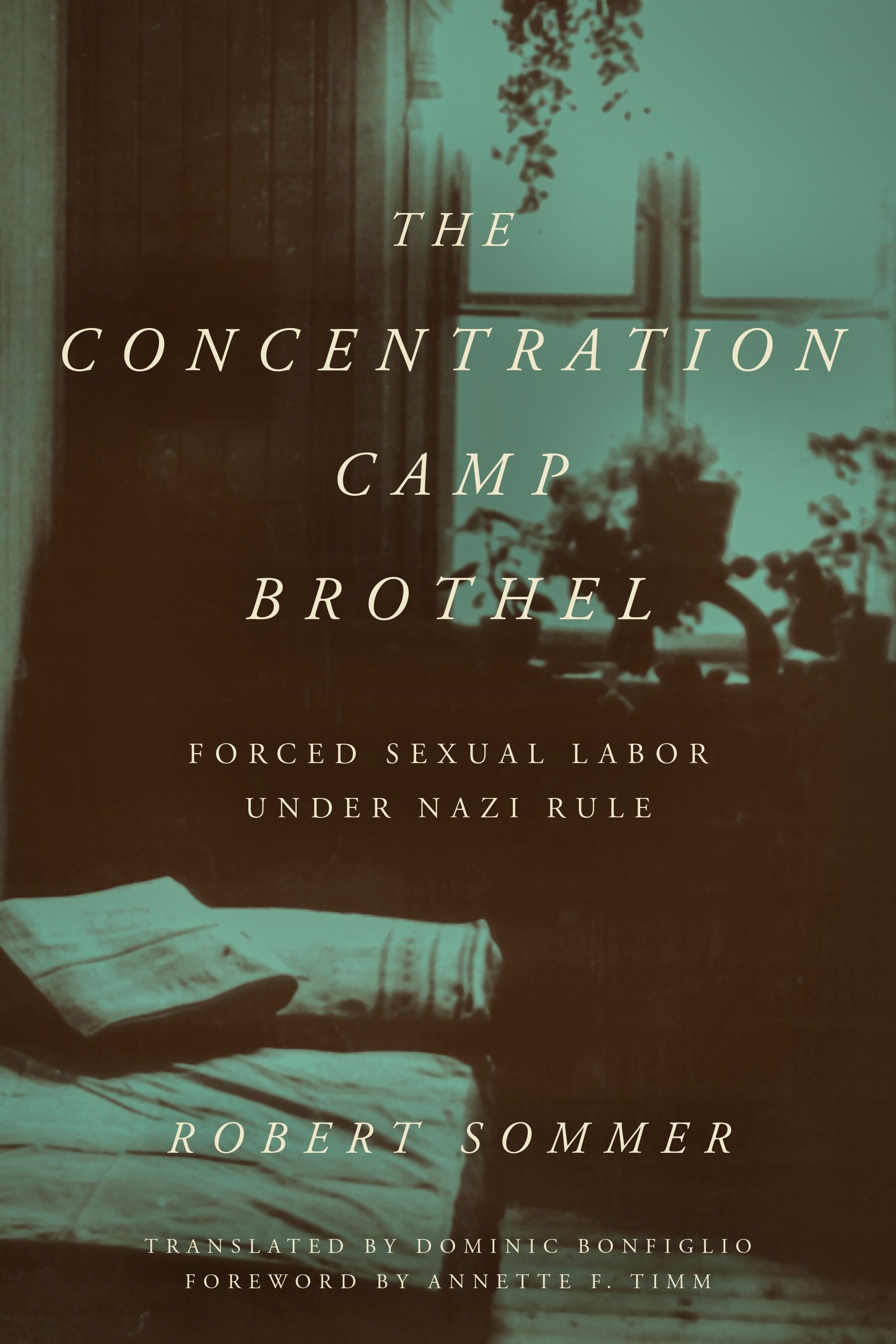
The Concentration Camp Brothel
Discover the chilling untold story of sexual forced
labor in Nazi concentration camps In his seminal work,
The Concentration Camp Brothel , Robert Sommer reveals
the hidden horrors of sexual forced labor within the SS
camp system, a subject long overshadowed and seldom
acknowledged in the discourse on the Holocaust. Through his
rigorous examination of over seventy archives and poignant
interviews with more than thirty survivors, including former
visitors of camp brothels, Sommer paints a vivid and
harrowing picture of the atrocities committed. This book
is the first to offer a comprehensive exploration of the
establishment, operation, and profound impact of brothels in
Nazi concentration camps. Sommer’s research meticulously
details the brothels’ integration into the concentration
camp system, their role in the Nazi exploitation of bodies for
control and profit, and the complex reactions of the
prisoner society to these establishments. He explores the
desperate survival strategies employed by the women forced into
sexual labor and the chilling motivations of their exploiters.
The book also places the tragedy of camp brothels in the
broader context of sexual violence under Nazi rule, making a
critical connection between these acts of exploitation and the
overall history of the Holocaust. This updated English edition
incorporates new findings and perspectives since the original
German publication in 2009, providing a more comprehensive
understanding of the subject. The foreword by Annette F. Timm
adds further context and contemporary analysis, enhancing the
book’s relevance and depth.
eBook

Mussolini's camps : civilian internment in fascist Italy (1940-1943)
\"This book - which is based on vast archival research and on a variety of primary sources - has filled a gap in Italy's historiography on Fascism, and in European and world history about concentration camps in our contemporary world. It provides, for the first time, a survey of the different types of internment practiced by Fascist Italy during the war and a historical map of its concentration camps. Published in Italian (I campi del duce, Turin: Einaudi, 2004), in Croatian (Mussolinijevi Logori, Zagreb: Golden Marketing - Tehnicka knjiga, 2007), in Slovenian (Fasisticna taborisca, Ljublana: Publicisticno drustvo ZAK, 2011), and now in English, Mussolini's Camps is both an excellent product of academic research and a narrative easily accessible to readers who are not professional historians. It undermines the myth that concentration camps were established in Italy only after the creation of the Republic of Salo and the Nazi occupation of Italy's northern regions in 1943, and questions the persistent and traditional image of Italians as brava gente (good people), showing how Fascism made extensive use of the camps (even in the occupied territories) as an instrument of coercion and political control.\"--Page iii.
Book

Barbed wire : an ecology of modernity
In this original and controversial book, historian and philosopher Reviel Netz explores the development of a controlling and pain-inducing technology—barbed wire. Surveying its development from 1874 to 1954, Netz describes its use to control cattle during the colonization of the American West and to control people in Nazi concentration camps and the Russian Gulag. Physical control over space was no longer symbolic after 1874.
This is a history told from the perspective of its victims. With vivid examples of the interconnectedness of humans, animals, and the environment, this dramatic account of barbed wire presents modern history through the lens of motion being prevented. Drawing together the history of humans and animals, Netz delivers a compelling new perspective on the issues of colonialism, capitalism, warfare, globalization, violence, and suffering. Theoretically sophisticated but written with a broad readership in mind, Barbed Wire calls for nothing less than a reconsideration of modernity.
eBook


Empire of Destruction
The first comparative, comprehensive history of Nazi mass
killing - showing how genocidal policies were crucial to the
regime's strategy to win the war Nazi Germany killed
approximately 13 million civilians and other non-combatants in
deliberate policies of mass murder, mostly during the war years.
Almost half the victims were Jewish, systematically destroyed in
the Holocaust, the core of the Nazis' pan-European racial
purification programme. Alex Kay argues that the genocide of
European Jewry can be examined in the wider context of Nazi mass
killing. For the first time, Empire of Destruction
considers Europe's Jews alongside all the other major victim
groups: captive Red Army soldiers, the Soviet urban population,
unarmed civilian victims of preventive terror and reprisals, the
mentally and physically disabled, the European Roma and the Polish
intelligentsia. Kay shows how each of these groups was regarded by
the Nazi regime as a potential threat to Germany's ability to
successfully wage a war for hegemony in Europe. Combining the full
quantitative scale of the killings with the individual horror, this
is a vital and groundbreaking work.
eBook

The Operation Reinhard death camps : Belzec, Sobibor, Treblinka
\"Under the code name Operation Reinhard, more than one and a half million Jews were murdered between 1942 and 1943 in the concentration camps of Belzec, Sobibor, and Treblinka, located in Nazi-occupied Poland. Unlike more well-known camps, which were used both for slave labor and extermination, these camps existed purely to murder Jews. Few victims survived to tell their stories, and the camps were largely forgotten after they were dismantled in 1943. The Operation Reinhard Death Camps bears eloquent witness to this horrific tragedy. This newly revised and expanded edition includes new material on the history of the Jews under German occupation in Poland; the execution and timing of Operation Reinhard; information about the ghettos in Lublin, Warsaw, Krakow, Radom, and Galicia; and updated numbers of the victims who were murdered during deportations. In addition to documenting the horror of the camps, Yitzhak Arad recounts the stories of those courageous enough to struggle against the Nazis and their \"final solution.\" Arad's work retrieves the experiences of Operation Reinhard's victims and survivors from obscurity and exposes a terrible chapter in humanity's history\" -- Provided by publisher.
Book

Spaniards in Mauthausen
By examining narratives about Spanish Mauthausen victims over
the past seventy years, author Sara J. Brenneis provides a
historical, critical, and chronological analysis of a virtually
unknown body of work.
eBook

One long night : a global history of concentration camps
\"For over 100 years, at least one concentration camp has existed somewhere on Earth. First used as battlefield strategy, camps have evolved with each passing decade, in the scope of their effects and the savage practicality with which governments have employed them. Even in the twenty-first century, as we continue to reckon with the magnitude and horror of the Holocaust, history tells us we have broken our own solemn promise of \"never again. In this harrowing work based on archival records and interviews during travel to four continents, Andrea Pitzer reveals for the first time the chronological and geopolitical history of concentration camps. Beginning with 1890s Cuba, she pinpoints concentration camps around the world and across decades. From the Philippines and Southern Africa in the early twentieth century to the Soviet Gulag and detention camps in China and North Korea during the Cold War, camp systems have been used as tools for civilian relocation and political repression. Often justified as a measure to protect a nation, or even the interned groups themselves, camps have instead served as brutal and dehumanizing sites that have claimed the lives of millions\"--Provided by publisher.
Book

Artifacts of Loss
From 1942 to 1946, as America prepared for war, 120,000 people of Japanese descent were forcibly interned in harsh desert camps across the American west.
In Artifacts of Loss, Jane E. Dusselier looks at the lives of these internees through the lens of their art. These camp-made creations included flowers made with tissue paper and shells, wood carvings of pets left behind, furniture made from discarded apple crates, gardens grown next to their housingùanything to help alleviate the visual deprivation and isolation caused by their circumstances. Their crafts were also central in sustaining, re-forming, and inspiring new relationships. Creating, exhibiting, consuming, living with, and thinking about art became embedded in the everyday patterns of camp life and helped provide internees with sustenance for mental, emotional, and psychic survival.
Dusselier urges her readers to consider these often overlooked folk crafts as meaningful political statements which are significant as material forms of protest and as representations of loss. She concludes briefly with a discussion of other displaced people around the globe today and the ways in which personal and group identity is reflected in similar creative ways.
eBook