
Catalogue Search | MBRL


Are you sure you want to remove the book from the shelf?

{{itemTitle}}
10
result(s) for
"Concept de nombre."
Sort by:

Can fish count? : what animals reveal about our uniquely mathematical minds
\"The philosopher Bertrand Russell once observed that realizing that a pair of apples and the passage of two days could somehow both be represented by the concept we call \"two\" was one of the most astonishing discoveries anyone had ever made. So what do we make of the incredible fact that animals seem to have inherent mathematical abilities? As cognitive psychologist Brian Butterworth shows us in Can Fish Count?, many \"simple\" animals--such as bees, which count trees and fence posts, and guppies, which can size up groups--have a sense of numbers. And unlike humans, they don't need to be taught. In telling animals' stories, Butterworth shines new light on one of our most ancient questions: Just where, exactly, do numbers come from? He reveals how insights gleaned from studying animals can help us make better sense of our own abilities. Full of discovery and delight, Can Fish Count? is an astonishing journey through the animal kingdom and the human mind\"--Amazon.com
Book

A Focus on Addition and Subtraction
This innovative text offers a unique approach to making mathematics education research on addition, subtraction, and number concepts readily accessible and understandable to pre-service and in-service teachers of grades K-3.
Revealing students' thought processes with extensive annotated samples of student work and vignettes characteristic of teachers' experiences, this book provides educators with the knowledge and tools needed to modify their lessons and improve student learning of additive reasoning in the primary grades. Based on research gathered in the Ongoing Assessment Project (OGAP), this engaging, easy-to-use resource features practical resources such as:
A close focus on student work, including 150+ annotated pieces of student work, to help teachers improve their ability to recognize, assess, and monitor their students' errors and misconceptions, as well as their developing conceptual understanding;
A focus on the OGAP Addition, Subtraction, and Base Ten Number Progressions, based on research conducted with hundreds of teachers and thousands of pieces of student work;
In-chapter sections on how Common Core State Standards for Math (CCSSM) are supported by math education research;
End-of-chapter questions to allow teachers to analyze student thinking and consider instructional strategies for their own students;
Instructional links to help teachers relate concepts from each chapter to their own instructional materials and programs;
An accompanying eResource, available online, offers an answer key to Looking Back questions, as well as a copy of the OGAP Additive Framework and the OGAP Number Line Continuum.
A Focus on Addition and Subtraction marks the fourth installment of the popular A Focus on... collection, designed to aid the professional development of pre-service and in-service mathematics teachers. Following from previous volumes on ratios and proportions, multiplication and division, and fractions, this newest addition is designed to bridge the gap between what math education researchers know and what teachers need to know in order to better understand evidence in student work and make effective instructional decisions.
eBook

Making numbers count : the art and science of communicating numbers
\"Understanding numbers is essential -- but humans aren't built to understand them. Chip Heath outlines specific principles that reveal how to translate a number into our brain's language. This book is filled with examples of extreme number makeovers, vivid before-and-after examples that take a dry number and present it in a way that people click in and say \"Wow, now I get it!\" This book will help math-lovers and math-haters alike translate the numbers that animate our world - allowing us to bring more data, more naturally, into decisions in our schools, our workplaces, and our society.\"-- Publisher's description.
Book

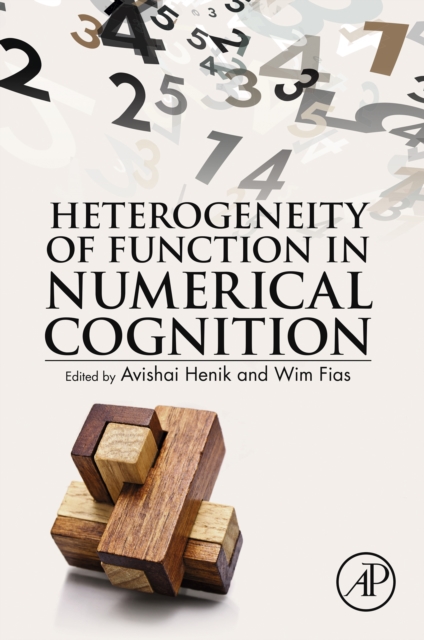
Heterogeneity of Function in Numerical Cognition
Heterogeneity of Function in Numerical Cognition presents the latest updates on ongoing research and discussions regarding numerical cognition.With great individual differences in the development or function of numerical cognition at neuroanatomical, neuropsychological, behavioral, and interactional levels, these issues are important.
eBook
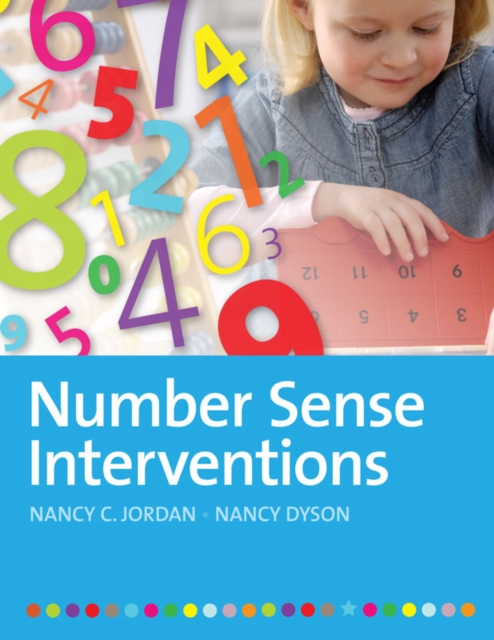
Number Sense Interventions
Use with the Number Sense Screener?(NSS?), your quick, reliable way to screen early numerical competencies. Find out where children need extra support-and then use the Number Sense Interventions to target those specific skills.
eBook

The child's understanding of number
The authors report the results of some half dozen years of research into when and how children acquire numerical skills. They provide a new set of answers to these questions, and overturn much of the traditional wisdom on the subject.
eBook

The number sense: how the mind creates mathematics
Our understanding of how the human brain performs mathematical calculations is far from complete, but in recent years there have been many exciting breakthroughs by scientists all over the world. Now, in The Number Sense, Stanislas Dehaene offers a fascinating look at this recent research, in an enlightening exploration of the mathematical mind. This new and completely updated edition includes all of the most recent scientific data and reaches many provocative conclusions that will intrigue anyone interested in learning, mathematics, or the mind.
eBook

The mystery of numbers
In The Mystery of Numbers, Annemarie Schimmel conducts an illuminating tour of the mysteries attributed to numbers over the centuries. She begins with an informative and often surprising introduction to the origins of number systems. But the heart of the book is an engrossing guide to the symbolism of numbers. Number symbolism, she shows, has deep roots in our culture, from the philosophy of the Pythagoreans and Platonists, to the religious mysticism of the Cabala and the Islamic Brethren of Purity, to Kepler's belief that the laws of planetary motion should be mathematically elegant, to the unlucky thirteen. After exploring the sources of number symbolism, Schimmel examines individual numbers ranging from one to ten thousand, discussing the meanings they have had for Judaic, Christian, and Islamic traditions, with examples from Indian, Chinese, and Native American cultures as well. From the Bible to the Mayans to Shakespeare, she shows how numbers have been considered feminine and masculine, holy and evil, lucky and unlucky, in this informative and entertaining book.
eBook

Nombre, linaje, parientes: usos y sentidos de las categorías de parentesco entre las personas que buscan sus orígenes en Argentina
A partir de una investigación realizada entre 2010 y 2016 con activistas que buscan sus orígenes en Argentina, este artículo analiza los sentidos y usos que estos efectúan de su nombre y apellido, y las formas en que se refieren a sus parientes de crianza. De este modo, procura contribuir a los debates antropológicos sobre la nomenclatura del parentesco, el emparentamiento y las relaciones de conectividad. La hipótesis del trabajo sostiene que la modificación del nombre o del apellido puede conceptualizarse como una práctica rectificadora tendiente a la afirmación de la propia agencia respecto a la construcción de la identidad personal. Si bien esta desinscripción del linaje al utilizar nombres o apellidos alternativos no se materializa en documentos personales, tiene efectos en otras esferas de la vida social, en las cuales estas personas son reconocidas a partir de las nuevas nominaciones.
Journal Article