
Catalogue Search | MBRL


Are you sure you want to remove the book from the shelf?

{{itemTitle}}
84
result(s) for
"Concubinage"
Sort by:

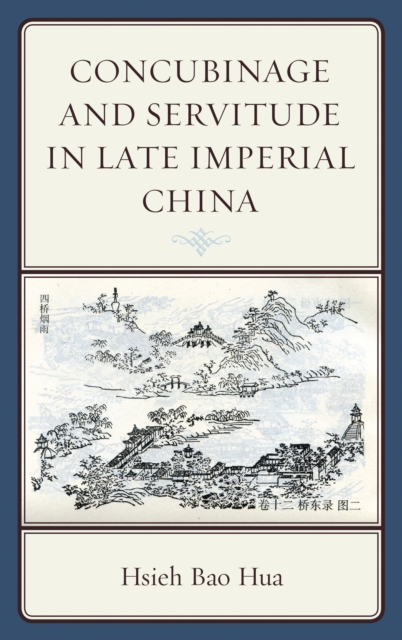
Concubinage and servitude in late imperial China
In the long course of late imperial Chinese history, servants and concubines formed a vast social stratum in the hinterland along the Grand Canal, particularly in urban areas. Concubinage and Servitude in Late Imperial China is a survey of the institutions and practice of concubinage and servitude in both the general populace and the imperial palace, with a focus on the examination of Ming-Qing political and socioeconomic history through the lives of this particular group of distinct yet associated individuals. The persistent theme of the book is how concubines, appointed by patriarchal polygamy, and servants, laboring under the master-servants hierarchy, experienced interactions and mobility within each institution and in associating with the other. While reviewing how ritual and law treated concubines and servants as patriarchal possessions, the author explores the perspectives available for individual concubines and servants and the limitations in their daily circumstances, searching for their “positional powers” and “privilege of the inferiors” in the context of Chinese culture during the Ming-Qing time period.
eBook


Courtesans, Concubines, and the Cult of Female Fidelity
This book traces changing gender relations in China from the tenth to fourteenth centuries by examining three critical categories of women: courtesans, concubines, and faithful wives. It shows how the intersection and mutual influence of these groups—and of male discourses about them—transformed ideas about family relations and the proper roles of men and women. Courtesan culture had a profound effect on Song social and family life, as entertainment skills became a defining feature of a new model of concubinage, and as entertainer-concubines increasingly became mothers of literati sons. Neo-Confucianism, the new moral learning of the Song, was significantly shaped by this entertainment culture and by the new markets—in women—that it created. Responding to a broad social consensus, Neo-Confucians called for enhanced recognition of concubine mothers in ritual and expressed increasing concern about wifely jealousy. The book also details the surprising origins of the Late Imperial cult of fidelity, showing that from inception, the drive to celebrate female loyalty was rooted in a complex amalgam of political, social, and moral agendas. By taking women—and men’s relationships with women—seriously, this book makes a case for the centrality of gender relations in the social, political, and intellectual life of the Song and Yuan dynasties.
eBook


Colonial Development and Population in Taiwan
An unusual view of an agrarian region in the process of development by a colonial power. Taiwan (or Formosa), when it reverted to Chinese control in 1945, had been for fifty years the Japanese empire's most cherished foreign possession. Using the remarkable statistical data that the Japanese compiled to aid their administration—one of the most complete and creditable records for a population of this size that has ever been at the disposal of demographers—this book is able to present an authoritative picture of the social economic agricultural and demographic development of the island.Originally published in 1966.The Princeton Legacy Library uses the latest print-on-demand technology to again make available previously out-of-print books from the distinguished backlist of Princeton University Press. These editions preserve the original texts of these important books while presenting them in durable paperback and hardcover editions. The goal of the Princeton Legacy Library is to vastly increase access to the rich scholarly heritage found in the thousands of books published by Princeton University Press since its founding in 1905.
eBook

Religion and Sexuality: Reading the Sixth Commandment (“You Shall Not Commit Adultery”) in the Context of Late Ming China
This article examines concubinage in late Ming China through Foucaudian discourse analysis of sexuality in order to explore different responses to the Sixth Commandment by the Jesuits and Chinese literati. It will be interdisciplinary and conducted by way of philology, sexuality studies, feminist studies, cross-cultural criticism, and inter-religious dialogue. Topics include the relationship between religion and sexuality, concubinage in late Ming China, the Jesuits’ attitude towards concubinage, and the case study of the Confucian Catholic Wang Zheng’s struggle. A cross-cultural study of the Six Commandment not only illustrates the complex interaction between religion, sexuality, and gender but also presents early encounters of the Chinese and Christian cultures and the dialogues between them.
Journal Article

Can Islam Be French?
Can Islam Be French? is an anthropological examination of how Muslims are responding to the conditions of life in France. Following up on his book Why the French Don't Like Headscarves, John Bowen turns his attention away from the perspectives of French non-Muslims to focus on those of the country's Muslims themselves. Bowen asks not the usual question--how well are Muslims integrating in France?--but, rather, how do French Muslims think about Islam? In particular, Bowen examines how French Muslims are fashioning new Islamic institutions and developing new ways of reasoning and teaching. He looks at some of the quite distinct ways in which mosques have connected with broader social and political forces, how Islamic educational entrepreneurs have fashioned niches for new forms of schooling, and how major Islamic public actors have set out a specifically French approach to religious norms. All of these efforts have provoked sharp responses in France and from overseas centers of Islamic scholarship, so Bowen also looks closely at debates over how--and how far--Muslims should adapt their religious traditions to these new social conditions. He argues that the particular ways in which Muslims have settled in France, and in which France governs religions, have created incentives for Muslims to develop new, pragmatic ways of thinking about religious issues in French society.
eBook
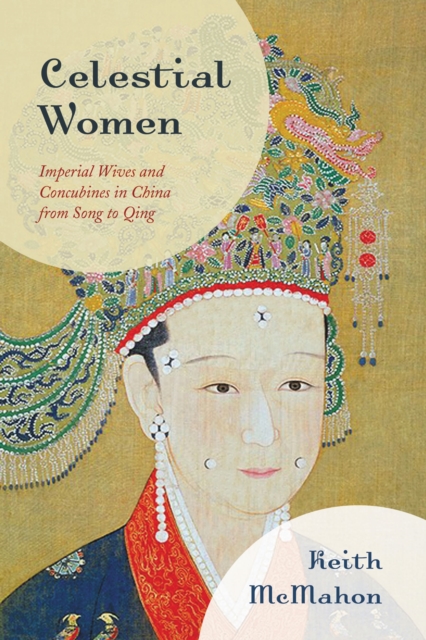
Celestial Women
This volume completes Keith McMahon's acclaimed history of imperial wives and royal polygamy in China. Avoiding the stereotype of the emperor's plural wives as mere victims or playthings, the book considers empresses and concubines as full-fledged participants in palace life, whether as mothers, wives, or go-betweens in the emperor's relations with others in the palace. Although restrictions on women's participation in politics increased dramatically after Empress Wu in the Tang, the author follows the strong and active women, of both high and low rank, who continued to appear. They counseled emperors, ghostwrote for them, oversaw succession when they died, and dominated them when they were weak. They influenced the emperor's relationships with other women and enhanced their aura and that of the royal house with their acts of artistic and religious patronage. Dynastic history ended in China when the prohibition that women should not rule was defied for the final time by Dowager Cixi, the last great monarch before China's transformation into a republic.
eBook

An imperial concubine's tale
Japan in the early seventeenth century was a wild place. Serial killers stalked the streets of Kyoto at night, while noblemen and women mingled freely at the imperial palace, drinking saké and watching kabuki dancing in the presence of the emperor's principal consort. Among these noblewomen was an imperial concubine named Nakanoin Nakako, who in 1609 became embroiled in a sex scandal involving both courtiers and young women in the emperor's service. As punishment, Nakako was banished to an island in the Pacific Ocean, but she never reached her destination. Instead, she was shipwrecked and spent fourteen years in a remote village on the Izu Peninsula before she was finally allowed to return to Kyoto. In 1641, Nakako began a new adventure: she entered a convent and became a Buddhist nun. Recounting the remarkable story of this resilient woman and her war-torn world, G. G. Rowley investigates aristocratic family archives, village storehouses, and the records of imperial convents. She follows the banished concubine as she endures rural exile, receives an unexpected reprieve, and rediscovers herself as the abbess of a nunnery. While unraveling Nakako's unusual tale, Rowley also reveals the little-known lives of samurai women who sacrificed themselves on the fringes of the great battles that brought an end to more than a century of civil war. Written with keen insight and genuine affection, An Imperial Concubine's Tale tells the true story of a woman's extraordinary life in seventeenth-century Japan.
eBook