
Catalogue Search | MBRL


Are you sure you want to remove the book from the shelf?

{{itemTitle}}
10
result(s) for
"Conduct of life in literature History To 1500."
Sort by:

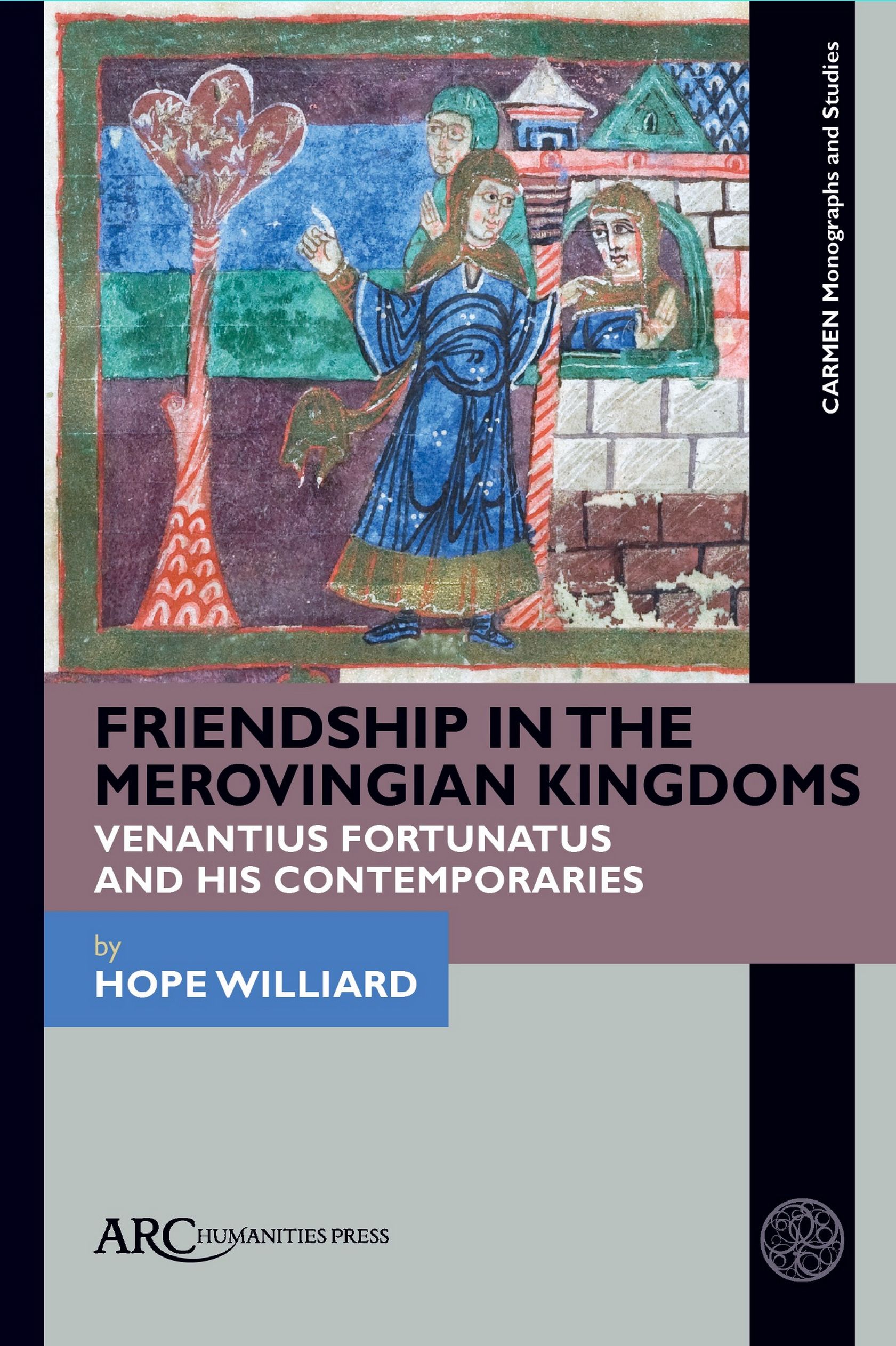
Friendship in the Merovingian Kingdoms
This book explores how one early medieval poet survived and thrived amidst the political turbulence of sixth century Gaul—with a little help from his friends. Born in northern Italy, Venantius Fortunatus made his career writing for and about members of the Merovingian elite. Although he is no longer dismissed as an opportunistic poetaster who wrote undistinguished flattery for undeserving kings and aristocrats, his work remains unduly neglected. This book reframes Fortunatus as a writer uniquely suited to his times, a professional poet who addressed his contemporaries’ needs and wishes for the prestige and sophistication of Classical culture. His poems and letters enabled his aristocratic patrons to situate themselves in networks, which they made and maintained in order to navigate a post-imperial but not post-Roman world. It makes an important contribution to our understanding of friendship in the Middle Ages and offers a fresh look at the Frankish kingdoms of Merovingian Gaul.
eBook

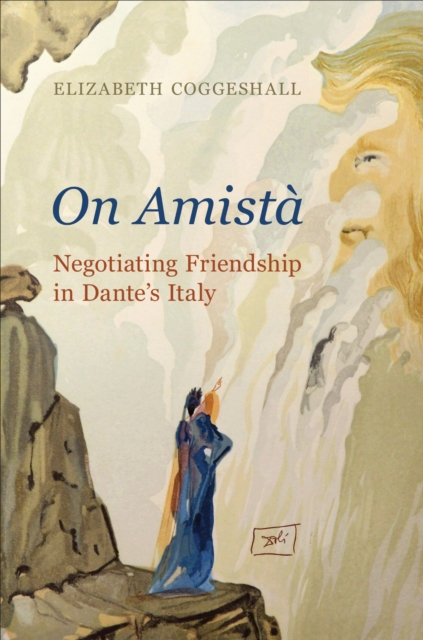
on Amistà
Although we often think of friendship today as an indisputable value of human social life, for thinkers and writers across late medieval Christian society friendship raised a number of social and ethical dilemmas that needed to be carefully negotiated. On Amist� analyses these dilemmas and looks at how Dante's strategic articulations of friendship evolved across the phases of his literary career as he manoeuvred between different social groups and settings.Elizabeth Coggeshall reveals that friendship was not an unequivocal moral good for the writers of late medieval Italy. Instead, it was an ambiguous term to be deployed strategically, describing a wide range of social relationships such as allies, collaborators, servants, patrons, rivals, and enemies. Drawing on the use of the language of friendship in the letters, correspondence poems, dedications, narratives, and treatises composed by Dante and his interlocutors, Coggeshall examines the way they skillfully negotiated around the dilemmas that friendship raised in the spheres of medieval Italian literary society. The book addresses instances of inclusivity and exclusivity, collaboration and self-interest, hierarchy and equality, and alterity and identity. Employing literary, historical, and sociological analysis, On Amist� presents a genealogy for the innovative and tactical use of the terms of friendship among the works of late medieval Italian authors.
eBook

Citizen and Self in Ancient Greece
This 2006 study examines how the ancient Greeks decided questions of justice as a key to understanding the intersection of our moral and political lives. Combining contemporary political philosophy with historical, literary and philosophical texts, it examines a series of remarkable individuals who performed 'scripts' of justice in early Iron Age, archaic and classical Greece. From the earlier periods, these include Homer's Achilles and Odysseus as heroic individuals who are also prototypical citizens, and Solon the lawgiver, writing the scripts of statute law and the jury trial. In democratic Athens, the focus turns to dialogues between a citizen's moral autonomy and political obligation in Aeschyleon tragedy, Pericles' citizenship paradigm, Antiphon's sophistic thought and forensic oratory, the political leadership of Alcibiades and Socrates' moral individualism.
eBook
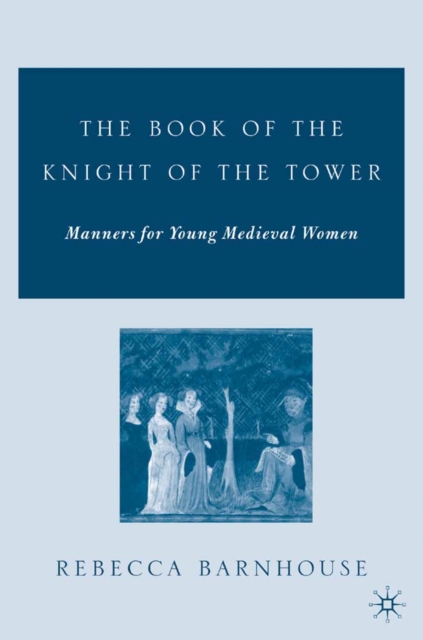
The book of the knight of the tower : manners for young medieval women
This book explores knightly stories of medieval manners and is a commentary on what people in the middle ages wore, how they prayed and what they hoped for in this life and the next. These stories range from the shockingly bawdy to the deeply pious, and often end with morals about the ways women can avoid 'blame, shame, and defame'.
eBook

Medieval Conduct Literature
Conduct literature is a term used to identify writings that address how one should 'conduct' oneself in social situations. In the medieval period conduct literature was essential reading for nearly all literate children and adolescents to educate them in the expected social behaviours for their culture, gender, and status. Using a comparative approach, this anthology pairs together pieces of male-directed and female-directed medieval conduct literature, many being translated into English for the first time, to present an illuminating picture of medieval gender norms, parenting, literary style, and pedagogy.
Containing texts written in six vernacular languages, each section is also accompanied by textual notes, an introduction, and an English translation. A fascinating examination of a diverse range of regions and cultures, Medieval Conduct Literature is a remarkable window into medieval life, customs, behaviour, and social expectations.
eBook
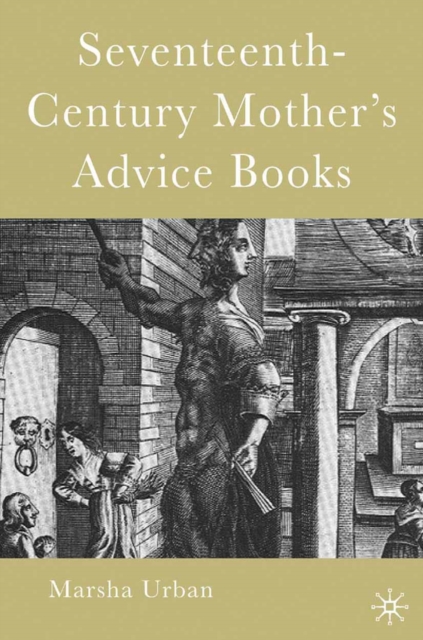
Seventeenth-century mother's advice books
Advice books published by women were a popular genre in Seventeenth and early Eighteenth-century England and they were moral manuals with strong religious overtones. Here, Urban highlights a notable exception: Age Rectified, which counsels women to acquire a 'disposition of mind' in old age which allows them to be accepted by younger generations.
eBook

The Romantic Crowd
In the long eighteenth century, sympathy was understood not just as an emotional bond, but also as a physiological force, through which disruption in one part of the body produces instantaneous disruption in another. Building on this theory, Romantic writers explored sympathy as a disruptive social phenomenon, which functioned to spread disorder between individuals and even across nations like a 'contagion'. It thus accounted for the instinctive behaviour of people swept up in a crowd. During this era sympathy assumed a controversial political significance, as it came to be associated with both riotous political protest and the diffusion of information through the press. Mary Fairclough reads Edmund Burke, Mary Wollstonecraft, William Godwin, John Thelwall, William Hazlitt and Thomas De Quincey alongside contemporary political, medical and philosophical discourse. Many of their central questions about crowd behaviour still remain to be answered by the modern discourse of collective psychology.
eBook
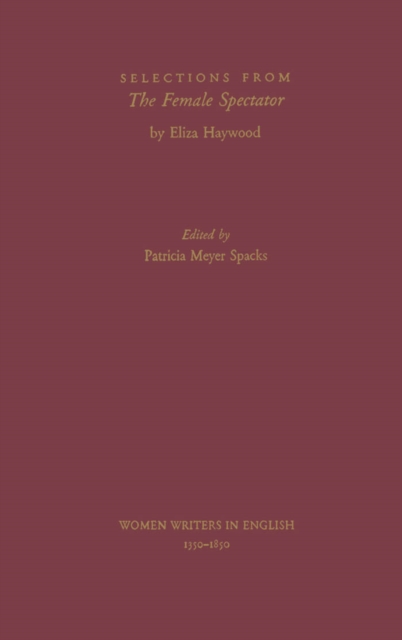
Selections from The female spectator
After Aphra Behn, Eliza Haywood was the most important English female novelist of the early eighteenth century. She also edited several serial newspapers, the most important of which, the Female Spectator, was the first modern periodical written by a woman and addressed to a female audience. This fully annotated collection of articles selected from the Female Spectator includes romantic and satiric fiction, moral essays, and social commentary, covering the broad range of concerns shared by eighteenth-century middle-class women. Perhaps most compelling to a twentieth-century audience is the evidence of what we might be tempted to call feminist awareness. By no means revolutionary in her attitudes, Haywood nonetheless perceives the inequities of her periods social conditions for women. She offers pragmatic advice, such as how to avoid disastrous marriages, how to deal with wandering husbands, and what kind of education women should seek. The essays also report on a broad range of social actualities, from the craze for tea drinking and the dangers of gossip to the problem of compulsive gambling. They allude to such larger matters as politics, war, and diplomacy, and promote the importance of science and the urgency of developing informed relations with nature.
eBook