
Catalogue Search | MBRL


Are you sure you want to remove the book from the shelf?

{{itemTitle}}
18,421
result(s) for
"Confucius."
Sort by:

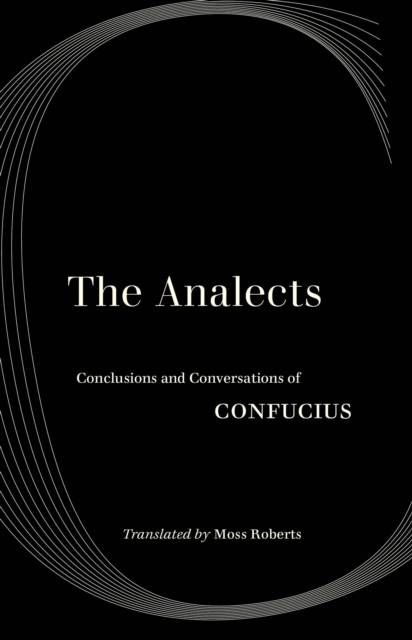
The Analects
For anyone interested in China-its past, its present, and its
future-the Analects (Lunyu) is a must-read. This new
translation by renowned East Asian scholar Moss Roberts will offer
a fresh interpretation of this classic work, sharpening and
clarifying its positions on ethics, politics, and social
organization. While no new edition of the Analects will
wholly transform our understanding of Confucius's teachings,
Roberts's translation attends to the many nuances in the text that
are often overlooked, allowing readers a richer understanding of
Confucius' historic and heroic attempt to restore order and
morality to government. This edition of the Analects
features a critical introduction by the translator as well as notes
on key terms and historical figures, a topical index, and
suggestions for further reading in recent English and Chinese
scholarship to extend the rich contextual background for his
translation. This ambitious new edition of the Analects
will enhance the understanding of specialists and newcomers to
Confucius alike.
eBook

The Influence of Qiu Jun on Jesuit Missionaries and Chinese Christian Texts in Ming–Qing China
This study explores the previously overlooked influence of Qiu Jun, a renowned mid-Ming dynasty scholar, on Jesuit missionaries and Chinese Catholic believers. Although Qiu’s impact on Confucian scholars of the mid-to-late Ming period is well established, his role in shaping formalized Chinese ritual systems and Chinese Catholicism has received little attention. A closer examination of Jesuit missionaries’ translation of Confucian classics and Chinese Catholic texts from the late Ming and early Qing periods reveals that Qiu’s works were frequently cited, particularly in relation to the abolition of divine titles, the worship of Confucius, and the establishment of the City-god system. Qiu’s responses to these issues, informed by Emperor Zhu Yuanzhang’s efforts to centralize power and establish authority in both secular and religious spheres, served as key references for mid-Ming reforms. Moreover, Jesuit fathers and Chinese Catholic adherents drew on Qiu’s perspectives in their writings to address various issues during the Chinese Rites Controversy. This research uncovers the profound impact of Qiu Jun’s ideas on the cultural exchange between China and the West in the 17th–18th centuries.
Journal Article


Partnerships Terminated: An Investigation into German University Choices vis-à-vis Confucius Institutes Between Exit, Voice, Loyalty, and Neglect
After an initial “hype” in the years since their inception in 2004 to the early-to-mid-2010s, Confucius Institutes (CIs) are now facing increasing scrutiny for potential undue interference. Consequently, some universities have terminated their CI partnerships. This study identifies the triggers that have led to universities in Germany reconsidering their relationships with CIs and examines two causes behind decisions to terminate such relationships: undue interference and strategic considerations. We focus on five German universities that ended or amended their CI relationships. Based on thirteen interviews, primary data, and secondary sources, we find that terminations were driven more by strategic concerns about the CI's value than direct experiences of undue interference. When a university's termination decision was informed by concerns about undue interference, this most often constituted a precaution in light of a subjectively anticipated undue interference risk, rather than a reaction to an actual, lived experience of undue interference. Decisions were most often triggered by bureaucratic procedures.
Journal Article


The Philosophical Thought of Confucius and Mencius, and the Concept of the Community of a Shared Future for Mankind
The Community of a Shared Future for Mankind seeks to mitigate the world’s current challenges, and to create a more sustainable future through better global governance. Some of the philosophical arguments of the Community of a Shared Future for Mankind, and its foundations, which this article traces, are grounded in the philosophical teachings of Confucius and Mencius. The five pillars of Confucianism are benevolence (Ren), righteousness (Yi), propriety (Li), wisdom (Zhi) and fidelity (Xin). The five pillars have their equivalents in the philosophy of the Community of a Shared Future for Mankind: benevolence has its equivalents in multilateral and bilateral agreements; righteousness shows justice; propriety’s equivalents are international standards and regulations; wisdom is the problem-solving dialogues; and trustworthiness is equated to international organizations that safeguard global integrity. The Confucian principle of harmony is congruent with the objective of the Community of a Shared Future for Mankind, of creating a world of harmony, peace and cooperation. The Golden Rule has been observed in the Community of a Shared Future for Mankind, through its insistence on reciprocal bilateral and multilateral cooperation. Mencius’ philosophical contribution to the Community of a Shared Future for Mankind is in his theory of human nature, where humaneness is seen as developmental—as would be the community built by the Community of a Shared Future for Mankind. Mencius’ principle of governance is congruent with the Community of a Shared Future for Mankind’s insistence on responsible governance. These congruences and similarities, between the Community of a Shared Future for Mankind and the philosophies of Confucius and Mencius, point to the foundations for the Community of a Shared Future for Mankind.
Journal Article