
Catalogue Search | MBRL


Are you sure you want to remove the book from the shelf?

{{itemTitle}}
28
result(s) for
"Conquest, G"
Sort by:

Geoffroy of Villehardouin, Marshal of Champagne
Geoffroy of Villehardouin, Marshal of
Champagne by Theodore Evergates traces the
remarkable life of Geoffroy of Villehardouin (c. 1148-c. 1217) from
his earliest years in Champagne through his last years in Greece
after the crusade.
The fourth son of a knight, Geoffroy became marshal of
Champagne, principal negotiator in organizing the Fourth Crusade,
chief of staff of the expedition to and conquest of Constantinople,
garrison commander of Constantinople and, in his late fifties,
field commander defending the Latin settlement in the Byzantine
empire against invading Bulgarian armies and revolting Greek
cities. Known for his diplomatic skills and rectitude, he served as
the chief military advisor to Count Thibaut III of Champagne and
later to Emperor Henry of Constantinople.
Geoffroy is remarkable as well for dictating the earliest war
memoir in medieval Europe, which is also the earliest prose
narrative in Old French. Addressed to a home audience in Champagne,
he described what he did, what he saw, and what he heard during his
eight years on crusade and especially during the fraught period
after the conquest of Constantinople. His memoir, The Book of
the Conquest of Constantinople , furnishes a commander's
retrospective account of the main events and inner workings of the
crusade-the innumerable meetings and speeches, the conduct (not
always commendable) of the barons, and the persistent discontent
within the army-as well as a celebration of his own deeds as a
diplomat and a military commander.
eBook

Alle Thyng Hath Tyme
Alle Thyng Hath Tyme recreates medieval people's experience of time: as continuous and discontinuous, linear and cyclical, embracing Creation and Judgement, shrinking to 'atoms' or 'droplets' and extending to the silent spaces of eternity. They might measure time by natural phenomena such as sunrise and sunset, the motion of the stars or the progress of the seasons, even as the late medieval invention of the mechanical clock was making time-reckoning more precise. Negotiating these mixed and competing systems, medieval people gained a nuanced and expansive sense of time that rewards attention today.
eBook

Heroes of empire
During the decades of empire (1870–1914), legendary heroes and their astonishing deeds of conquest gave imperialism a recognizable human face. Henry Morton Stanley, Pierre Savorgnan de Brazza, Charles Gordon, Jean-Baptiste Marchand, and Hubert Lyautey all braved almost unimaginable dangers among “savage” people for their nation’s greater good. This vastly readable book, the first comparative history of colonial heroes in Britain and France, shows via unforgettable portraits the shift from public veneration of the peaceful conqueror to unbridled passion for the vanquishing hero. Edward Berenson argues that these five men transformed the imperial steeplechase of those years into a powerful “heroic moment.” He breaks new ground by linking the era’s “new imperialism” to its “new journalism”—the penny press—which furnished the public with larger-than-life figures who then embodied each nation’s imperial hopes and anxieties.
eBook

Recurrent Genocidal Nightmares
Genocide has been called the ‘crime of crimes’ and an ‘odious scourge.’ With millions of victims in the last century alone, it is one of the great moral and political challenges of our age. Despite the challenges, such human cruelty has not stopped. The 21st century is recording its first genocide in Cameroon with only a scanty few raising a finger. The significance of the ‘odious scourge’ has compelled Tatah Mentan to research on the trajectory of the ‘scourge’ in Africa over the past centuries. The targeted ongoing mass killings in Cameroon, like those of Rwanda before, have driven the scholar to expand his focus beyond the Holocaust, which had long been the primary case study. In this book, Tatah Mentan explains that these cases were not merely a human catastrophe, nor an atavistic reversion to the barbarism of a past epoch, but rather an event produced by the unfolding of the logic of capitalism itself. This book therefore critically explores the essence of capitalism as genocide in Africa and its consequences on Africans during their colonisation and incorporation into the European-dominated racialised capitalist world system in the late 18th century. It uses multidimensional, comparative methods, and critical approaches to explain the dynamic interplay among social structures, human agency, and terror to explain the connection between structural capitalist terrorism and the emergence of the capitalist world system. Tatah Mentan proposes a genuine participatory democratic alternative to the unending genocide nightmares. Nurturing participatory attitudes, would facilitate and reinforce self-management, and educate and empower individuals and dispossessed and under-represented communities to seek self-determination and democratic participation in the political arena. Tatah Mentan concludes that the same fundamental commitments that urge humanity to promote participatory political democracy should compel them to promote truly inclusive economic democracy as well. Political economists, historians, students, corporate managers and policy makers at national and international levels are invited to share the insights of this book.
eBook
Narratives of Voyages towards the North-West, in Search of a Passage to Cathay and India, 1496 to 1631
This work contains accounts of the voyages of Cabot, Davis, Frobisher, and others, drawn chiefly from the works of Hakluyt, Purchas, Harris and Foxe. The supplementary material includes the 1848 annual report. This is a new print-on-demand hardback edition of the volume first published in 1849.
eBook
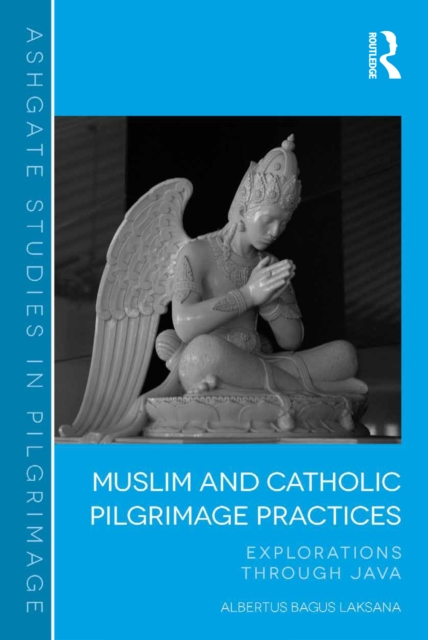
Muslim and Catholic Pilgrimage Practices
Exploring the distinctive nature and role of local pilgrimage traditions among Muslims and Catholics, Muslim and Catholic Pilgrimage Practices draws particularly on south central Java, Indonesia. In this area, the hybrid local Muslim pilgrimage culture is shaped by traditional Islam, the Javano-Islamic sultanates, and the Javanese culture with its strong Hindu-Buddhist heritage. This region is also home to a vibrant Catholic community whose identity formation has occurred in a way that involves complex engagements with Islam as well as Javanese culture. In this respect, local pilgrimage tradition presents itself as a rich milieu in which these complex engagements have been taking place between Islam, Catholicism, and Javanese culture.
Employing a comparative theological and phenomenological analysis, this book reveals the deeper religio-cultural and theological import of pilgrimage practice in the identity formation and interaction among Muslims and Catholics in south central Java. In a wider context, it also sheds light on the larger dynamics of the complex encounter between Islam, Christianity and local cultures.
eBook

Histories of Infamy
\"Roa-de-la-Carrera convincingly shows that Gómara, as well as other historians in the period, cannot easily ignore nor erase the contradictions of the Spanish colonial project.\"-Luis Fernando Restrepo, University of Arkansas
\"In an eloquent and thorough exegesis, Roa-de-la-Carrera reveals how and why López de Gómara, having written the best of all possible books in exultation of Spanish imperialism, nevertheless failed to convince the readers of his time.\"-Susan Schroeder, Tulane University
InHistories of Infamy, Cristián Roa-de-la-Carrera explores Francisco López de Gómara's (1511-ca.1559) attempt to ethically reconcile Spain's civilizing mission with the conquistadors' abuse and exploitation of Native peoples.
The most widely read account of the conquest in its time, Gómara'sHistoria general de las Indias y Conquista de Méxicorationalized the conquistadors' crimes as unavoidable evils in the task of bringing \"civilization\" to the New World. Through an elaborate defense of Spanish imperialism, Gómara aimed to convince his readers of the merits of the conquest, regardless of the devastation it had wrought upon Spain's new subjects. Despite his efforts, Gómara's apologist text quickly fell into disrepute and became ammunition for Spain's critics. Evaluating the effectiveness of ideologies of colonization, Roa-de-la-Carrera's analysis will appeal to scholars in colonial studies and readers interested in the history of the Americas.
eBook
The Captivity of Hans Stade of Hesse, in A.D. 1547-1555, among the Wild Tribes of Eastern Brazil
Translated from the 1557 Marburg edition of the author's Warhafftige Historia und Beschreiburg ejner Landtschallte der wilden, nacketen, grimmigen Menschfresser Leuthen in der Newnwelt America gelegen. This is a new print-on-demand hardback edition of the volume first published in 1874.
eBook
Henry Hudson the Navigator
'Collected, partly Translated, and Annotated, with an Introduction'. The supplementary material includes the 1860 annual report. This is a new print-on-demand hardback edition of the volume first published in 1860.
eBook