
Catalogue Search | MBRL


Are you sure you want to remove the book from the shelf?

{{itemTitle}}
266
result(s) for
"Conscience Religious aspects."
Sort by:


Bold Conscience
How the conscience in early modern England emerged as a fulcrum for public action
Bold Conscience chronicles the shifting conception of conscience in early modern England, as it evolved from a faculty of restraint—what Shakespeare labels “coward conscience”—to one of bold and forthright self-assertion. The concept of conscience played an important role in post-Reformation England, from clerical leaders to laymen, not least because of its central place in determining loyalties during the English Civil War and the regicide of King Charles I. Yet the most complex and lasting perspectives on conscience emerged from deliberately literary voices—William Shakespeare, John Donne, and John Milton.
Joshua Held argues that literary texts by these authors transform the idea of conscience as a private, shameful state to one of boldness fit for navigating both royal power and common dissent in the public realm. Held tracks the increasing political power of conscience from Shakespeare’s Hamlet and Henry VIII to Donne’s court sermons and Milton’s Areopagitica , showing finally that in Paradise Lost , Milton roots boldness in the inner paradise of a pure, common conscience.
Applying a fine-grain analysis to literary England from about 1601 to 1667, this study also looks back to the 1520s, to Luther’s theological foundations of the concept, and forward to 1689, to Locke’s transformation of the idea alongside the term “consciousness.” Ultimately, Held’s study shows how conscience emerges at once as a bulwark against absolute sovereignty and as a stronghold of personal certainty.
eBook

Conscience and Its Critics
Conscience and Its Critics is an eloquent and passionate examination of the opposition between Protestant conscience and Enlightenment reason in the seventeenth and eighteenth centuries. Seeking to illuminate what the United Nations Declaration of Rights means in its assertion that reason and conscience are the definitive qualities of human beings, Edward Andrew attempts to give determinate shape to the protean notion of conscience through historical analysis.
The argument turns on the liberal Enlightenment's attempt to deconstruct conscience as an innate practical principle. The ontological basis for individualism in the seventeenth century, conscience was replaced in the eighteenth century by public opinion and conformity to social expectations. Focusing on the English tradition of political thought and moral psychology and drawing on a wide range of writers, Andrew reveals a strongly conservative dimension to the Enlightenment in opposing the egalitarian and antinomian strain in Protestant conscience. He then traces the unresolved relationship between reason and conscience through to the modern conception of the liberty of conscience, and shows how conscience served to contest social inequality and the natural laws of capitalist accumulation.
eBook

The Geography of Conscience
Bodian presents a study which analyzes the remarkable evidence offered by a trial record from the 1640s of a Portuguese-Jewish prisoner of the Lisbon Inquisition who argued for his release on the grounds of freedom of conscience. The arguments of this prisoner reveal a very early effort to integrate a European discourse of freedom of conscience into a traditional Jewish outlook. The prisoner's voice is that of a young man who might well be described as an \"Atlantic Jew\"--a son of Portuguese-born parents who in his short life lived in, and assimilated much from, the diverse environments of southwest France, Amsterdam, and Dutch Brazil before being captured in Portuguese Brazil and delivered for trial to Lisbon. She also briefly sketches why, up to the seventeenth century, the concept of conscience was of so little interest to Jews and why the Jewish prisoner in question was ideally poised to articulate a fresh (though distinctly northern European) iteration of it.
Journal Article
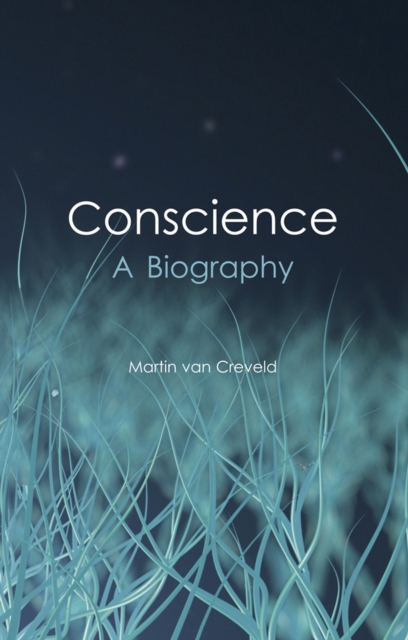
Conscience
Many of us consider conscience one of the most important if not the fundamental quality that makes us human, distinguishing us from animals, on the one hand, and machines on the other. But what is conscience, exactly? Is it a product of our biological roots, as Darwin thought, or is it a purely social invention? If the latter, how did it come into the world? In this biography of that most elusive human element, Martin van Creveld explores conscience throughout history, ranging across numerous subjects, from human rights to health to the environment. Along the way he considers the evolution of conscience in its myriad, occasionally strange and ever-surprising permutations. The Old Testament erroneously, it turns out is normally seen as the fountainhead from which the Western idea of conscience has sprung, while Antigone was the first person on record to explicitly speak of conscience. The story of conscience involves the philosophers Zeno, Cicero and Seneca; Christian thinkers such as Paul, Augustine, Aquinas and, above all, Martin Luther; and modern intellectual giants such as Machiavelli, Rousseau, Kant, Hegel, Nietzsche and Freud. Individual chapters are devoted to Japan, China and even the Nazis, as well as the most recent discoveries in robotics and neuroscience and how they have contributed to the ways we think about our own morality. Ultimately, van Creveld shows that conscience remains as elusive as ever, a continuously mysterious voice that guides how we think about right and wrong.
eBook


Talmud, conscience et parole
Existe-t-il une identité de pensée, de méthode entre la technique psychanalytique et le raisonnement talmudique ? Notre hypothèse de la particularité de la pensée juive provient de l'étude du talmud et de la difficulté à suivre le fil des idées sans s'égarer dans le labyrinthe des digressions et des circonvolutions du raisonnement et des concepts. L'approche du champ freudien nous a, d'autre part, enseigné que le travail de la cure sur le fil de la parole et avec l'inconscient, suit un trajet similaire qui mène le sujet vers la reconnaissance de la loi symbolique. Des textes provenant de l'étude journalière du talmud ont été sélectionnés et complétés par les chapitres sur les rêves et les voeux. Les chapitres consacrés à la mystique et au judaïsme littéraire (midrash et aggada), à la sexualité, à Freud et son rapport au judaïsme, complètent cette étude et éclaireront les sources judaïques de l'éthique de la parole, comme de la relation à autrui.
eBook