
Catalogue Search | MBRL


Are you sure you want to remove the book from the shelf?

{{itemTitle}}
120
result(s) for
"Conservation des ressources marines."
Sort by:

Kings of their own ocean : tuna, obsession, and the future of our seas
\"In 2004, an enigmatic charter captain named Al Anderson caught and tagged one Atlantic bluefin tuna off New England's coast. Fourteen years later that same fish -- dubbed Amelia for her ocean-spanning journeys -- was caught again, this time in a Mediterranean fish trap. Over his fishing career, Al marked more than sixty thousand fish with plastic tags, an obsession that made him nearly as many enemies as it did friends. His quest landed him in the crossfire of an ongoing fight between a booming bluefin tuna industry and desperate conservation efforts, a conflict that is once again heating up as overfishing and climate change threaten the fish's fate. Kings of Their Own Ocean is an urgent investigation that combines science, business, crime, and environmental justice. Through Karen Pinchin's exclusive interviews and access, interdisciplinary approach, and mesmerizing storytelling, readers join her on boats and docks as she visits tuna hot spots and scientists from Portugal to Japan, New Jersey to Nova Scotia, and glimpse, as Pinchin does, rays of dazzling hope for the future of our oceans.\" -- Page 2 of cover.
Book

Protecting the Polar Marine Environment
How can we best protect the polar marine environment against pollution? Leading scholars on environmental law, the law of the sea, and Arctic and Antarctic affairs here examine this important question. To what extent do existing global instruments of environmental protection apply to the Arctic Ocean and the Southern Ocean? Can the arrangements adopted at regional, sub-regional and national levels provide adequate protection? This book examines and compares various levels of regulation in protecting the marine environment of the Arctic and Antarctic, with specific attention to land-based activities, radioactive waste dumping, and shipping in ice-covered waters. Developments since the establishment of the Arctic Council in 1996 and the entry into force of the Protocol on Environmental Protection to the Antarctic Treaty in 1998 are also discussed. This is a volume that will appeal to polar specialists and to all those interested in environmental law and policy.
eBook
Fishing for Fairness
Fishing for Fairness develops an explicitly cultural perspective on environmental politics in the Philippines by analysing the responses of fishers to marine resource regulations. In the resource frontier of the Calamianes Islands, fishing, conservation and tourism provide the context where competing visions of how to engage with marine resources are played out. The book draws on data from ethnographic fieldwork with fishers, government and NGO officials, fish traders and tourism operators to show how the strategic responses of fishers to management initiatives are couched within particular cultural idioms. Tapping into broader notions of morality in the Philippines, fishers express a discourse that emphasises their poverty and the obligations of the wealthy to treat them with fairness. By deploying this discourse, fishers are able to reframe what are—on the surface—questions of environmental management into issues about poverty within particular social relationships. By using a cultural political ecology framework to analyse fishers' responses to regulation, the book emphasises the distinctive ways in which marginalised people in the Philippines resist and reframe resource management initiatives. Fishing for Fairness will appeal to both academics and policy makers interested in marine resource management, political ecology, anthropology and development studies particularly throughout the Asia-Pacific.
eBook
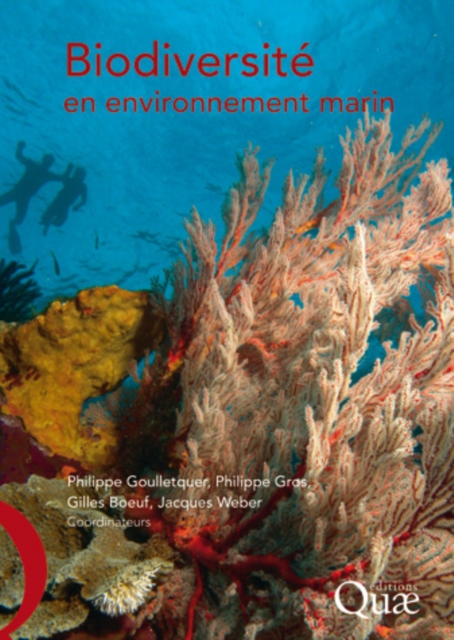
Biodiversité en environnement marin
Préserver la biodiversité marine, dégradée par de multiples pressions d'origine anthropique, nécessite de mieux la connaître dans toutes ses dimensions, du gène à l'écosystème. Sa préservation est désormais une priorité mondiale inscrite dans plusieurs conventions internationales et un objectif affirmé des politiques européennes et des stratégies nationales. Ce livre est également disponible en anglais sous le titre Biodiversity in the Marine Environment auprès des éditions Springer - www.springer.com.
eBook
The Blue Revolution
\"Overfishing. For the world's oceans, it's long been a worrisome problem with few answers. Many of the global fish stocks are at a dangerous tipping point, some spiraling toward extinction. But as older fishing fleets retire and new technologies develop, a better, more sustainable way to farm this popular protein has emerged to profoundly shift the balance. The Blue Revolution tells the story of the recent transformation of commercial fishing: an encouraging change from maximizing volume through unrestrained wild hunting to maximizing value through controlled harvesting and farming. Entrepreneurs applying newer, smarter technologies are modernizing fisheries in unprecedented ways. In many parts of the world, the seafood on our plates is increasingly the product of smart decisions about ecosystems, waste, efficiency, transparency, and quality.\"
eBook
North Atlantic. Episode 1, The dark ocean
This ambitious natural history program brings the iconic creatures and marine life of the North Atlantic into spectacular focus. Inspired by the Irish ancestors that ventured before him, underwater cameraman Ken O'Sullivan explores the dark depths of the North Atlantic – and immerses the viewer in the mesmerizing world of marine life exploration. He addresses the urgent struggle to conserve the stunning sea life he encounters and pays homage to the ancient spirit of exploration.
Streaming Video
North Atlantic. Episode 2, Searching for monsters
This ambitious natural history program brings the iconic creatures and marine life of the North Atlantic into spectacular focus. Inspired by the Irish ancestors that ventured before him, underwater cameraman Ken O'Sullivan explores the dark depths of the North Atlantic – and immerses the viewer in the mesmerizing world of marine life exploration. He addresses the urgent struggle to conserve the stunning sea life he encounters and pays homage to the ancient spirit of exploration.
Streaming Video

Marine historical ecology in conservation
This pioneering volume provides a blueprint for managing the challenges of ocean conservation using marine historical ecology-an interdisciplinary area of study that is helping society to gain a more in-depth understanding of past human-environmental interactions in coastal and marine ecosystems and of the ecological and social outcomes associated with these interactions.Developed by groundbreaking practitioners in the field,Marine Historical Ecology
in Conservationhighlights the innovative ways that historical ecology can be applied to improve conservation and management efforts in the oceans.The book focuses on four key challenges that confront marine conservation: (1) recovering endangered species, (2) conserving fisheries, (3) restoring ecosystems, and (4) engaging the public. Chapters emphasize real-world conservation scenarios appropriate for students, faculty, researchers, and practitioners in marine science, conservation biology, natural resource management, paleoecology, and marine and coastal archaeology.By focusing on success stories and applied solutions, this volume delivers the required up-to-date science and tools needed for restoration and protection of ocean and coastal ecosystems.
eBook
The Marine Environment and United Nations Sustainable Development Goal 14
In The Marine Environment and United Nations Sustainable Development Goal 14, leading marine experts assess the scope, achievements, and limitations of UN SDG 14 for the conservation and sustainable use of marine resources.
eBook
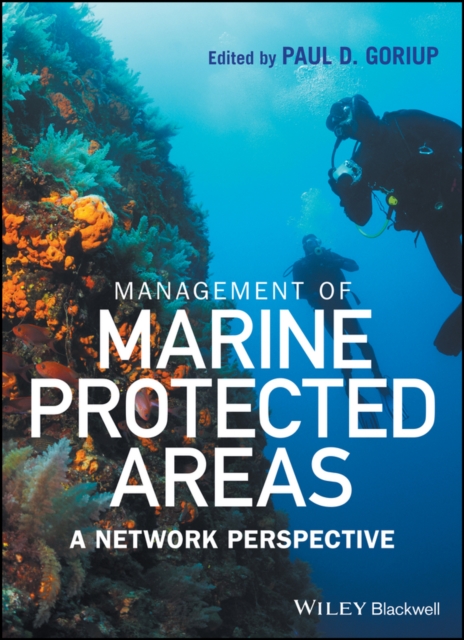
Management of marine protected areas
With the health of the world’s oceans threatened as never before, it is becoming increasingly apparent that Marine Protected Areas (MPAs) play a vitally important role in protecting marine and coastal habitats. Management of Marine Protected Areas: A Network Perspective draws on the results of a major EU-sponsored research project related to the establishment of networks of MPAs in the Mediterranean and Black Seas that transpired from February 2011 to January 2016. Featuring contributions by leading university- and national research institute-based scientists, chapters utilize the latest research data and developments in marine conservation policy to explore issues related to ways in which networks of MPAs may amplify the effectiveness and conservation benefits of individual areas within them. Topics addressed include the broader socio-economic impacts of MPAs in the Mediterranean and Black Seas; the use of Marine Spatial Planning (MSP) to resolve conflicts between marine resource use and protection; special protection measures under the EU’s Marine Strategy Framework Directive (MSFD); ecological value assessments in the Black Sea; the Ecosystem Approach (EA) for managing marine ecosystems; MPAs along Turkey’s Black Sea coast; MPAs and offshore wind farms; and managing and monitoring MPA networks within and between the Black and Mediterranean Seas. Timely and important, Management of Marine Protected Areas: A Network Perspective offers invaluable insights into the role of MPAs in preserving the welfare and long-term viability of our world’s oceans.
eBook