
Catalogue Search | MBRL


Are you sure you want to remove the book from the shelf?

{{itemTitle}}
455
result(s) for
"Consumer protection -- Law and legislation -- United States"
Sort by:


More Than You Wanted to Know
Perhaps no kind of regulation is more common or less useful than mandated disclosure-requiring one party to a transaction to give the other information. It is the iTunes terms you assent to, the doctor's consent form you sign, the pile of papers you get with your mortgage. Reading the terms, the form, and the papers is supposed to equip you to choose your purchase, your treatment, and your loan well.More Than You Wanted to Knowsurveys the evidence and finds that mandated disclosure rarely works. But how could it? Who reads these disclosures? Who understands them? Who uses them to make better choices?
Omri Ben-Shahar and Carl Schneider put the regulatory problem in human terms. Most people find disclosures complex, obscure, and dull. Most people make choices by stripping information away, not layering it on. Most people find they can safely ignore most disclosures and that they lack the literacy to analyze them anyway. And so many disclosures are mandated that nobody could heed them all. Nor can all this be changed by simpler forms in plainer English, since complex things cannot be made simple by better writing. Furthermore, disclosure is a lawmakers' panacea, so they keep issuing new mandates and expanding old ones, often instead of taking on the hard work of writing regulations with bite.
Timely and provocative,More Than You Wanted to Knowtakes on the form of regulation we encounter daily and asks why we must encounter it at all.
eBook


Regulatory Breakdown
With chapters written by some of the nation's foremost economists, political scientists, and legal scholars, Regulatory Breakdown brings clarity to the heated debate over regulation by dissecting the disparate causes of the current crisis as well as analyzing the most promising solutions to what ails the U.S. regulatory system.
eBook

Antitrust law in the new economy : Google, Yelp, LIBOR, and the control of information
\"Markets run on information. Buyers make decisions by relying on their knowledge of the products available, and sellers decide what to produce based on their understanding of what buyers want. But the distribution of market information has changed, as consumers increasingly turn to sources that act as intermediaries for information--companies like Yelp and Google. Antitrust Law in the New Economy considers a wide range of problems that arise around one aspect of information in the marketplace: its quality. Sellers now have the ability and motivation to distort the truth about their products when they make data available to intermediaries. And intermediaries, in turn, have their own incentives to skew the facts they provide to buyers, both to benefit advertisers and to gain advantages over their competition. Consumer protection law is poorly suited for these problems in the information economy. Antitrust law, designed to regulate powerful firms and prevent collusion among producers, is a better choice. But the current application of antitrust law pays little attention to information quality. Mark Patterson discusses a range of ways in which data can be manipulated for competitive advantage and exploitation of consumers (as happened in the LIBOR scandal), and he considers novel issues like \"confusopoly\" and sellers' use of consumers' personal information in direct selling. Antitrust law can and should be adapted for the information economy, Patterson argues, and he shows how courts can apply antitrust to address today's problems\"-- Provided by publisher.
Book

Lemon Law
Every state in the country has enacted consumer-protection legislation known as a lemon laws to assist new vehicle buyers with either recurring mechanical problems (commonly referred to as \"warranty nonconformities\") in spite of attempts by manufacturers and dealers to repair them, or situations where the defects have caused the vehicle to be out.
eBook
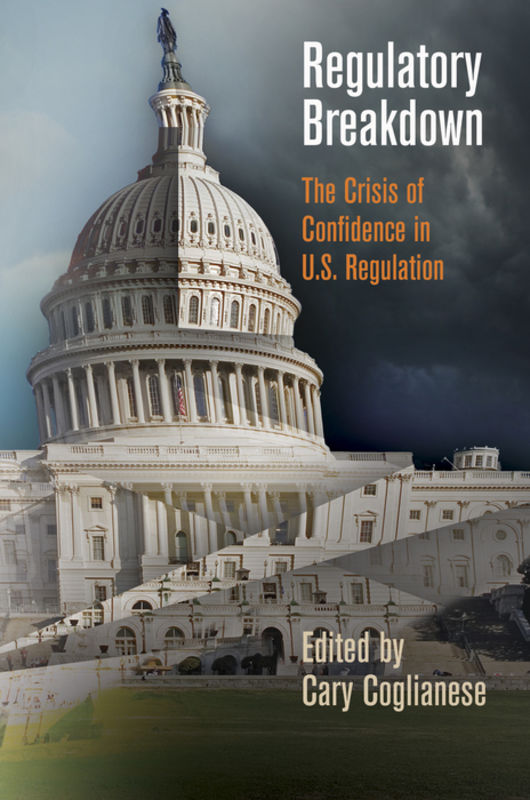
Regulatory breakdown : the crisis of confidence in U.S. regulation
Regulatory Breakdown: The Crisis of Confidence in U.S. Regulation brings fresh insight and analytic rigor to what has become one of the most contested domains of American domestic politics. Critics from the left blame lax regulation for the housing meltdown and financial crisis—not to mention major public health disasters ranging from the Gulf Coast oil spill to the Upper Big Branch Mine explosion. At the same time, critics on the right disparage an excessively strict and costly regulatory system for hampering economic recovery. With such polarized accounts of regulation and its performance, the nation needs now more than ever the kind of dispassionate, rigorous scholarship found in this book.With chapters written by some of the nation's foremost economists, political scientists, and legal scholars, Regulatory Breakdown brings clarity to the heated debate over regulation by dissecting the disparate causes of the current crisis as well as analyzing promising solutions to what ails the U.S. regulatory system. This volume shows policymakers, researchers, and the public why they need to question conventional wisdom about regulation—whether from the left or the right—and demonstrates the value of undertaking systematic analysis before adopting policy reforms in the wake of disaster.
eBook

When the Senate Worked for Us
Every politically sentient American knows that Congress has been dominated by special interests, and many people do not remember a time when Congress legislated in the public interest. In the 1960s and '70s, however, lobbyists were aggressive but were countered by progressive senators and representatives, as several books have documented. What has remained untold is the major behind-the-scenes contribution of entrepreneurial Congressional staff, who planted the seeds of public interest bills in their bosses' minds and maneuvered to counteract the influence of lobbyists to pass laws in consumer protection, public health, and other policy arenas crying out for effective government regulation. They infuriated Nixon's advisor, John Ehrlichman, who called them \"bumblebees,\" a name they wore as a badge of honor. For his insider account, Pertschuk draws on many interviews, as well as his fifteen years serving on the staff of the Senate Commerce Committee that Senator Warren Magnuson chaired and as the committee's Democratic Staff Director. That committee became, in Ralph Nader's words, \"the Grand Central Station for consumer protection advocates.\"
eBook
Consumer Law, Common Markets and Federalism in Europe and the United States
No detailed description available for \"Consumer Law, Common Markets and Federalism in Europe and the United States\".
eBook
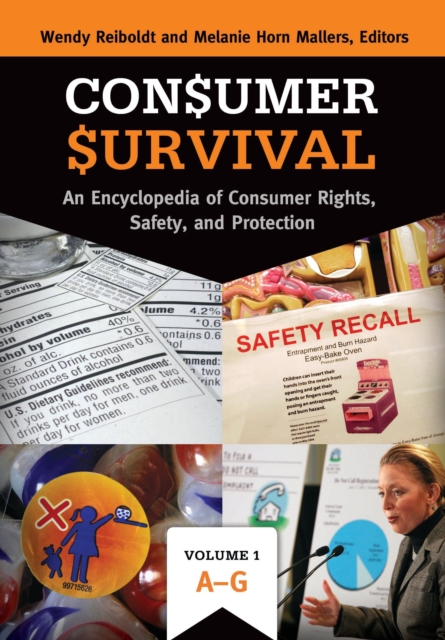
Consumer Survival: An Encyclopedia of Consumer Rights, Safety, and Protection
Designed to empower readers to advocate for themselves and others, this wide-ranging encyclopedia reveals a surprising range of resources and options that consumers have at their disposal.The only book of its kind, this two-volume, alphabetically arranged reference covers a broad array of topics related to consumer rights, including those of interest to often-overlooked populations such as older adults, veterans, and the homeless. Specific entries address critical areas including food and product safety, housing, health care, the financial industry, the automobile industry, and telecommunications. The encyclopedia reviews the historical development of the consumer movement, examines beliefs and values that drive the movement, and identifies agencies and laws intended to safeguard consumers.Expert contributors discuss key current issues as well as those likely to arise in the future. Vignettes and case studies are used throughout, and various, sometimes contrasting viewpoints are shared to help readers better understand the content. Related topics are easily discovered through a \"see also\" list, and additional readings are provided at the end of each entry.
eBook