
Catalogue Search | MBRL


Are you sure you want to remove the book from the shelf?

{{itemTitle}}
10,110
result(s) for
"Consumers China."
Sort by:


Consumer-Citizens of China
A PDF version of this book is available for free in open access via www.tandfebooks.com as well as the OAPEN Library platform, www.oapen.org. It has been made available under a Creative Commons Attribution-Non Commercial-No Derivatives 3.0 license and is part of the OAPEN-UK research project. This book presents a comprehensive examination of Chinese consumer behaviour and challenges the previously dichotomous interpretation of the consumption of Western and non-Western brands in China. The dominant position is that Chinese consumers are driven by a desire to imitate the lifestyles of Westerners and thereby advance their social standing locally. The alternative is that consumers reject Western brands as a symbolic gesture of loyalty to their nation-state. Drawing from survey responses and in depth interviews with Chinese consumers in both rural and urban areas, Kelly Tian and Lily Dong find that consumers situate Western brands within select historical moments. This embellishment attaches historical meanings to Western brands in ways that render them useful in asserting preferred visions of the future China. By highlighting how Western brands are used in contests for national identity, Consumer-Citizens of China challenges the notion of the \"patriot’s paradox\" and answers scholars’ questions as to whether Chinese nationalists today allow for a Sino-Western space where the Chinese can love China without hating the West. Consumer-Citizens of China will be of interest to students and scholars of business studies, Chinese and Asian Studies and Political Science. Kelly Tian is Professor of Marketing and holds the Anderson Chair of Business at New Mexico State University. Lily Dong is Associate Professor of Marketing at the University of Alaska at Fairbanks.
eBook

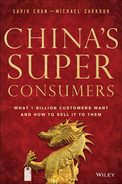
China's super consumers
Chinese Consumers are Changing The World – Understand Them and Sell To Them
China has transformed itself from a feudal economy in the 19 th century, to Mao and Communism in the 20 th century, to the largest consumer market in the world by the early 21 st century. China's Super Consumers explores the extraordinary birth of consumerism in China and explains who these super consumers are. China's Super Consumers offers an in-depth explanation of what's inside the minds of Chinese consumers and explores what they buy, where they buy, how they buy, and most importantly why they buy.
The book is filled with real-world stories of the foreign and domestic companies, leading brands, and top executives who have succeeded in selling to this burgeoning marketplace. This remarkable book also takes you inside the boardrooms of the people who understand Chinese consumers and have had success in the Chinese market.
* A hands-on resource for succeeding in the Chinese marketplace
* Filled with real-world stories of companies who have made an impact in China
* Discover what the Chinese consumer wants and how to deliver the goods
* Written by Savio Chan and Michael Zakkour, two leading experts on the Chinese market
This book is an invaluable resource for anyone who wants a clear understanding of how China's Super Consumers are changing the world and how to sell to them.
eBook
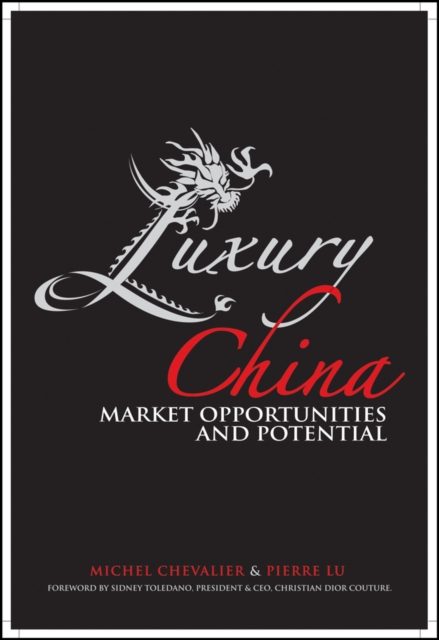
Luxury china
A guide to reaching and profiting from China's expanding luxury consumer class China's growing consumer base and expanding economy means more disposable income for more Chinese citizens.The Chinese market for luxury goods is expected to expand from 2 billion this year to nearly 12 billion by 2015.
eBook

The Voice of Chinese Health Consumers: A Text Mining Approach to Web-Based Physician Reviews
Many Web-based health care platforms allow patients to evaluate physicians by posting open-end textual reviews based on their experiences. These reviews are helpful resources for other patients to choose high-quality doctors, especially in countries like China where no doctor referral systems exist. Analyzing such a large amount of user-generated content to understand the voice of health consumers has attracted much attention from health care providers and health care researchers.
The aim of this paper is to automatically extract hidden topics from Web-based physician reviews using text-mining techniques to examine what Chinese patients have said about their doctors and whether these topics differ across various specialties. This knowledge will help health care consumers, providers, and researchers better understand this information.
We conducted two-fold analyses on the data collected from the \"Good Doctor Online\" platform, the largest online health community in China. First, we explored all reviews from 2006-2014 using descriptive statistics. Second, we applied the well-known topic extraction algorithm Latent Dirichlet Allocation to more than 500,000 textual reviews from over 75,000 Chinese doctors across four major specialty areas to understand what Chinese health consumers said online about their doctor visits.
On the \"Good Doctor Online\" platform, 112,873 out of 314,624 doctors had been reviewed at least once by April 11, 2014. Among the 772,979 textual reviews, we chose to focus on four major specialty areas that received the most reviews: Internal Medicine, Surgery, Obstetrics/Gynecology and Pediatrics, and Chinese Traditional Medicine. Among the doctors who received reviews from those four medical specialties, two-thirds of them received more than two reviews and in a few extreme cases, some doctors received more than 500 reviews. Across the four major areas, the most popular topics reviewers found were the experience of finding doctors, doctors' technical skills and bedside manner, general appreciation from patients, and description of various symptoms.
To the best of our knowledge, our work is the first study using an automated text-mining approach to analyze a large amount of unstructured textual data of Web-based physician reviews in China. Based on our analysis, we found that Chinese reviewers mainly concentrate on a few popular topics. This is consistent with the goal of Chinese online health platforms and demonstrates the health care focus in China's health care system. Our text-mining approach reveals a new research area on how to use big data to help health care providers, health care administrators, and policy makers hear patient voices, target patient concerns, and improve the quality of care in this age of patient-centered care. Also, on the health care consumer side, our text mining technique helps patients make more informed decisions about which specialists to see without reading thousands of reviews, which is simply not feasible. In addition, our comparison analysis of Web-based physician reviews in China and the United States also indicates some cultural differences.
Journal Article

The libidinal economy of China
The Libidinal Economy of China engages a range of post-colonial and psychoanalytically informed thinkers in a truly cross disciplinary study. Lacanian theories on hysteria, femininity, and narcissism are applied in the international domain of geopolitics to formulate a general theory on China’s relationship to the West. David Eng and Homi Bhabha are employed for discussing racial fetishism in contemporary China, while Slavoj Žižek’s ideas on violence and the Other are engaged in explaining the emotional dimension of national identification. The study concludes that China and the New Chinese Nationalism is firmly under the gaze of a Western Other analogous to a male gaze. That Other rules the libidinal economy of consumer culture, which explains China’s recurring history of wanting to emulate and catch up with the West while simultaneously reacting to such an attained intimacy with castration anxiety and aggressive hysteria.
eBook

Influences of background factors on consumers' purchase intention in China's organic food market: Assessing moderating role of word-of-mouth (WOM)
The present study aims to clarify how background factors influence consumers' intention of purchasing organic food from individual, social, and information perspectives (i.e., health consciousness, self-perceived vegetarian, as well as labeling). Another aim is to explore the moderating role of word-of-mouth (WOM) in relationship between purchase intention and purchase decision to fill in the intention-behavior gap in the field of behavior of purchasing organic food. The data were acquired through purposive sampling method by distributing questionnaires among organic food consumers. 280 out of 306 questionnaires were valid to proceed to statistical analysis. All proposed hypotheses were verified through structural equation modeling (SEM) and SPSS PROCESS regression analysis. As suggested from the study results, except for hedonistic motivation factor, the other background factors (i.e., individual, social, and information) significantly impacted consumers' purchase intention. Moreover, the relationship between purchase intention and purchase decision was significantly moderated by word-of-mouth (WOM). The present study sheds light on how to motivate consumers' purchase intention by stressing vital background factors from individual (i.e., purchase attitude and health consciousness), social (i.e., self-perceived vegetarian and environmental concern), and information perspectives (i.e., labeling and social media information). Besides, a novel insight is presented for marketers on how to deepen the relationship between consumers' purchase intention and purchase decision via the moderating effect of word-of-mouth (WOM).
Journal Article

How Does Information Influence Consumers’ Purchase Decisions for Environmentally Friendly Farming Produce? Evidence from China and Japan Based on Choice Experiment
In this research, 600 Chinese and Japanese consumers were divided into four groups to analyze consumers’ marginal willingness to pay for environmentally friendly farming (EFF) produce. We found that Chinese consumers had high awareness of green foods, while Japanese consumers were more familiar with organic produce than specially cultivated produce, perhaps because the latter has not yet received uniform national certification in Japan. Choice experiments show that EFF produce prices and consumers’ income critically affect consumers’ decision to pay, especially in China. After each group read different formal definitions of EFF produce, Chinese consumers still preferred green food certification, whereas Japanese consumers chose specially cultivated carrots. Both displayed different ideological purchasing behaviors through added interaction terms with an increase in education. When no information was given, Japanese consumers’ purchasing decisions became more positive as their education levels rose. Possibly, highly educated Chinese consumers emphasize pragmatism, whereas Japanese consumers emphasize the connection between environmental protection and agriculture. Therefore, EFF messaging should be differentiated by region. For distributors committed to international trade in EFF products between developing and developed markets, we suggest lower costs, differentiated product messaging, and community initiatives events to enhance trade and marketing in both China and Japan.
Journal Article

On Regulating Chinese Consumer Environmental Behaviour To Reduce Global Warming: Some Reflections
Low-carbon consumption is inevitable for international societies to respond to reduce global warming because it restricts the generation of carbon emissions from the consumer’s side. The consumption behaviours of Chinese consumers are identified as having high level of waste, excessive energy demand, lack of awareness and unreasonable consumption. These high-carbon consumption behaviours should be subject to effective regulatory measures imposed by the Chinese government. This article explores the current policies and practices of China in promoting low-carbon consumption and suggests the Chinese government make clearer rules and standards for the labelling and public procurement of low-carbon products and service expand low-carbon development pilot programs in China and strengthen the education of Chinese consumers.
Journal Article