
Catalogue Search | MBRL


Are you sure you want to remove the book from the shelf?

{{itemTitle}}
854
result(s) for
"Continuous improvement process."
Sort by:

A guide to continuous improvement transformation : concepts, processes, implementation
This book enables enterprise business leaders - from CEOs to supervisors - to understand what \"Continuous Improvement\" is, why it is probably the best answer to improved business performance in years, and how to put it to work in the unique environment of a specific organization. The book examines what is at the core of \"Continuous Improvement\" and delves deeper into the elements and constituents necessary to take an organization to the next level to ensure its continued, long-term existence. It provides guidance to enterprise management and to professionals engaged in the implementation of a \"Continuous Improvement\" initiative and enables them to structure and manage its implementation successfully. It also provides tools to quickly assess where an enterprise business stands in terms of strategic management and \"Continuous Improvement.\"
Book

Evaluation and Improvement of a Plastic Production System Using Integrated OEE Methodology: A Case Study
Overall equipment effectiveness (OEE) is a key indicator to measure the effectiveness of production systems. This paper aims to evaluate and improve a plastic production line based on OEE evaluation. An integrated framework is proposed to enhance the production system efficiency. This paper presents the data for a Plastic production line in Jordan under real working conditions. The data covers three months. A framework process to improve the OEE of the Plastic production system was proposed. Six major stoppage losses were inspected with the help of Pareto analysis. Furthermore, the actual availability, efficiency, and quality rate measures, together with the whole OEE for each working day, week, and month of the production line were shown. The methodology is based on determining the OEE of a Plastic production line after determining the causes of failures. The fishbone diagram tool is used to determine the root causes of failures. To improve the OEE measure, several losses are identified. The results reveal that the company should improve its policy to improve the production line’s performance and reduce losses. Top management should also pay attention to reducing the speed losses, which consist of 58.1%, and eliminate the planned and unscheduled disruptions covering 12.73% of all losses. This can be achieved by establishing a proper operation management procedure and strategy. This, in turn, optimized the equipment’s effectiveness. The quality procedure should include the changeover program that may be executed every day. Similarly, all preventive maintenance procedures for the six machines should be properly executed in predetermined intervals. There are several limitations in the research. Firstly, the research case study is only the plastic production system. Secondly, the research is related to the downtime or stoppage by analyzing it using fishbone diagram. Further, supported by other techniques such as the Pareto chart, six big losses analyses and CED. This research conducted on a Plastic industry. However, similar studies can be carried out in future in other manufacturing industries like electronic, pharmaceutical, textile industries, etc., and service industry. However, as future research work the contributions of this paper with other lean manufacturing concept like six sigma, quality function deployment, TQM, and just-in-time manu-facturing, can also be conducting to assess the overall production line efficiency. On the other hand, several statistical tests can be implemented based on data collected of TPM performance indicators. The proposed method supports policymakers in their decision-making process on the operations management line. Further-more, it improves the production systems’ productivity quality, and performance, reducing unplanned stop-pages and breakdowns, and reducing maintenance costs.
Journal Article

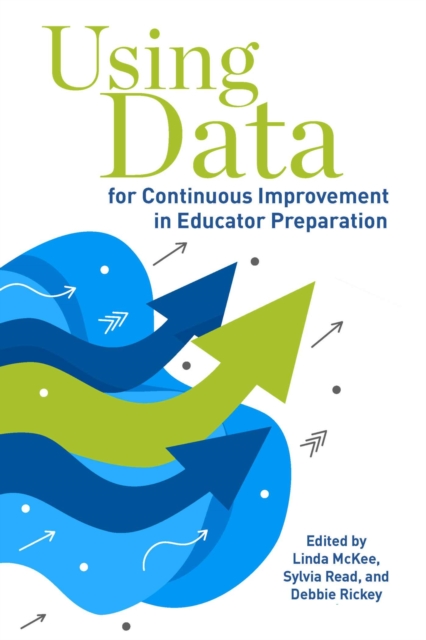
Using Data for Continuous Improvement in Educator Preparation
Using Data for Continuous Improvement in Educator Preparation provides case studies that illuminate and contextualize the ways in which educator preparation programs determine the data they need to improve, collect data, analyze data, share data with stakeholders, and close the loop by making focused improvements based on the data. Educator preparation programs operate in a wide range of contexts that have different requirements (e.g., state-mandated measures), different affordances, and different needs. This text focuses on not only the stories of how data is collected, analyzed, and used for improvement, but also on how stakeholders are impacted by the continuous improvement process. In the editors' work with accreditation and educator preparation program evaluation, they noticed a variety of approaches to collecting, analyzing, and using data for program improvement. Often this intense work with data goes unnoticed and unappreciated because it is done in the service of accreditation that, once completed, does not reach an audience outside of the institution and the accreditation agency. Using Data for Continuous Improvement in Educator Preparation solves this problem by shedding light on this important work. This volume inaugurates the AAQEP Program Evaluation in Education Series.Perfect for courses such as: Methods of Program Evaluation; Teacher Education; Improvement Science
eBook


Development of a multi-item Operational Excellence scale: Exploratory and confirmatory factor analysis
PurposeConsidering the relevance of operational excellence as a business strategy, organizations are striving to improve themselves by adopting best practices and universally accepted principles through the process of continuous improvement, and these principles should be embedded in the culture of an organization. Organizations pursue to align themselves by continuously improving their processes by adopting scientifically proven techniques and cultural transformation throughout the organization. However, there is a lack of scientific instruments for the assessment of operational excellence. The objective of this study is to develop a scale for the assessment of practices of operational excellence principles in the organizations. Further reliability and validity of the developed scale are measured by testing the relationship between Human Resource Practices (HRP) and Operational Excellence (OE).Design/methodology/approachThis study comprises quantitative design through exploratory and confirmatory studies and also includes qualitative analysis to develop a scale for the assessment of Operational Excellence (OE). Interviews from industry experts have been conducted to identify the major components for which organizations are striving for OE. Previous literature and excellence models, especially principles of the Shingo Operational Excellence Model (SOEM), have been reviewed and considered to finalize the scale items. Data were collected in two stages from both Telecommunication subsectors (Cellular Mobile Operators and Fixed Local Loop Operators) of Pakistan through the cross-sectional survey. In the first stage, exploratory factor analysis (EFA) was performed on the sample of 611 respondents from both Cellular Mobile and Fixed Local Loop operators of Pakistan. In the second stage, confirmatory factor analysis (CFA) was performed on the sample of 423 respondents from the Fixed local loop operators. EFA was conducted by using SPSS version 23 to finalize the OE scale, and for confirmatory factor analysis, PLS-SEM using Smart PLS was used to confirm the reliability and validity of the OE Scale.FindingsThe results of EFA reveal that OE is a multidimensional construct with three dimensions and 23 items. The dimensions of the developed OE Scale explored in this study are cultural enablers (CE), continuous process improvement (CPI) and enterprise alignment (EA). The confirmatory factor analysis of OE confirmed the scale dimensionality, reliability and validity along with the hypothesis testing to measure the impact of antecedent variable HRP on OE.Research limitations/implicationsOrganizations pursue to improve and align their operational processes but usually unable to confirm the implementation of their desired objectives. Based on the developed OE scale, managers may assess the implementation of OE principles in their organizations. This research has been conducted in the telecommunication sector of Pakistan only, and the developed instrument needs to be further tested in other organizations.Practical implicationsThe instrument developed in this study will help both researchers and practitioners to assess the principles of operational excellence in their organizations and enable them to design the strategies for improving organizational performance.Social implicationsThe results of this study will create awareness about the principles of operational excellence. The developed OE instrument will assist in identifying the gaps in organizational norms and values from the perspective of paying respect to every individual inside and outside the organization. OE instrument will be further helpful in the identification and assurance of health, safety, protection of the environment and community issues.Originality/valueThis study provides a reliable and validated scale for the scientific area of operation management and helps managers with the assessment of operational excellence in their organizations. This newly developed scale is also valid to test and use in different studies and industries by researchers and practitioners.
Journal Article

How to succeed with continuous improvement : a primer for becoming the best in the world
\"The all-you-need-to-know primer on continuous improvement--offering best practices presented in a comprehensive, detailed case study illustrating what works and what doesn'tHow to Succeed with Continuous Improvement takes the reader through a real-life case study of one organization's journey towards a world-class continuous improvement process. It provides practical advice on methods, tools, and leadership to help operations professionals set up, execute, and continuously build upon their organization's improvement work.The book offers specific advice and practical application on how to get all employees to give maximum contributions by using their ideas to improve the organization. Each chapter details part of the transformation story and then reflects on and analyzes each concept of continuous improvement illustrated. Joakim Ahlstrom is Head of Consulting for C2, a firm that helps companies establish continuous improvements that provide measurable results. \"-- Provided by publisher.
Book

Decoding the persistence of delayed hospital discharge: An in‐depth scoping review and insights from two decades
Objective This article addresses the persistent challenge of Delayed Hospital Discharge (DHD) and aims to provide a comprehensive overview, synthesis, and actionable, sustainable plan based on the synthesis of the systematic review articles spanning the past 24 years. Our research aims to comprehensively examine DHD, identifying its primary causes and emphasizing the significance of effective communication and management in healthcare settings. Methods We conducted the Preferred Reporting Items for Systematic Reviews and Meta‐Analyses extension for Scoping Reviews (PRISMA‐ScR) method for synthesizing findings from 23 review papers published over the last two decades, encompassing over 700 studies. In addition, we employed a practical and comprehensive framework to tackle DHD. Rooted in Linderman's model, our approach focused on continuous process improvement (CPI), which highlights senior management commitment, technical/administrative support, and social/transitional care. Our proposed CPI method comprised several stages: planning, implementation, data analysis, and adaptation, all contributing to continuous improvement in healthcare delivery. This method provided valuable insights and recommendations for addressing DHD challenges. Findings Our DHD analysis revealed crucial insights across multiple dimensions. Firstly, examining causes and interventions uncovered issues such as limited discharge destinations, signaling unsustainable solutions, and inefficient care coordination. The second aspect explored the patient and caregiver experience, emphasizing challenges linked to staff uncertainty and negative physical environments, with notable attention to the underexplored area of caregiver experience. The third theme explored organizational and individual factors, including cognitive impairment and socioeconomic influences. The findings emphasized the importance of incorporating patients' data, recognizing its complexity and current avoidance. Finally, the role of transitional and social care and financial strategies was scrutinized, emphasizing the need for multicomponent, context‐specific interventions to address DHD effectively. Conclusion This study addresses gaps in the literature, challenges prevailing solutions, and offers practical pathways for reducing DHD, contributing significantly to healthcare quality and patient outcomes. The synthesis introduces the vital CPI stage, enhancing Linderman's work and providing a pragmatic framework to eradicate delayed discharge. Future efforts will address practitioner consultations to enhance perspectives and further enrich the study. Patient or Public Contribution Our scoping review synthesizes and analyzes existing systematic review articles and emphasizes offering practical, actionable solutions. While our approach does not directly engage patients, it strategically focuses on extracting insights from the literature to create a CPI framework. This unique aspect is intentionally designed to yield tangible benefits for patients, service users, caregivers, and the public. Our actionable recommendations aim to improve hospital discharge processes for better healthcare outcomes and experiences. This detailed analysis goes beyond theoretical considerations and provides a practical guide to improve healthcare practices and policies.
Journal Article

Incremental software architecture : a method for saving failing IT implementations
\"This book will depict rare insights into actual failed-to-perform software systems, followed by comprehensive root-cause analyses identifying the reasons for their unsuccessful execution in production. Remedies will be provided that offer strategies to tackle the chief issues. Last, architecture and design best practices will conclude the discussion. The book will assist users to: Mitigate risks of software development projects Increase return on investments (ROI) Provide effective tools to assess technological achievability and viability Introduce software design best practices for enterprise architecture efforts Identify actual software construction value proposition Foster software assets reuse and consolidation Accelerate time-to-market \"-- Provided by publisher.
Book

An Enhanced Kaizen Event in a Sterile Processing Department of a Rural Hospital: A Case Study
Operating Rooms (ORs) generate the largest revenues and losses in a hospital. Without the prompt supply of sterile surgical trays from the Sterile Processing Department (SPD), the OR would not be able to perform surgeries to its busy schedule. Nevertheless, little emphasis has been brought in the medical literature to research on surgical instrument processing in the medical literature. The present study was done applies an Enhanced Kaizen Event (EKE) in the SPD of a rural hospital to identify sources of waste and minimize non-value-added steps in the SPD processes. The EKE consisted of three successive Plan-Do-Check-Act (PDCA) cycles, which focused on improvements at the departmental level first, then at an area level, and finally at the station level. The EKE yielded an improved streamlined workflow and a new design for the SPD layout, one of its areas, and a workstation. This paper aims at building a methodology, including identified steps. Results exhibited a 35% reduction in travel distance by the staff, eliminating non-value-added processes, reducing errors in the sterilization process, and eliminating cross-contamination for sterilized materials.
Journal Article