
Catalogue Search | MBRL


Are you sure you want to remove the book from the shelf?

{{itemTitle}}
642
result(s) for
"Conversion Islam History."
Sort by:


The New Muslims of Post-Conquest Iran
How do converts to a religion come to feel an attachment to it? The New Muslims of Post-Conquest Iran answers this important question for Iran by focusing on the role of memory and its revision and erasure in the ninth to eleventh centuries. During this period, the descendants of the Persian imperial, religious and historiographical traditions not only wrote themselves into starkly different early Arabic and Islamic accounts of the past but also systematically suppressed much knowledge about pre-Islamic history. The result was both a new 'Persian' ethnic identity and the pairing of Islam with other loyalties and affiliations, including family, locale and sect. This pioneering study examines revisions to memory in a wide range of cases, from Iran's imperial and administrative heritage to the Prophet Muhammad's stalwart Persian companion, Salman al-Farisi, and to memory of Iranian scholars, soldiers and rulers in the mid-seventh century.
eBook
The Islamization of the Holy Land, 634-1800
From the seventh century onwards the population of the Near East gradually became Muslim. Nevertheless, other religious communities continued to exist, maintaining an enduring presence in the region, despite being surrounded by Muslims and by people becoming Muslims.this book argues that the causes that led to the conversion of most of the Holy Land's population, as well as the survival of some religious communities, are essentially social and geographic in nature, rather than theological, and that two parallel processes were the main catalysts of Islamization: de-urbanization and urbanization.
BOOK

Conversion to Islam in the Premodern Age
Conversion to Islam is a phenomenon of immense significance in
human history. At the outset of Islamic rule in the seventh
century, Muslims constituted a tiny minority in most areas under
their control. But by the beginning of the modern period, they
formed the majority in most territories from North Africa to
Southeast Asia. Across such diverse lands, peoples, and time
periods, conversion was a complex, varied phenomenon. Converts
lived in a world of overlapping and competing religious, cultural,
social, and familial affiliations, and the effects of turning to
Islam played out in every aspect of life. Conversion therefore
provides a critical lens for world history, magnifying the
constantly evolving array of beliefs, practices, and outlooks that
constitute Islam around the globe. This groundbreaking collection
of texts, translated from sources in a dozen languages from the
seventh to the eighteenth centuries, presents the historical
process of conversion to Islam in all its variety and unruly
detail, through the eyes of both Muslim and non-Muslim
observers.
eBook

Conversion and apostasy in the late Ottoman Empire
\"In the nineteenth-century Ottoman Empire traditional religious structures crumbled as the empire itself began to fall apart. The state's answer to schism was regulation and control, administered in the form of a number of edicts in the early part of the century. It is against this background that different religious communities and individuals negotiated survival by converting to Islam when their political interests or their lives were at stake. As the century progressed, however, conversion was no longer sufficient to guarantee citizenship and property rights as the state became increasingly paranoid about its apostates and what it perceived as their 'denationalization'. The book tells the story of the struggle between the Ottoman State, the Great Powers and a multitude of evangelical organizations, shedding light on current flash-points in the Arab world and the Balkans, offering alternative perspectives on national and religious identity and the interconnection between the two\"-- Provided by publisher.
Book
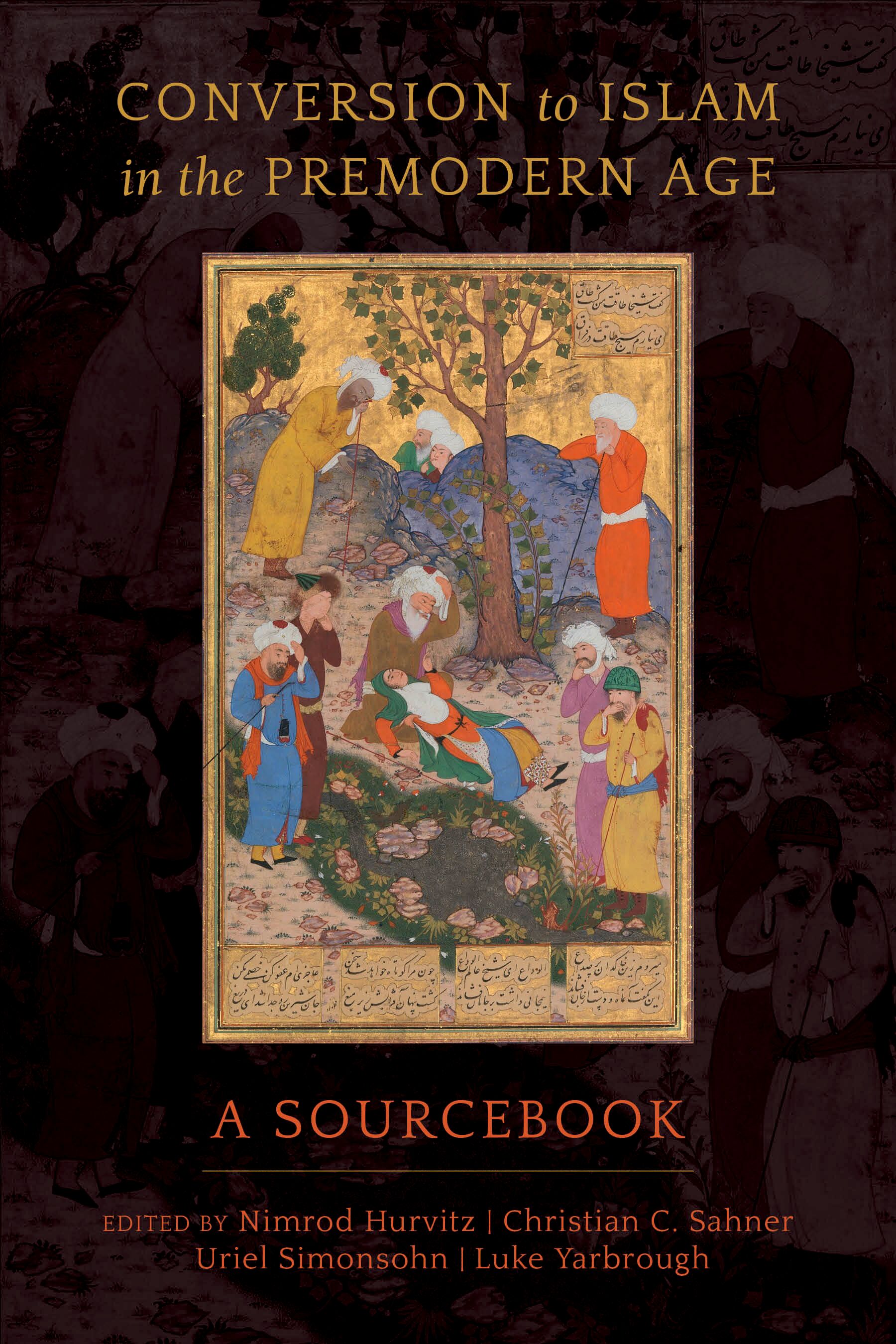
Conversion to Islam in the premodern age : a sourcebook
Conversion to Islam is a phenomenon of immense significance in human history. At the outset of Islamic rule in the seventh century, Muslims constituted a tiny minority in most areas under their control. But by the beginning of the modern period, they formed the majority in most territories from North Africa to Southeast Asia. Across such diverse lands, peoples, and time periods, conversion was a complex, varied phenomenon. Converts lived in a world of overlapping and competing religious, cultural, social, and familial affiliations, and the effects of turning to Islam played out in every aspect of life. Conversion therefore provides a critical lens for world history, magnifying the constantly evolving array of beliefs, practices, and outlooks that constitute Islam around the globe. This groundbreaking collection of texts, translated from sources in a dozen languages from the seventh to the eighteenth centuries, presents the historical process of conversion to Islam in all its variety and unruly detail, through the eyes of both Muslim and non-Muslim observers.
eBook

The Mongols and the Islamic world : from conquest to conversion
\"An epic historical consideration of the Mongol conquest of Western Asia and the spread of Islam during the years of non-Muslim rule. The Mongol conquest of the Islamic world began in the early thirteenth century when Genghis Khan and his warriors overran Central Asia and devastated much of Iran. Distinguished historian Peter Jackson offers a fresh and fascinating consideration of the years of infidel Mongol rule in Western Asia, drawing from an impressive array of primary sources as well as modern studies to demonstrate how Islam not only survived the savagery of the conquest, but spread throughout the empire. This unmatched study goes beyond the well-documented Mongol campaigns of massacre and devastation to explore different aspects of an immense imperial event that encompassed what is now Iran, Iraq, Turkey, and Afghanistan, as well as Central Asia and parts of eastern Europe. It examines in depth the cultural consequences for the incorporated Islamic lands, the Muslim experience of Mongol sovereignty, and the conquerors' eventual conversion to Islam\"--Provided by publisher.
BOOK

Can Islam Be French?
Can Islam Be French? is an anthropological examination of how Muslims are responding to the conditions of life in France. Following up on his book Why the French Don't Like Headscarves, John Bowen turns his attention away from the perspectives of French non-Muslims to focus on those of the country's Muslims themselves. Bowen asks not the usual question--how well are Muslims integrating in France?--but, rather, how do French Muslims think about Islam? In particular, Bowen examines how French Muslims are fashioning new Islamic institutions and developing new ways of reasoning and teaching. He looks at some of the quite distinct ways in which mosques have connected with broader social and political forces, how Islamic educational entrepreneurs have fashioned niches for new forms of schooling, and how major Islamic public actors have set out a specifically French approach to religious norms. All of these efforts have provoked sharp responses in France and from overseas centers of Islamic scholarship, so Bowen also looks closely at debates over how--and how far--Muslims should adapt their religious traditions to these new social conditions. He argues that the particular ways in which Muslims have settled in France, and in which France governs religions, have created incentives for Muslims to develop new, pragmatic ways of thinking about religious issues in French society.
eBook

Islamisation
The spread of Islam and the process of Islamisation (meaning both conversion to Islam and the adoption of Muslim culture) is explored in the twenty-four chapters of this volume. Taking a comparative perspective, both the historical trajectory of Islamisation and the methodological problems in its study are addressed, with coverage moving from Africa to China and from the seventh century to the start of the colonial period in 1800. Key questions are addressed. What is meant by Islamisation? How far was the spread of Islam as a religion bound up with the spread of Muslim culture? To what extent are Islamisation and conversion parallel processes? How is Islamisation connected to Arabisation? What role do vernacular Muslim languages play in the promotion of Muslim culture? The broad, comparative perspective allows readers to develop a thorough understanding of the process of Islamisation over eleven centuries of its history.
eBook

Why the French Don't Like Headscarves
The French government's 2004 decision to ban Islamic headscarves and other religious signs from public schools puzzled many observers, both because it seemed to infringe needlessly on religious freedom, and because it was hailed by many in France as an answer to a surprisingly wide range of social ills, from violence against females in poor suburbs to anti-Semitism.Why the French Don't Like Headscarvesexplains why headscarves on schoolgirls caused such a furor, and why the furor yielded this law. Making sense of the dramatic debate from his perspective as an American anthropologist in France at the time, John Bowen writes about everyday life and public events while also presenting interviews with officials and intellectuals, and analyzing French television programs and other media.
Bowen argues that the focus on headscarves came from a century-old sensitivity to the public presence of religion in schools, feared links between public expressions of Islamic identity and radical Islam, and a media-driven frenzy that built support for a headscarf ban during 2003-2004. Although the defense oflaïcité(secularity) was cited as the law's major justification, politicians, intellectuals, and the media linked the scarves to more concrete social anxieties--about \"communalism,\" political Islam, and violence toward women.
Written in engaging, jargon-free prose,Why the French Don't Like Headscarvesis the first comprehensive and objective analysis of this subject, in any language, and it speaks to tensions between assimilation and diversity that extend well beyond France's borders.
eBook