
Catalogue Search | MBRL


Are you sure you want to remove the book from the shelf?

{{itemTitle}}
242
result(s) for
"Cooking, European."
Sort by:

European peasant cookery
\"There are over 500 recipes in this classic work from one of the UK's most respected food writers. First published in the 1980 and twenty years in the making, it is now available again in a handsome new hardback edition.\"-- Provided by publisher.
BOOK

Food Culture in Colonial Asia
Presenting a social history of colonial food practices in India, Malaysia and Singapore, this book discusses the contribution that Asian domestic servants made towards the development of this cuisine between 1858 and 1963. Domestic cookbooks, household management manuals, memoirs, diaries and travelogues are used to investigate the culinary practices in the colonial household, as well as in clubs, hill stations, hotels and restaurants.
Challenging accepted ideas about colonial cuisine, the book argues that a distinctive cuisine emerged as a result of negotiation and collaboration between the expatriate British and local people, and included dishes such as curries, mulligatawny, kedgeree, country captain and pish pash. The cuisine evolved over time, with the indigenous servants preparing both local and European foods. The book highlights both the role and representation of domestic servants in the colonies. It is an important contribution for students and scholars of food history and colonial history, as well as Asian Studies.
eBook

Eat in my kitchen : to cook, to bake, to eat, and to treat
\"This cookbook, named after the food blog that inspired it, is a comprehensive collection of Berlin-based food writer and photographer Meike Peters' recipes. The recipes combine a northern European practical attitude, from the author's German roots, with a rustic Mediterranean-inspired palate, from her summers in Malta. This cookbook includes one hundred recipes, each accompanied by full-page images. Six \"Meet In Your Kitchen\" features include recipes by and interviews with Molly Yeh, Yossy Arefi, Malin Elmlid, the Hemsley sisters, and more\"-- Provided by publisher.
Book

Culinary Texts in Context, 1500–1800
This collection represents a new and significant contribution to the study of recipe books from the early modern period (ca. 1500-1800) by situating them in a broader European context, traversing Catalonia, Finland, French and German-speaking regions, Ireland, Portugal, Spain, Sweden, and England. Ten essays, including a critical introduction to the genre, trace the materiality of the books and the use of the instructions therein, investigating patterns of recipe collection and their evolution over time; the international transmission of recipes, ingredients, and artisanal knowledge; and women's manuscript culture. The authors explore how localised traditions of book production and domestic record-keeping shaped the physical forms of the books, and how stains, folds, marginalia, items pressed between pages, and pasted-in additions reveal their many uses. The inclusion of new ingredients and the integration of foreign recipes point to the many ways in which people, food, ideas, and books travelled the globe.
eBook
Culture of the fork
Giovanni Rebora has crafted an elegant and accessible history filled with fascinating information and illustrations. He discusses the availability of resources, how people kept from starving in the winter, how they farmed, how tastes developed and changed, what the lower classes ate, and what the aristocracy enjoyed. The book is divided into brief chapters covering the history of bread, soups, stuffed pastas, the use of salt, cheese, meat, fish, fruits and vegetables, the arrival of butter, the quest for sugar, new world foods, setting the table, and beverages, including wine and tea. A special appendix, \"A Meal with Columbus,\" includes a mini-anthology of recipes from the countries where he lived: Italy, Portugal, Spain, and England. Entertaining and enlightening, \"Culture of the Fork\" will interest scholars of history and gastronomy -- and everyone who eats.
eBook

Food and cooking in Viking times
describes and gives examples of cooking and food that Vikings ate.
Book

A Novel Method to Analyze Social Transmission in Chronologically Sequenced Assemblages, Implemented on Cultural Inheritance of the Art of Cooking
Here we present an analytical technique for the measurement and evaluation of changes in chronologically sequenced assemblages. To illustrate the method, we studied the cultural evolution of European cooking as revealed in seven cook books dispersed over the past 800 years. We investigated if changes in the set of commonly used ingredients were mainly gradual or subject to fashion fluctuations. Applying our method to the data from the cook books revealed that overall, there is a clear continuity in cooking over the ages--cooking is knowledge that is passed down through generations, not something (re-)invented by each generation on its own. Looking at three main categories of ingredients separately (spices, animal products and vegetables), however, disclosed that all ingredients do not change according to the same pattern. While choice of animal products was very conservative, changing completely sequentially, changes in the choices of spices, but also of vegetables, were more unbounded. We hypothesize that this may be due a combination of fashion fluctuations and changes in availability due to contact with the Americas during our study time period. The presented method is also usable on other assemblage type data, and can thus be of utility for analyzing sequential archaeological data from the same area or other similarly organized material.
Journal Article

Maydān : recipes from Lebanon and beyond
\"Seeking inspiration for her restaurants, Rose Previte traveled old spice trade routes, learning directly from cooks to expand her knowledge of the most delicious regional traditions. The word maydān, which can be loosely translated as 'gathering place,' has roots in a number of languages and has been crossing borders for generations, from Tangier to Tehran and from Batumi to Beirut--just like the food Previte cooks. The more than 100 recipes featured in this cookbook originate from her travels, the most popular dishes in the restaurants, as well as Previte's home kitchen, taking cues from the way her Lebanese family ate growing up, with boldly flavorful food that brings people together and is meant to be shared.\"--Back cover.
Book
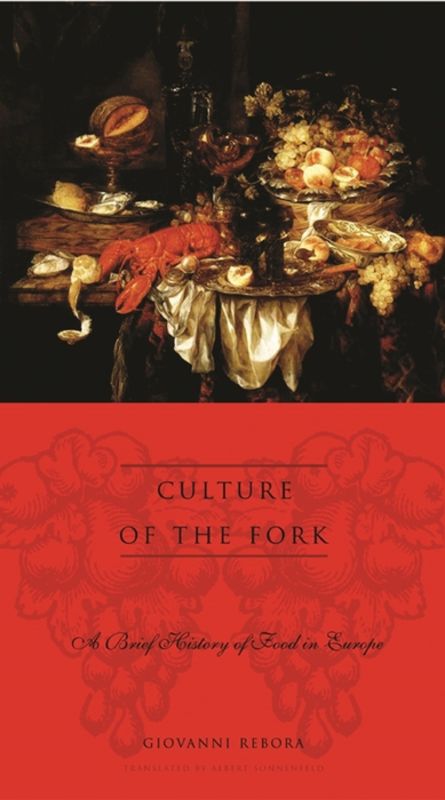
Culture of the Fork
We know where he went, what he wrote, and even what he wore, but what in the world did Christopher Columbus eat? The Renaissance and the age of discovery introduced Europeans to exotic cultures, mores, manners, and ideas. Along with the cross-cultural exchange of Old and New World, East and West, came new foodstuffs, preparations, and flavors. That kitchen revolution led to the development of new utensils and table manners. Some of the impact is still felt -- and tasted -- today.
Giovanni Rebora has crafted an elegant and accessible history filled with fascinating information and illustrations. He discusses the availability of resources, how people kept from starving in the winter, how they farmed, how tastes developed and changed, what the lower classes ate, and what the aristocracy enjoyed.
The book is divided into brief chapters covering the history of bread, soups, stuffed pastas, the use of salt, cheese, meat, fish, fruits and vegetables, the arrival of butter, the quest for sugar, new world foods, setting the table, and beverages, including wine and tea. A special appendix, \"A Meal with Columbus,\" includes a mini-anthology of recipes from the countries where he lived: Italy, Portugal, Spain, and England.
Entertaining and enlightening,Culture of the Forkwill interest scholars of history and gastronomy -- and everyone who eats.
eBook