
Catalogue Search | MBRL


Are you sure you want to remove the book from the shelf?

{{itemTitle}}
98
result(s) for
"Cooking, German"
Sort by:

The German cookbook
\"The only comprehensive collection of German recipes - from authentic traditional dishes to contemporary cuisine. Germany is made up of a series of distinct regional culinary cultures. From Hamburg on the north coast to Munich in the Alpine south, and from Frankfurt in the west to Berlin in the east, Germany's cities and farmland yield a remarkable variety of ingredients and influences. This authoritative book showcases this diversity, with 500 recipes including both beloved traditional cuisine and contemporary dishes representing the new direction of German cooking - from snacks to desserts, meat, poultry, and fish, to potatoes, dumplings, and noodles. An introduction showcasing the culinary cultural history of the country introduces the origins of the classic recipes. These recipes have been tested for accuracy in a home kitchen, making them fully accessible to a wide range of cooking abilities. Icons indicate everything from vegetarian, gluten-, and dairy-free options to recipes with five ingredients or fewer and simple one-pot dishes. The German Cookbook is the latest in Phaidon's bestselling series of authoritative cookbooks on global cuisines.\"--Provided by publisher.
Book
The kitchen, food, and cooking in reformation Germany
In international culinary history, Germany is still largely a blank space, its unparalleled wealth of source material and large body of published research available only to readers of German. This books aims to give everybody else an overview of German foodways at a crucial juncture in its history. The Reformation era, broadly speaking from the Imperial Reforms of the 1480s to the beginning of the Thirty Years’ War, laid the foundations for many developments in German culture, language, and history, not least the notion of its existence as a country. Understanding the food traditions and habits of the time is important to anyone studying Germany’s culinary history and identity. Using original source material, food production, processing and consumption are explored with a view to the social significance of food and the practicalities of feeding a growing population. Food habits across the social spectrum are presented, looking at the foodways of rich and poor in city and country. The study shows a foodscape richly differentiated by region, class, income, gender and religion, but united by a shared culinary identity that was just beginning to emerge. An appendix of recipes helps the reader gain an appreciation of the practical aspects of food in the age of Martin Luther.
eBook

Strudel, noodles & dumplings
\"'For me the German kitchen is as much a way of life as it is about preparing a meal. I want to teach as many people as I can about German family food, in the hope that it will satisfy, inspire and bring new dishes to the table.' Strudel, Noodles and Dumplings is a cookbook about Germany's varied culinary heritage, seen through the eyes of Anja Dunk's family recipes. From recipes such as Vollkorn-Buttermilch Waffeln (Wholewheat buttermilk waffles) to Schweinebraten mit Kuemmel (Caraway roast pork) and Zucchini und Gruener Paprika Salat in Joghurt Sosse (Courgette and green pepper salad with yogurt dressing), home-cooked German food is gently spiced, smoky, buttery and deeply savoury, yet sweet and sour. Anja's way of cooking is vibrant, honest and deeply intertwined with the seasons and the weather. Featuring over 200 simple recipes for the everyday family table, as well as a handful for special occasions, Anja's cookbook is an essential guide for all the basics of German cuisine, at the same time as providing inspiration and encouragement for cooking throughout the year.\"--Provided by publisher.
Book

Modern German cookbook
In Modern German cookbook, the only German television chef with two Michelin stars, Frank Rosin, shares his secrets and puts a modern twist on 100 classic German recipes.
Book
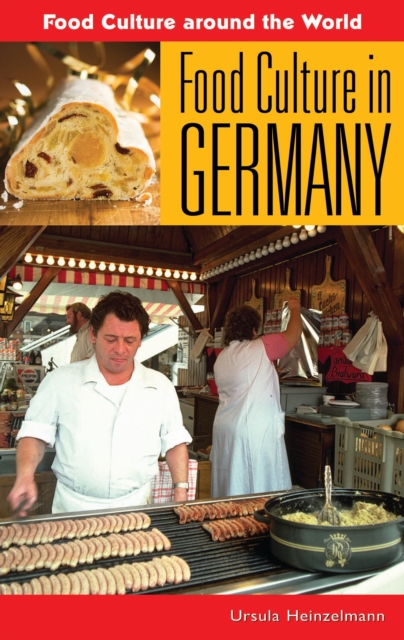
Food Culture in Germany
The grown-up Germany of today is able to explore its cultural identity, including its food culture. For some years now, German food has seen a return to regionalism, and beloved traditional dishes have been rediscovered and revived, counteracting to some extent the effects of globalization and industrialization. As well, a host of new culinary traditions brought in with new immigrants makes for an exciting food scene. Food Culture in Germany, written by a native Berliner, is destined to become a classic as the best source in English for a thorough and up-to-date understanding of Germans and their food—the history, foodstuffs, cooking, special occasions, lifestyle eating habits, and diet and health. The Historical Overview chapter takes the reader on a culinary tour from ancient times through the Holy Roman Empire to the Lebensraum of Hitler and on to reunification of the two Germanys until today's return to normalcy. Chapter 2, Major Foods and Ingredients, highlights the classic German staples. Chapter 3, Cooking, discusses the family and gender dynamics plus cooking techniques and utensils, the German kitchen, and the professional chef as media figure phenomenon. The Typical Meals chapter gives an in-depth insider's look at how and what Germans eat today. Chapter 5, Eating Out, describes the wide range of opportunities for eating out, from grabbing Currywurst on the street, to lunching in office and school cafeterias, to meeting friends for coffee and cake at the Konditerei. German holidays and special occasions are elaborated on in the context of more secular and younger influences in Chapter 6. Chapter 7 covers the German diet and the strong interest in health in the country, with its holistic roots. Food safety, a big topic in Europe today, is also discussed at length. An introduction, chronology, glossary, resource guide, selected bibliography, and illustrations complete this outstanding resource.
eBook

