Catalogue Search | MBRL


Are you sure you want to remove the book from the shelf?

{{itemTitle}}
21
result(s) for
"Cooking, Spanish History."
Sort by:


The Gastronomical Arts in Spain
The Gastronomical Arts in Spain includes essays that span from the medieval to the contemporary world, providing a taste of the many ways in which the art of gastronomy developed in Spain over time. This collection encompasses a series of cultural objects and a number of interests, ranging from medicine to science, from meals to banquets, and from specific recipes to cookbooks.The contributors consider Spanish cuisine as presented in a variety of texts, including literature, medical and dietary prescriptions, historical documents, cookbooks, and periodicals. They draw on literary texts in their socio-historical context in order to explore concerns related to the production and consumption of food for reasons of hunger, sustenance, health, and even gluttony.Structured into three distinct \"courses\" that focus on the history of foodstuffs, food etiquette, and culinary fashion, The Gastronomical Arts in Spain brings together the many sights and sounds of the Spanish kitchen throughout the centuries.
eBook

Delicioso : a history of food in Spain
Spanish cuisine is a melting-pot of cultures, flavors, and ingredients: Greek and Roman; Jewish, Moorish, and Middle Eastern. It has been enriched by Spanish climate, geology, and spectacular topography, which have encouraged a variety of regional food traditions and \"Cocinas,\" such as Basque, Galician, Castilian, Andalusian, and Catalan. It has been shaped by the country's complex history, as foreign occupations brought religious and cultural influences that determined what people ate and still eat. And it has continually evolved with the arrival of new ideas and foodstuffs from Italy, France, and the Americas, including cocoa, potatoes, tomatoes, beans, and chili peppers. Having become a powerhouse of creativity and innovation in recent decades, Spanish cuisine has placed itself among the best in the world. This is the first book in English to trace the history of the food of Spain from antiquity to the present day. From the use of pork fat and olive oil to the Spanish passion for eggplants and pomegranates, María José Sevilla skillfully weaves together the history of Spanish cuisine, the circumstances affecting its development and characteristics, and the country's changing relationship to food and cookery.
BOOK

Jews, Food, and Spain
A fascinating study that will appeal to both culinarians
and readers interested in the intersecting histories of food,
Sephardic Jewish culture, and the Mediterranean world of Iberia and
northern Africa. In the absence of any Jewish cookbook
from the pre-1492 era, it requires arduous research and a creative
but disciplined imagination to reconstruct Sephardic tastes from
the past and their survival and transmission in communities around
the Mediterranean in the early modern period, followed by the even
more extensive diaspora in the New World. In this intricate and
absorbing study, Hélène Jawhara Piñer presents readers with the
dishes, ingredients, techniques, and aesthetic principles that make
up a sophisticated and attractive cuisine, one that has had a
mostly unremarked influence on modern Spanish and Portuguese
recipes.
eBook

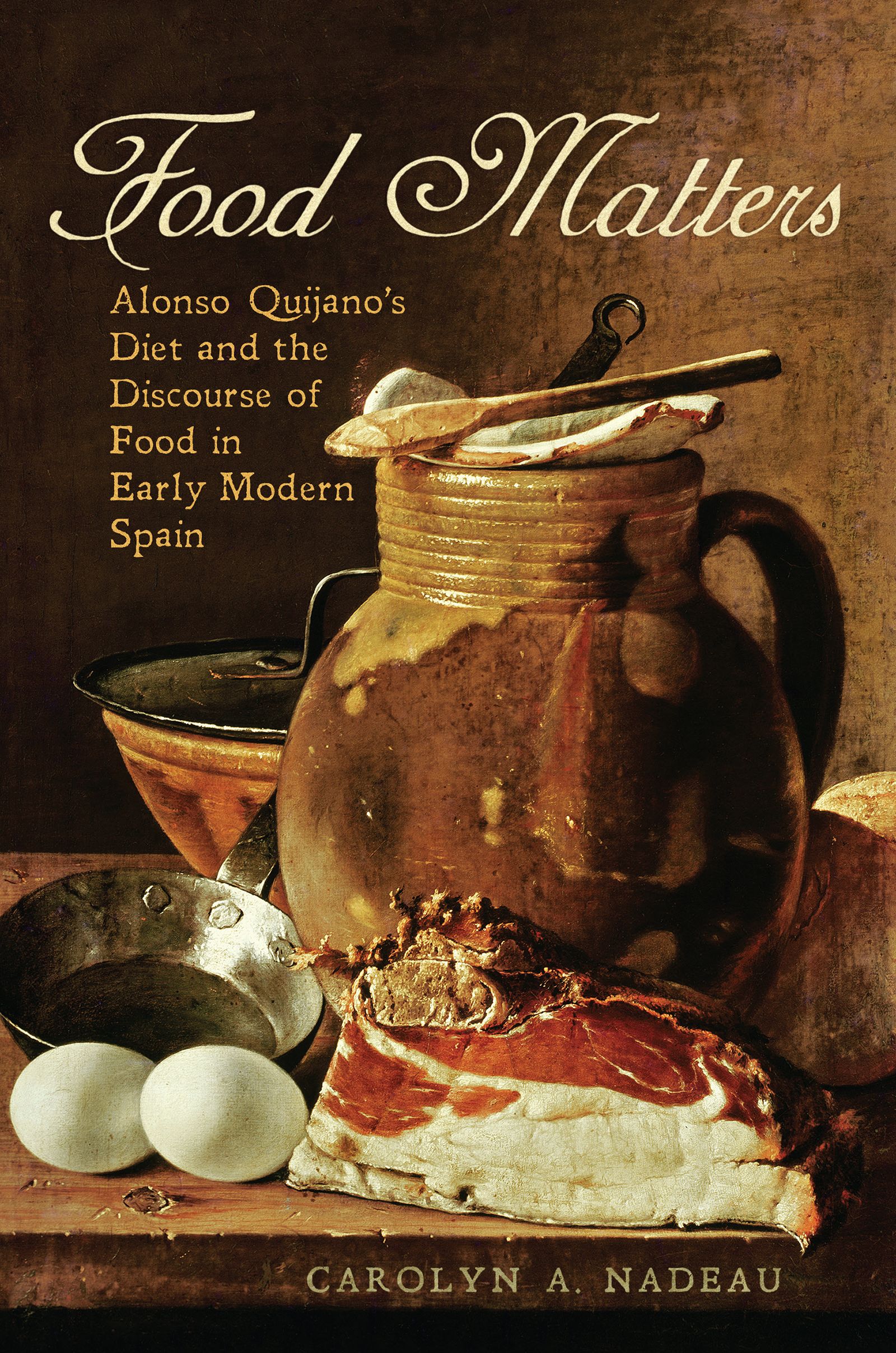
Food Matters
In the second sentence of Don Quixote , Cervantes describes the diet of the protagonist, Alonso Quijano: “A stew made of more beef than mutton, cold salad on most nights, abstinence eggs on Saturdays, lentils on Fridays, and an additional squab on Sundays.”
Through an inventive and original engagement with this text, Carolyn A. Nadeau explores the shifts in Spain’s cultural and gastronomic history. Using cooking manuals, novels, poems, dietary treatises, and other texts, she brings to light the figurative significance of foodstuffs and culinary practices in early modern Spain. Drawing on the work of Pierre Bourdieu and Stephen Mennell, Food Matters reveals patterns of interdependence as observed, for example, in how Muslim and Jewish aversion to pork fired Spain’s passion for ham, what happened when New World foodstuffs entered into Old World kitchens, and how food and sexual urges that so often came together, regardless of class, ethnicity, or gender, construct moments of communal celebration.
This mouth-watering tour of the discourses of food in early modern Spain is complemented by an appendix that features forty-seven recipes drawn from contemporary sources.
eBook

Sephardi
In this extraordinary cookbook, chef and scholar Helene Jawhara-Piner combines rich culinary history and Jewish heritage to serve up over fifty culturally significant recipes. Steeped in the history of the Sephardic Jews (Jews of Spain) and their diaspora, these recipes are expertly collected from such diverse sources as medieval cookbooks, Inquisition trials, medical treatises, poems, and literature. Original sources ranging from the thirteenth century onwards and written in Arabic, Spanish, Portuguese, Occitan, Italian, and Hebrew, are here presented in English translation, bearing witness to the culinary diversity of the Sephardim, who brought their cuisine with them and kept it alive wherever they went. Jawhara-Piner provides enlightening commentary for each recipe, revealing underlying societal issues from anti-Semitism to social order. In addition, the author provides several of her own recipes inspired by her research and academic studies. Each creation and bite of the dishes herein are guaranteed to transport the reader to the most deeply moving and intriguing aspects of Jewish history. Jawhara-Piner reminds us that eating is a way to commemorate the past.
eBook
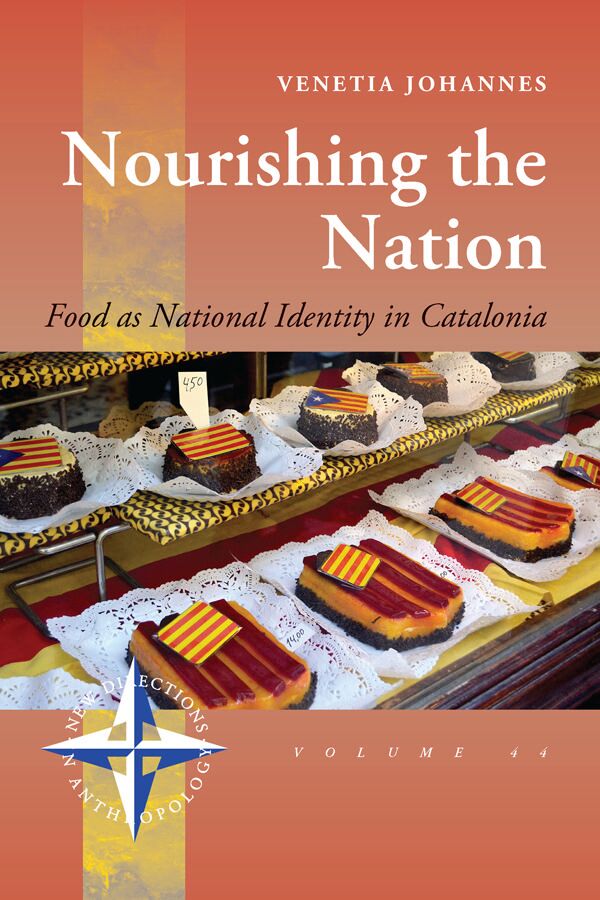
Nourishing the Nation
In the early twenty-first century, nationalism has seen a surprising resurgence across the Western world. In the Catalan Autonomous Community in northeastern Spain, this resurgence has been most apparent in widespread support for Catalonia’s pro-independence movement, and the popular assertion of Catalan symbols, culture and identity in everyday life. Nourishing the Nation provides an ethnographic account of the everyday experience of national identity in Catalonia, using an essential, everyday object of consumption: food. As a crucial element of Catalan cultural life, a focus on food provides unique insight into the lived realities of Catalan nationalism, and how Catalans experience and express their national identity today.
eBook

A Tortilla Is Like Life
Located in the southern San Luis Valley of Colorado, the remote and relatively unknown town of Antonito is home to an overwhelmingly Hispanic population struggling not only to exist in an economically depressed and politically marginalized area, but also to preserve their culture and their lifeways. Between 1996 and 2006, anthropologist Carole Counihan collected food-centered life histories from nineteen Mexicanas—Hispanic American women—who had long-standing roots in the Upper Rio Grande region. The interviews in this groundbreaking study focused on southern Colorado Hispanic foodways—beliefs and behaviors surrounding food production, distribution, preparation, and consumption. In this book, Counihan features extensive excerpts from these interviews to give voice to the women of Antonito and highlight their perspectives. Three lines of inquiry are framed: feminist ethnography, Latino cultural citizenship, and Chicano environmentalism. Counihan documents how Antonito’s Mexicanas establish a sense of place and belonging through their knowledge of land and water and use this knowledge to sustain their families and communities. Women play an important role by gardening, canning, and drying vegetables; earning money to buy food; cooking; and feeding family, friends, and neighbors on ordinary and festive occasions. They use food to solder or break relationships and to express contrasting feelings of harmony and generosity, or enmity and envy. The interviews in this book reveal that these Mexicanas are resourceful providers whose food work contributes to cultural survival.
eBook

Nourishing the nation : food as national identity in Catalonia / Venetia Johannes
\"In the early twenty-first century, nationalism has seen a surprising resurgence across the Western world. In the Catalan Autonomous Community in northeastern Spain, this resurgence has been most apparent in widespread support for Catalonia's pro-independence movement, and the popular assertion of Catalan symbols, culture and identity in everyday life. Nourishing the Nation provides an ethnographic account of the everyday experience of national identity in Catalonia, using an essential, everyday object of consumption: food. As a crucial element of Catalan cultural life, a focus on food provides unique insight into the lived realities of Catalan nationalism, and how Catalans experience and express their national identity today\"--
eBook