
Catalogue Search | MBRL


Are you sure you want to remove the book from the shelf?

{{itemTitle}}
1,299
result(s) for
"Cooking (Cocoa)"
Sort by:


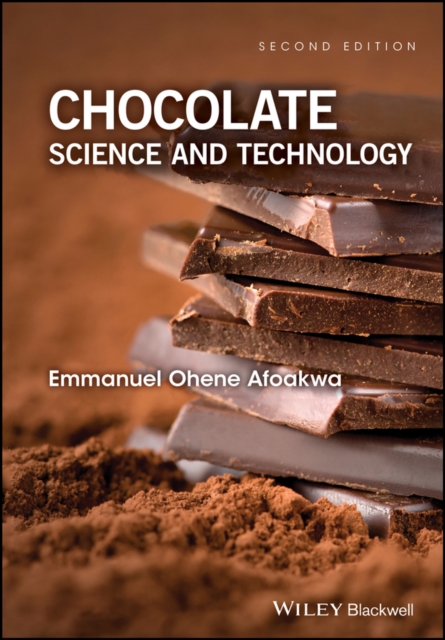
Chocolate Science and Technology
CHOCOLATE SCIENCE AND TECHNOLOGY This second edition provides information on recent advances in the science and technology of chocolate manufacture and the entire international cocoa industry. It provides detailed reviews of a wide range of topics, including cocoa production, cocoa and chocolate manufacturing operations, sensory perception of chocolate quality, flavour release and perception, sugar replacement and alternative sweetening solutions in chocolate production, industrial manufacture of sugar-free chocolates and the nutrition and health benefits of cocoa and chocolate consumption. The topics cover modern cocoa cultivation and production practices with special attention to cocoa bean composition, genotypic variations in the bean, post-harvest pretreatments, fermentation and drying processes and the biochemical basis of these operations. The scientific principles behind industrial chocolate manufacture are outlined, with detailed explanations of the various stages of chocolate manufacturing, including mixing, refining, conching and tempering. Other topics covered include the chemistry of flavour formation and development during cocoa processing and chocolate manufacture; volatile flavour compounds and their characteristics and identification; sensory descriptions and character; and flavour release and perception in chocolate. The nutritional and health benefits of cocoa and chocolate consumption and the application of HACCP and other food safety management systems such as ISO 22000 in the chocolate processing industry are also addressed. Additionally, detailed research on the influence of different raw materials and processing operations on the flavour and other quality characteristics of chocolates have been provided, with scope for process optimization and improvement. The book is intended to be a desk reference for all those engaged in the business of making and using chocolate worldwide; confectionery and chocolate scientists in industry and academia; students and practising food scientists and technologists; nutritionists and other health professionals; and libraries of institutions where agriculture, food science and nutrition are studied and researched.
eBook
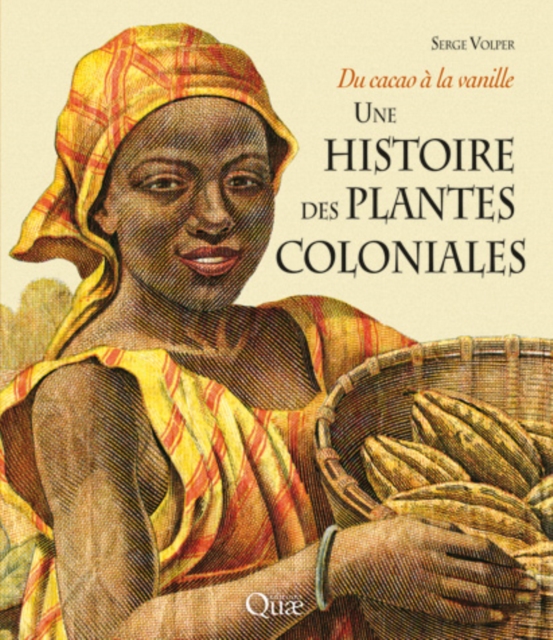
Une histoire des plantes coloniales
Partez pour un voyage riche en arômes et saveurs dans l'Afrique de la fin du XXe jusqu'aux indépendances des États africains en 1950 ! Ce livre, largement illustré, retrace l'âge d'or des plantes coloniales, leur importance dans les pays d'Afrique jusqu'à la période récente.
eBook


Characteristics of Mango Kernel Fats Extracted from 11 China-Specific Varieties and Their Typically Fractionated Fractions
11 China-specific mango varieties, i.e., Tainong, Xiangya, Okrong, Keitt, Chiin Hwang, Guifei, Yuexi, Biantao, Guixiang, Zihua and Guire, were selected from South China, and the kernels were separated from pulps and then dried to extract mango kernel fats (MKF). 5.65–11.14 % of the fats could be obtained from dried kernels using hexane extraction, and their iodine values, slip melting points, triacylglycerols,
sn
-2 fatty acids and micronutrients were analyzed. MKF were comprised predominantly of triacylglycerols reaching 85.09–92.72, and 78.28–84.37 % of oleic at the
sn
-2 position. 29.99–55.44 % of SOS, 11.17–23.34 % of SOO and 13.10–19.79 % of POS occupied the main percentages of triacylglycerols, indicating MKF have diversified application after fractionation. Certain variety characterized as moderate values mentioned above, therefore, was selected and then fractionated by two-stage processes to produce typical MKF fractions. The stearin (Fraction-II) fractionated from the first solid fraction (Fraction-I) with 68.09 % of SOS and 15.43 % of POS was more suitable as cocoa butter improver, while the olein (Fraction-III) produced from the first liquid fraction was rich in SOO (45.59 %), POO (11.37 %) and OOO (11.14 %), which are considered as ideal cooking oil or frying fat ingredients. In addition, high amounts of micronutrients, including sterol, tocopherol and squalene, were also found in MKF ranged from 3837 to 7085, 81 to 916, and 164 to 941 mg/kg among different varieties, respectively. In particular, squalene levels were higher compared with most of other vegetable oils.
Journal Article

Cocoa Coproducts-Based and Walnut Oil Gelled Emulsion as Animal Fat Replacer and Healthy Bioactive Source in Beef Burgers
The aim of this work was to evaluate the effects on the chemical, physic-chemical, technological, and sensory properties of beef burger when replacing different quantities of fat (50 and 100%) with different levels of oil-in-water-gelled emulsion elaborated with walnut oil and cocoa bean shell flour (GECW). The chemical composition of the samples was affected by the fat replacement. The reformulation increased the moisture and ash content while the fat and protein content decreased with respect to the control sample. The linolenic and linolenic acid content of the beef burgers increased as the GECW replacement was augmented. The polyunsaturated fatty/saturated fatty acid ratio increased in both raw and cooked burgers, whereas the atherogenicity index and thrombogenicity index were reduced in both raw and cooked burgers with respect to the control sample. The use of GECW as a fat replacer was found to be effective in improving the cooking loss. Similarly, there were positive effects on reductions in the diameter and the increases in the thickness of the beef burgers. Regarding lipid stability, in both the raw and cooked burgers, the reformulation increased the 2-thiobarbituric acid reactive substance (TBARs) values with respect to the control sample. In both types of reformulated burgers, three bound polyphenols (mainly catechin and epicatechin) and two free polyphenols were identified, as were methylxanthines theobromine and caffeine. The sensory properties for the control and partial pork backfat replacement treatments were similar, while the sample with the total pork backfat replacement treatment showed the lowest scores. The blend of cocoa bean shell flour and walnut oil could be used as new ingredients for the development of beef burgers with a healthier nutritional profile without demeriting their sensory or cooking characteristics and physic-chemical properties
Journal Article

Changes in the flavan-3-ols, anthocyanins, and flavanols composition of cocoa beans of different Theobroma cacao L. groups affected by roasting conditions
In the present study, the effect of roasting conditions on the individual flavan-3-ols, anthocyanins, and flavanols content of cocoa beans of five different Theobroma cacao L. groups was studied. The raw cocoa beans were roasted at four different temperatures (110, 120, 135, and 150 °C) and three different relative air humidities (0.3, 2.0, and 5.0 %). The great variations in the contents of both total and individual phenolic compounds among the different studied cocoa groups were observed. In general, the cocoa beans of the Forastero group from Brazil exhibited the highest content of individual flavan-3-ols, anthocyanins, and flavanols, while the samples of the Trinitario type from Papua New Guinea had the lowest polyphenols levels. Roasting significantly affected the profile and levels of the flavan-3-ols, anthocyanins, and flavanols in cocoa beans. The changes depended upon the different cocoa types evaluated and their processing conditions. A decrease in epicatechin, procyanidin B, procyanidin C1, both anthocyanins, and quercetin glycosides was observed in all of the five cocoa groups tested after roasting. This reduction coincided with the increase in catechin and quercetin contents in roasted cocoa beans from the five cocoa groups.
Journal Article

Traceability of Functional Volatile Compounds Generated on Inoculated Cocoa Fermentation and Its Potential Health Benefits
Microbial communities are responsible for the unique functional properties of chocolate. During microbial growth, several antimicrobial and antioxidant metabolites are produced and can influence human wellbeing. In the last decades, the use of starter cultures in cocoa fermentation has been pushed to improve nutritional value, quality, and the overall product safety. However, it must be noted that unpredictable changes in cocoa flavor have been reported between the different strains from the same species used as a starter, causing a loss of desirable notes and flavors. Thus, the importance of an accurate selection of the starter cultures based on the biogenic effect to complement and optimize chocolate quality has become a major interest for the chocolate industry. This paper aimed to review the microbial communities identified from spontaneous cocoa fermentations and focused on the yeast starter strains used in cocoa beans and their sensorial and flavor profile. The potential compounds that could have health-promoting benefits like limonene, benzaldehyde, 2-phenylethanol, 2-methylbutanal, phenylacetaldehyde, and 2-phenylethyl acetate were also evaluated as their presence remained constant after roasting. Further research is needed to highlight the future perspectives of microbial volatile compounds as biomarkers to warrant food quality and safety.
Journal Article
