
Catalogue Search | MBRL


Are you sure you want to remove the book from the shelf?

{{itemTitle}}
14
result(s) for
"Cooking Middle West."
Sort by:

Fried walleye & cherry pie : midwestern writers on food
\"A collection of essays exploring the foods and food culture of the American Midwest\"-- Provided by publisher.
Book

Savoring the Seasons of Northern Heartland
Embracing the traditional cooking of the diverse peoples of the Upper Midwest-from the Ojibwe and Dakota to the immigrant communities of Norwegians, Swedes, Germans, Italians, and Hmong-Beth Dooley and Lucia Watson present more than two hundred recipes for the modern kitchen, many with seasonal variations to take advantage of the freshest fruits and vegetables available.
eBook

From the Jewish Heartland
From the Jewish Heartland: Two Centuries of Midwest Foodways reveals the distinctive flavor of Jewish foods in the Midwest and tracks regional culinary changes through time. Exploring Jewish culinary innovation in America's heartland from the 1800s to today, Ellen F. Steinberg and Jack H. Prost examine recipes from numerous midwestern sources, both kosher and nonkosher, including Jewish homemakers' handwritten manuscripts and notebooks, published journals and newspaper columns, and interviews with Jewish cooks, bakers, and delicatessen owners._x000B__x000B_With the influx of hundreds of thousands of Jews during the late nineteenth and early twentieth centuries came new recipes and foodways that transformed the culture of the region. Settling into the cities, towns, and farm communities of Ohio, Indiana, Wisconsin, Michigan, Illinois, Missouri, Iowa, and Minnesota, Jewish immigrants incorporated local fruits, vegetables, and other comestibles into traditional recipes. Such incomparable gustatory delights include Tzizel bagels and rye breads coated in midwestern cornmeal, baklava studded with locally grown cranberries, dark pumpernickel bread sprinkled with almonds and crunchy Iowa sunflower seeds, tangy ketchup concocted from wild sour grapes, Sephardic borekas (turnovers) made with sweet cherries from Michigan, rich Chicago cheesecakes, native huckleberry pie from St. Paul, and savory gefilte fish from Minnesota northern pike._x000B__x000B_Steinberg and Prost also consider the effect of improved preservation and transportation on rural and urban Jewish foodways, as reported in contemporary newspapers, magazines, and published accounts. They give special attention to the impact on these foodways of large-scale immigration, relocation, and Americanization processes during the nineteenth century and the efforts of social and culinary reformers to modify traditional Jewish food preparation and ingredients._x000B__x000B_Including dozens of sample recipes, From the Jewish Heartland: Two Centuries of Midwest Foodways takes readers on a memorable and unique tour of midwestern Jewish cooking and culture.
eBook

Acute Toxoplasmosis among Canadian Deer Hunters Associated with Consumption of Undercooked Deer Meat Hunted in the United States
We conducted a recent investigation in Quebec, Canada, concerning Canadian deer hunters who went to the United States to hunt deer and returned with symptoms of fever, severe headache, myalgia, and articular pain of undetermined etiology. Further investigation identified that a group of 10 hunters from Quebec attended a hunting retreat in Illinois (USA) during November 22-December 4, 2018. Six of the 10 hunters had similar symptoms and illness onset dates. Serologic tests indicated a recent toxoplasmosis infection for all symptomatic hunters, and the risk factor identified was consumption of undercooked deer meat. Among asymptomatic hunters, 2 were already immune to toxoplasmosis, 1 was not immune, and the immune status of 1 remains unknown. Outbreaks of acute toxoplasmosis infection are rare in North America, but physicians should be aware that such outbreaks could become more common.
Journal Article

Reassembling the pieces, reassessing the picture: an analytical study of medieval pottery (mid. twelfth–sixteenth c.) from Polis Chrysochous, Cyprus
This paper presents the results of the analytical study of medieval pottery (mid. twelfth–sixteenth centuries AD), both glazed tableware and coarse wares, from a domestic structure uncovered at the site of Polis-Petrerades, Cyprus. A total of 50 samples were selected for scientific analysis, representing the main wares attested across the island from the Frankish (1192–1489) and Venetian (1489–1571) periods. This study follows an integrated approach to ceramic studies, which includes the classification of wares as well as petrographic and chemical analyses of selected samples, aiming to characterise ceramic bodies, slips and glazes. The results contribute to the reconstruction of production sequences that were, furthermore, interpreted within the archaeological and historical contexts of the period to address questions of ceramic production, potting traditions and distribution of medieval wares in Cyprus. Glazed tableware of different local workshops, namely Paphos and Lapithos, along with imports, reached that particular domestic building in the northwest of the island. Furthermore, local glazed and unglazed coarse wares were produced at different workshops than glazed tableware, the former showing a consistent preference for non-calcareous clays associated with the Troodos mountains. The heterogeneous character of the assemblage demonstrates the active participation of Polis Chrysochous within the regional and interregional trading routes of the period. At the same time, by focusing on a consumption context, this study reveals the potential that can be gained through the scientific analysis of both table and coarse wares from urban and rural sites of Medieval Cyprus.
Journal Article
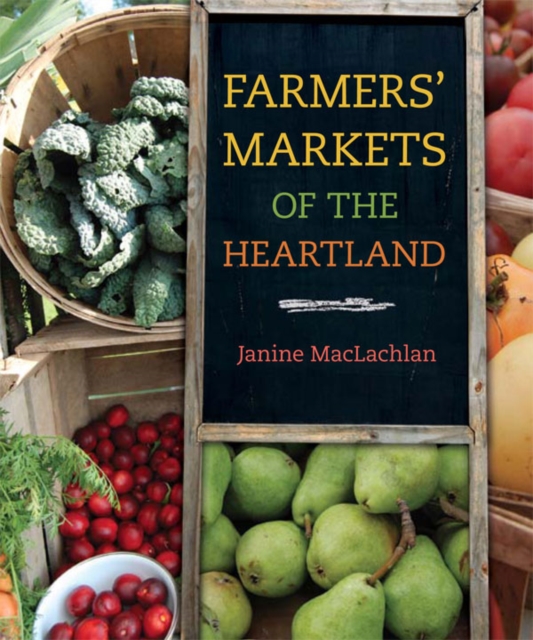
Farmers' markets of the heartland
Farmers' Markets of the Heartland celebrates the growers, producers, and artisans who bring fresh, nourishing food to their local communities every week. In this splendidly illustrated book, food writer and self-described farm groupie Janine MacLachlan embarks on an extensive tour of seasonal markets and farmstands throughout the Midwest, sampling local flavors and colors from Michigan, Ohio, Indiana, Illinois, Missouri, Iowa, Minnesota, and Wisconsin._x000B__x000B_MacLachlan conducts delicious research as she travels across the Heartland to meet farmers, taste their food, and explore how their businesses thrive in the face of an industrial food supply. Finding farmers' markets in leafy parks and edgy neighborhoods, and even one nestled into a national park, MacLachlan tells the stories of a pair of farmers growing specialty crops on a few acres of northern Michigan for just a few months out of the year, an Ohio cattle farm that has raised heritage beef in the same family since 1820, and a Minnesota farmer who has made it her mission to get folks growing the Jimmy Nardello sweet Italian frying pepper. Along the way, she savors vibrant red carrots, slurpy peaches, vast quantities of specialty cheeses, and some of the tastiest pie to cross anyone's lips. _x000B__x000B_Informed by debates about eating local, seasonal crops, organic farming, and biodiversity, Farmers' Markets of the Heartland tantalizes with special recipes from farm-friendly chefs and dozens of luscious color photographs that will inspire you to harvest the homegrown flavors in your own neighborhood._x000B__x000B_
eBook

Five Pond-centred Outbreaks of Cholera in Villages of West Bengal, India: Evidence for Focused Interventions
In rural West Bengal, outbreaks of cholera are often centred around ponds that is a feature of the environment. Five investigations of laboratory-confirmed, pond-centred outbreaks of cholera were reviewed. Case-control odds ratios were approximated with relative risks (RRs) as the incidence was low. The environment was investigated to understand how the pond(s) could have become contaminated and could have infected villagers. The five outbreaks of cholera in 2004-2008 led to 277 cases and three deaths (median attack rate: 51/1,000 people; case fatality: 1.1%; median age of case-patients: 22 years; median duration: 13 days, range: 6-15 days). Factors significantly (p<0.05) associated with cholera in the case-control (n=4) and cohort investigations (n=1) included washing utensils in ponds (4 outbreaks of cholera, RR range: 6-12), bathing (3 outbreaks of cholera, RR range: 3.5-9.3), and exposure to pond water, including drinking (2 outbreaks of cholera, RR range: 2.1-3.2), mouth washing (1 outbreak of cholera, RR: 4.8), and cooking (1 outbreak of cholera, RR: 3.0). Initial case-patients contaminated ponds through washing soiled clothes (n=4) or defaecation (n=1). Ubiquitous ponds used for many purposes transmit cholera in West Bengal. Focused health education, hygiene, and sanitation must protect villagers, particularly following the occurrence of an index case in a village that has ponds.
Journal Article

Midwest Maize
Food historian Cynthia Clampitt pens the epic story of what happened when Mesoamerican farmers bred a nondescript grass into a staff of life so prolific, so protean, that it represents nothing less than one of humankind's greatest achievements. Blending history with expert reportage, she traces the disparate threads that have woven corn into the fabric of our diet, politics, economy, science, and cuisine. At the same time she explores its future as a source of energy and the foundation of seemingly limitless green technologies. The result is a bourbon-to-biofuels portrait of the astonishing plant that sustains the world.
eBook

Cookin' Up Health: Developing a Nutrition Intervention for a Rural Appalachian Population
Cookin' Up Health is a culturally targeted and individualized tailored nutrition intervention using a computer-based interactive format. Using a cooking show theme, the program demonstrates step-by-step meal preparation emphasizing healthy selection and portion control. Focus groups were conducted with women in two rural counties in West Virginia to guide the development of the intervention. Women felt more susceptible to heart disease because the changing role of women creates more stress and less time; weight loss was a greater motivator for dietary change than was preventing heart disease; social support is a barrier and facilitator for dietary change; cultural heritage and the way women were raised were major barriers to making health changes as adults; convenience and the cost of eating healthier were major factors when trying to make changes in diet; and women did not feel confident in their ability to maintain dietary changes.
Journal Article

Effectiveness of a Nutrition Intervention With Rural Low-income Women
Objectives: To evaluate Cookin' Up Health, a computer-based interactive nutrition intervention.Methods: After randomization to intervention and control groups, 262 women in rural clinics in West Virginia completed both a baseline and 3-month follow-up
survey.Results: Compared to the control group, the intervention group had significantly improved scores on knowledge of dietary fats, food label reading, and readiness to eat 5 fruits and vegetables a day and foods lower in fat.Conclusions: This brief interactive
nutrition intervention shows potential as a strategy to begin the process of change, but follow-up may be needed for actual behavior change to occur.
Journal Article