
Catalogue Search | MBRL


Are you sure you want to remove the book from the shelf?

{{itemTitle}}
9
result(s) for
"Coptic Christian saints"
Sort by:
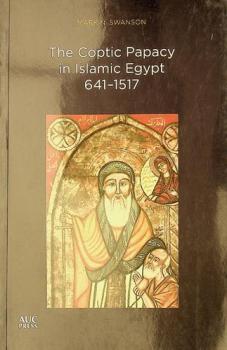
The coptic papacy in Islamic Egypt, 641-1517
\"In Volume 1 of this series, Stephen Davis contended that the themes of \"apostolicity, martyrdom, monastic patronage, and theological resistance\" were determinative for the cultural construction of Egyptian church leadership in late antiquity. Volume 2, The Coptic Papacy in Islamic Egypt, shows that the medieval Coptic popes (641-1517 CE) were regularly portrayed as standing in continuity with their saintly predecessors; however, at the same time, they were active in creating something new, the Coptic Orthodox Church, a community that struggled to preserve a distinctive life and witness within the new Islamic world order. Building on recent advances in the study of sources for Coptic church history, the present volume aims to show how portrayals of the medieval popes provide a window into the religious and social life of their community\"-- Provided by publisher.
Book
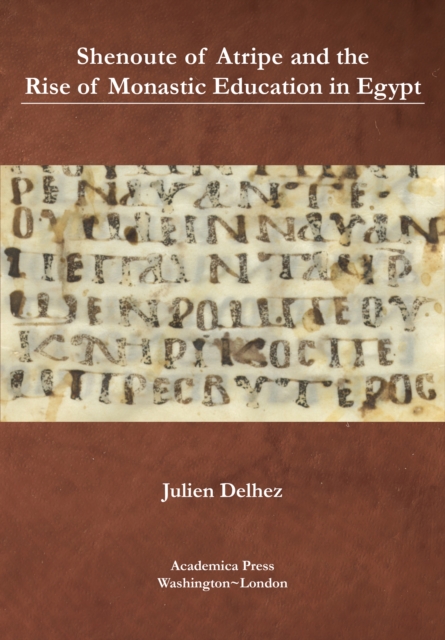
Shenoute of Atripe and the Rise of Monastic Education in Egypt
Shenoute of Atripe and the Rise of Monastic Education in Egypt addresses the monastic teachings of Shenoute of Atripe, an Egyptian author and monastic leader of the fourth and fifth centuries CE, as well as the literary and cultural context of his teachings. The first chapter provides basic notions of Shenoute and explores the chronology of his life. Considering both known elements and new hints, it offers a new chronology that challenges the traditionally accepted reconstruction, especially with regard to the date of Shenoute's death. The second chapter focuses on Shenoute's educational background, particularly the hypothesis that Shenoute received a classical Greek education before becoming a monk. The last three chapters offer an analysis of the education offered by Shenoute, by his monastic predecessors in Egypt, and by Shenoute's successor Besa.
eBook


THE MONASTERY OF ST. HEDRA IN ASWAN, AS A COPTIC PILGRIMAGE DESTINATION
This paper aims to explore and show the great importance of the monastery, which is considered one of the important Coptic pilgrimage medieval monasteries in Egypt. This monastery of Saint Hedra is located on the west bank of the Nile in the Aswan governorate. It was dedicated to his founder, Saint Hedra, who was the Bishop of Aswan at that time. The monastery was built in the seventh century. It is among the monasteries that belonged to Saint Pachomius, the founder of Communal monasticism in Upper Egypt at the beginning of the fourth century A.D. The monastery has a unique design; it is large and was built on 2 terraces, the lower one and the upper terrace. Also has many of the building's elements. The main part of the monastery is the church, which takes the basilica design; however, it is partly ruined and mostly of the parts of the monastery. Also, it was one of the Communal monasticism monasteries in Upper Egypt that had many monks who lived in the twelfth century; however, it became one abandoned monastery in the thirteenth century. This monastery has great historical, architectural, social, and religious values nowadays, and there are some excavations being carried out at this site, which shows the great importance of this monastery as a pilgrimage destination for many pilgrims all over the world. Moreover, it has one of the intangible heritages, which is the great celebration, named in Arabic as Mulid, which is consecrated to the Saint Hedra and is trying to revive this celebration wider. This study aims to put this site on the map of Christian pilgrimage in Egypt due to the great importance of the Monastery, which are historical, architectural, religious, and social values. Also, it should be added to the religious touristic programs as a pilgrimage destination for many Christians.
Journal Article

Shenoute of Atripe and the uses of poverty
Shenoute of Atripe: stern abbot, loquacious preacher, patron of the poor and scourge of pagans in fifth-century Egypt. This book studies his numerous Coptic writings and finds them to be the most important literary source for the study of society, economy and religion in late antique Egypt. The issues and concerns Shenoute grappled with on a daily basis, Ariel Lopez argues, were not local problems, unique to one small corner of the ancient world. Rather, they are crucial to interpreting late antiquity as a historical period—rural patronage, religious intolerance, the Christian care of the poor and the local impact of the late Roman state. His little known writings provide us not only with a rare opportunity to see the life of a holy man as he himself saw it, but also with a privileged window into his world. Lopez brings Shenoute to prominence as witness of and participant in the major transformations of his time.
eBook

EMERGING CHRISTIAN MEDIA IN EGYPT: CLERICAL AUTHORITY AND THE VISUALIZATION OF WOMEN IN COPTIC VIDEO FILMS
This article examines the depiction of women and gender within Coptic Orthodox video films or “hagiopics” produced between 1987 and 2010. As part of a recent religious renewal, hagiopics have expanded, altered, and reinvented traditional stories of saints and pious figures and have also generated, within this traditionally patriarchal setting, a wider space for the articulation of female voices. While their inclusion can be seen as potentially empowering for women, this paper suggests that during Pope Shenouda III's reign (1971–2012), the films became a powerful vehicle for broadcasting the church's conservative teachings on female power and authority, marriage and marital dissolution, spousal abuse, and femininity. By highlighting an array of exemplary female characters, hagiopics capture women's role as custodians of a distinctive Coptic ethos and of family and communal cohesiveness. The films’ emphasis on women's physical modesty, submissiveness, and obedience to male figureheads also hints at the modern church's anxieties about women's increasing autonomy in choosing marriage partners and their growing demands for more equal treatment within the church.
Journal Article

The IFAO Leaves of the \Life\ of Moses of Abydos
Edition of a number of parchment leaves in the collections of the French Archaeological Institute in Cairo, containing parts of the Vita of Moses of Abydos, a 6th century Coptic monastic leader.
Journal Article

S
This chapter contains all entries for S:
St. Andrei Rublev (ca. 1360‐1430) to Syrian Orthodox Churches
Book Chapter

Monastic Bodies: Discipline and Salvation in Shenoute of Atripe
Papaconstantinou reviews Monastic Bodies: Discipline and Salvation in Shenoute of Atripe by Caroline T. Schroeder.
Book Review