
Catalogue Search | MBRL


Are you sure you want to remove the book from the shelf?

{{itemTitle}}
36
result(s) for
"Copts Egypt History."
Sort by:

Coptic civilization : two thousand years of Christianity in Egypt
Egypt's Copts make up one of the oldest and largest Christian communities in the Middle East. Yet despite the availability of a large number of books on aspects of Coptic culture, including art and architecture, monasticism, theology, and music, there is to date no single volume that provides a comprehensive cultural history of the Copts and their achievements. 'Coptic Civilization' aims to fill this gap, by introducing the general reader, the interested non-specialist, to Coptic culture in all its variety and multi-faceted richness. With contributions by twenty scholars, 'Coptic Civilization' includes chapters on monasticism, the Coptic language, Coptic literature, Christian Arabic literature, the objects and documents of daily life, magic, art and architecture, and textiles, as well as the history of Coptic Church, its liturgy, theology, and music.
Book


Coptic identity and Ayyubid politics in Egypt, 1218-1250
\"Using the life and writings of Cyril III Ibn Laqlaq, 75th patriarch of the Coptic Orthodox Church, along with a variety of Christian and Muslim chroniclers, this study explores the identity and context of the Christian community of Egypt and its relations with the leadership of the Ayyubid dynasty in the early thirteenth century. Kurt Werthmuller introduces new scholarship that illuminates the varied relationships between medieval Christians of Egypt and their Muslim neighbors. Demonstrating that the Coptic community was neither passive nor static, the author discusses the active role played by the Copts in the formation and evolution of their own identity within the wider political and societal context of this period. In particular, he examines the boundaries between Copts and the wider Egyptian society in the Ayyubid period in three 'in-between spaces': patriarchal authority, religious conversion, and monasticism.\"--Jacket.
Book

Egypt after Mubarak
Which way will Egypt go now that Husni Mubarak's authoritarian regime has been swept from power? Will it become an Islamic theocracy similar to Iran? Will it embrace Western-style liberalism and democracy?Egypt after Mubarakreveals that Egypt's secularists and Islamists may yet navigate a middle path that results in a uniquely Islamic form of liberalism and, perhaps, democracy. Bruce Rutherford draws on in-depth interviews with Egyptian judges, lawyers, Islamic activists, politicians, and businesspeople. He utilizes major court rulings, political documents of the Muslim Brotherhood, and the writings of Egypt's leading contemporary Islamic thinkers. Rutherford demonstrates that, in post-Mubarak Egypt, progress toward liberalism and democracy is likely to be slow.
Essential reading on a subject of global importance, this edition includes a new introduction by Rutherford that takes stock of the Arab Spring and the Muslim Brotherhood's victories in the 2011-2012 elections.
eBook

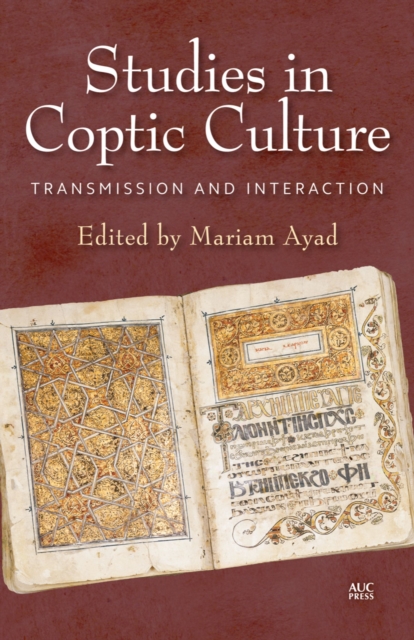
Studies in Coptic Culture
Coptic contributions to the formative theological debates of Christianity have long been recognized. Less well known are other, equally valuable, Coptic contributions to the transmission and preservation of technical and scientific knowledge, and a full understanding of how Egypt's Copts survived and interacted with the country's majority population over the centuries. Studies in Coptic Culture attempts to examine these issues from divergent perspectives.
eBook
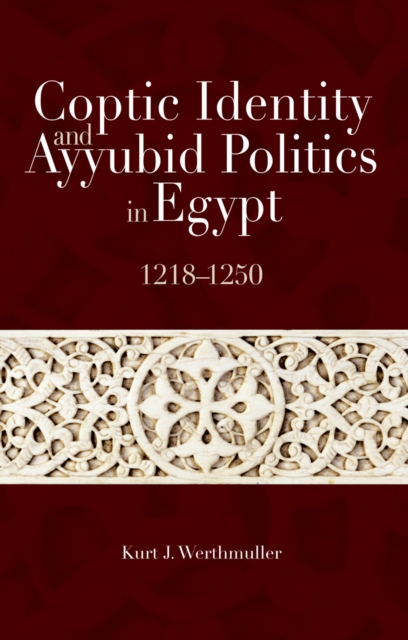
Coptic Identity and Ayyubid Politics in Egypt, 1218–1250
Using the life and writings of Cyril III Ibn Laqlaq, 75th patriarch of the Coptic Orthodox Church, along with a variety of Christian and Muslim chroniclers, this study explores the identity and context of the Christian community of Egypt and its relations with the leadership of the Ayyubid dynasty in the early thirteenth century. Kurt Werthmuller introduces new scholarship that illuminates the varied relationships between medieval Christians of Egypt and their Muslim neighbors.
eBook
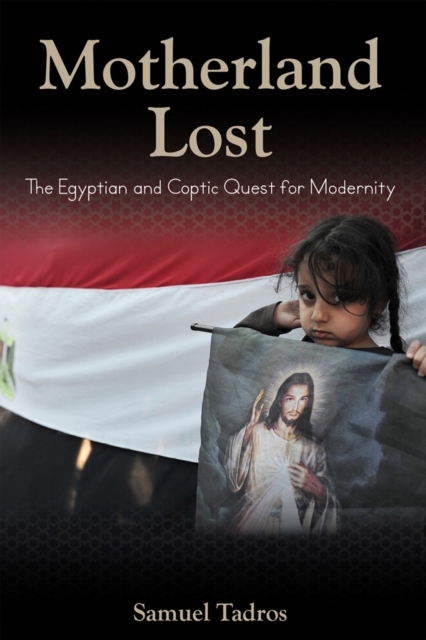
Motherland Lost
Samuel Tadros provides a clear understanding of Copts—the native Egyptian Christians—and their crisis of modernity in conjunction with the overall developments in Egypt as it faced its own struggles with modernity. He argues that the modern plight of Copts is inseparable from the crisis of modernity and the answers developed to address that crisis by the Egyptian state and intellectuals, as well as by the Coptic Church and laypeople.
eBook

American Evangelicals in Egypt
In 1854, American Presbyterian missionaries arrived in Egypt as part of a larger Anglo-American Protestant movement aiming for worldwide evangelization. Protected by British imperial power, and later by mounting American global influence, their enterprise flourished during the next century. American Evangelicals in Egypt follows the ongoing and often unexpected transformations initiated by missionary activities between the mid-nineteenth century and 1967--when the Six-Day Arab-Israeli War uprooted the Americans in Egypt.
Heather Sharkey uses Arabic and English sources to shed light on the many facets of missionary encounters with Egyptians. These occurred through institutions, such as schools and hospitals, and through literacy programs and rural development projects that anticipated later efforts of NGOs. To Egyptian Muslims and Coptic Christians, missionaries presented new models for civic participation and for women's roles in collective worship and community life. At the same time, missionary efforts to convert Muslims and reform Copts stimulated new forms of Egyptian social activism and prompted nationalists to enact laws restricting missionary activities. Faced by Islamic strictures and customs regarding apostasy and conversion, and by expectations regarding the proper structure of Christian-Muslim relations, missionaries in Egypt set off debates about religious liberty that reverberate even today. Ultimately, the missionary experience in Egypt led to reconsiderations of mission policy and evangelism in ways that had long-term repercussions for the culture of American Protestantism.
eBook