
Catalogue Search | MBRL


Are you sure you want to remove the book from the shelf?

{{itemTitle}}
18
result(s) for
"Copts Political activity."
Sort by:


The Copts in Egyptian Politics 1918-1952
This book explores the political relationship between the Muslim majority and Coptic minority in Egypt between 1918 and 1952. Many Egyptians hoped to see the collaboration of the 1919 revolution spur the creation of both a new collective Egyptian identity and a state without religious bias. Traditional ways of governing, however, were not so easily cast aside.
Some Egyptians held tenaciously to the traditional arrangements which had both guaranteed Muslim primacy and served relatively well to protect the Copts and afford them some autonomy. Differences within the Coptic community over the wisdom of trusting the genuineness and durability of Muslim support for equality were accentuated by a protracted struggle between reforming laymen and conservative clergy for control of the community. The unwillingness of all parties to compromise hampered the ability of the community both to determine and to defend its interests.
The Copts met with modest success in their attempt to become full Egyptian citizens. Their influence in the Wafd, the pre-eminent political party, was very strong prior to and in the early years of the constitutional monarchy, and their formal representation was generally adequate and, in some parliaments, better than adequate. However, this very success produced a backlash which caused many Copts to believe, by the 1940s, that the experiment had failed: political activity has become fraught with risk for them. At the close of the monarchy, equality and shared power seemed motions as distant as in the disheartening years before the 1919 revolution.
eBook
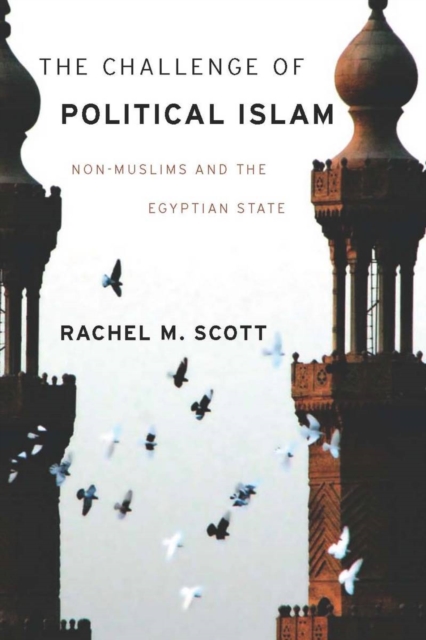
The challenge of political Islam : non-Muslims and the Egyptian state
The rise of political Islam has provoked considerable debate about the compatibility of democracy, tolerance, and pluralism with the Islamist position. As The Challenge of Political Islam reveals, Egyptian Islamists today are more integrated into the political arena than ever, and are voicing a broad spectrum of positions, including a vision of Islamic citizenship more inclusive of non-Muslims. Based on Islamist writings, political tracts, and interviews with Islamists—including members of Egypt's Muslim Brotherhood and other important contemporary thinkers—this book looks closely at how modern, politically-oriented Egyptian Islamists perceive non-Muslims in an Islamic state and how non-Muslims respond. Clarifying the movement's aims, this work uncovers how Islamists have responded to the pressures of modernity, the degree to which the movement has been influenced by both a historical Islamic framework and Western modes of political thinking, and the necessity to reconsider the notion that secularism is a precondition for toleration.
eBook

Four Guys and a Fax Machine? Diasporas, New Information Technologies, and the Internationalization of Religion in Egypt
Generally, coverage of political culture in the Middle East has been characterized by, and criticized for, its insistence upon the singular importance and salience of Islam as a religious factor. Rowe highlights the need for a disaggregation of political culture in the Middle East and recognition of the significance of religion in founding and defining that same political culture.
Journal Article

