
Catalogue Search | MBRL


Are you sure you want to remove the book from the shelf?

{{itemTitle}}
84
result(s) for
"Copybooks"
Sort by:

National characteristics and variation in Arabic handwriting
•Arabic handwriting samples from Morocco, Tunisia, Jordan and Oman were examined.•Discernible forms of characters were identified and recorded for the samples.•Nationality was associated with specific character forms; national characteristics.•Regional characteristics were more evident.
From each of four Arabic countries; Morocco, Tunisia, Jordan and Oman, 150 participants produced handwriting samples which were examined to assess whether national characteristics were discernible. Ten characters, which have different configurations depending upon their position in the word, along with one short word, were classified into distinguishable forms, and these forms recorded for each handwriting sample. Tests of independence showed that character forms used were not independent of country (p<0.001) for all but one character-position (this was dropped from subsequent analyses). A correspondence analysis ordination plot and analysis of similarity (R=0.326, p=0.0002) showed that whole samples were discernibly grouped by country, and a tree analysis produced a classification which was 71% accurate for the original data and 83% accurate for 80 new handwriting samples that underwent ‘blind’ classification. When the countries were combined into two regions, North Africa and Middle East, the grouping was more marked. Thus, there appears to be some scope for narrowing down the nationality, and particularly the wider geographical region of an author based upon the character forms they use in Arabic handwriting.
Journal Article
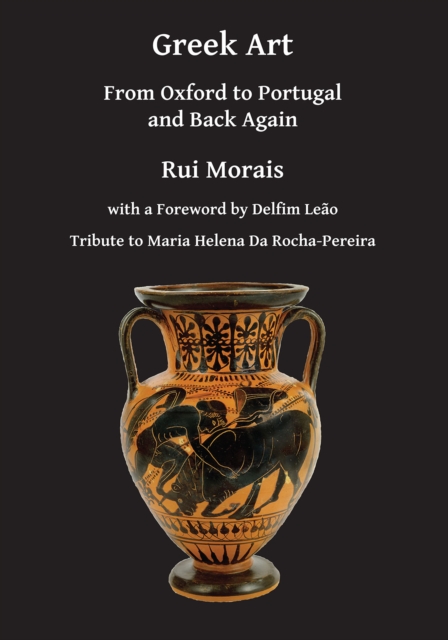
Greek art: from Oxford to Portugal and back again
One of the most fascinating topics in the study of ancient art concerns artistic practices and models and the means of transmission of iconographic designs and decorative compositions. This phenomenon, although well known, has not drawn much attention of scholars of the ancient art. Apart from copies of originals, the practice dates back to the first civilizations and may be even older. The media used could be painted vignettes on papyri, paint on leather, or sketches painted on ostraca, used as pattern books. This issue is practically unheard of regarding ancient Greece, although a few media have been found which may have facilitated the transmission of iconographic designs and decorative compositions. In this study we present some examples that suggest the existence of pattern books in the Greek world.
eBook