
Catalogue Search | MBRL


Are you sure you want to remove the book from the shelf?

{{itemTitle}}
421
result(s) for
"Coran."
Sort by:

Encyclopaedia of the Qurʼān
The Encyclopaedia of the Qur'ān online contains the complete articles of the printed volumes 1 to 5, the indices will be added as they become available.
Book
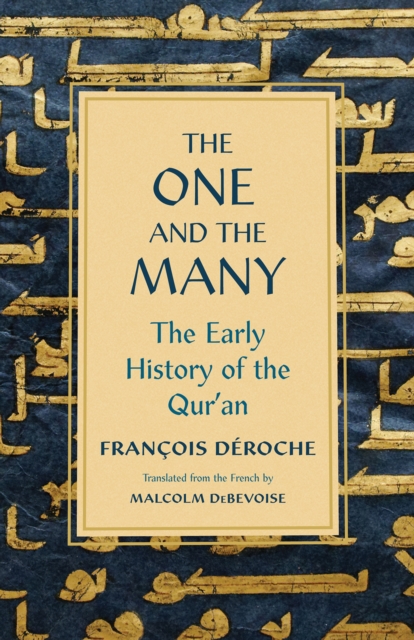
The One and the Many
A revelatory account of early Islam's great diversity by
the world's leading scholar of early Qur'anic manuscripts
\"There is no one better placed than François Déroche to
write the history-and tell the story-of how the Quran went from
words uttered by Muhammad to inviolable canonical scripture. This
is a meticulous, lucid, and fascinating book.\"-Shawkat Toorawa,
Yale University According to Muslim dogma, the recited and
written text of the Qur'an as we know it today scrupulously
reflects the divine word as it was originally sent down to
Muhammad. An examination of early Islamic sources, including
accounts of prophetic sayings, all of them compared with the oldest
Qur'anic manuscripts, reveal that plurality was in fact the
outstanding characteristic of the genesis and transmission of the
Qur'an, both textually and orally. By piecing together information
about alternative wordings eliminated from the canonical version
that gradually came to be imposed during the first centuries of
Islam, François Déroche shows that the Qur'an long remained open to
textual diversity. Not only did the faithful initially adopt a
flexible attitude toward the Qur'anic text, an attitude strikingly
at odds with the absolute literalism later enforced by Muslim
orthodoxy, but Muhammad himself turns out to have been more
concerned with the meaning than the letter of the divine message.
eBook
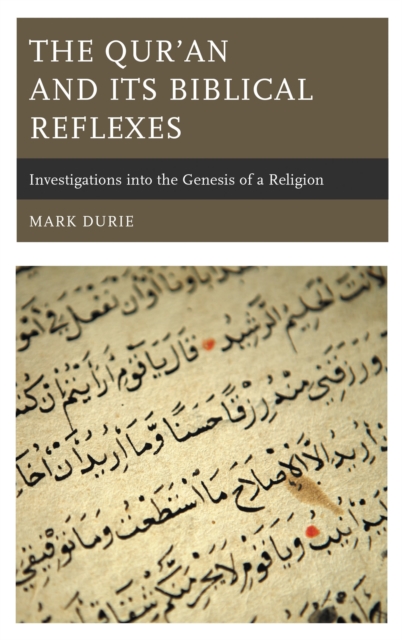
The Qur'an and Its Biblical Reflexes
This path-breaking book sets aside the traditional story of the life of Muhammad, and inquires into the internal history of the Qur'an itself.Drawing on fresh insights from linguistics and theology, Durie puts forward a new and very different explanation for the \"Mecca-Medina\" division, attributing it to a theological crisis which arose.
eBook

Creation and contemplation : the cosmology of the Qur'ān and its late antique background
In Creation and Contemplation, Julien Decharneux explores the connections between the cosmology of the Qur'an and various cosmological traditions of Late Antiquity, with a focus on Syriac Christianity. The first part of the book studies how, in exhorting its audience to contemplate the world, the Qur'an carries on a tradition of natural contemplation that had developed throughout Late Antiquity in the Christian world. In this regard, the analysis suggests particularly striking connections with the mystical and ascetic literature of the Church of the East, which was in effervescence at the time of the emergence of Islam. The second part argues that the Qur'anic cosmological discourse is built so as to serve the overarching theological message of the text, namely God's absolute unity. Despite the allusive, and sometimes obscure, way in which the Qur'an talks about the world's coming into being and its maintenance in existence, the text betrays its authors' acquaintance with cosmological debates of Late Antiquity. In studying the Qur'an through the prism of Late Antiquity, this book contributes to our understanding of the emergence of Islam and its relationship with other religious traditions of the time.
BOOK

Decoupling interfacial compatibilization and chain extension in polymer blends using rheology: PBAT/EVOH with MDI
The rheological models were employed to distinguish dual elasticity effects of a compatibilizer in a polymer blend with a droplet-matrix morphology. Polymeric methylene diphenyl diisocyanate (MDI) acts as a reactive compatibilizer in immiscible blends of Poly(butylene adipate-
co
-terephthalate) (PBAT)/ poly(ethylene vinyl alcohol) (EVOH). Therefore, it alters elasticity of the blend through interface compatibilization. It also acts as chain extender in PBAT and increases its elasticity. The blends of PBAT/EVOH with a ratio of (70/30) wt% containing MDI were prepared by melt mixing. The FE-SEM images showed that by adding MDI the radius of EVOH droplets decreases from 0.34 to 0.12 µm. The interphase viscosity of the blends, estimated by Lee-Park model, was lower than the viscosity of PBAT-MDI as matrix, revealing a greater chain-extending effect of MDI as compared to its interfacial compatibilization effect. The shear-thinning behavior of the interphase, PBAT-grafted-EVOH, was stronger than the matrix i.e. chain extended PBAT. Coran model was modified by considering the interphase's elasticity, which improved the fitted curve's accuracy to the experimental data. Pal model revealed a decrement in the interfacial tension when adding MDI to the blend, confirming an effective compatibilization role of MDI in the PBAT/EVOH blend.
Journal Article


The quest of the historical Muhammad and other studies on formative Islam
\"The lead essay in this book is the first effort to approach the historical figure of Muhammad in a manner comparable to the investigations that biblical scholars have made in the effort to recover the historical figure of Jesus. Using comparable methods and approaches, this study demonstrates that despite a widely held belief that Islam was born \"in the full light of history,\" we in fact know considerably less about both Muhammad and the beginnings of Islam than we do about the historical Jesus and the beginnings of Christianity. Also included are republications of four previously published essays dealing with such topics as the Qur'an's status as a late ancient biblical apocryphon, the relation between the Jerusalem Temple and the Holy House revered by the Qur'an, and the imminent eschatology of the Qur'an and the early Islamic tradition.\"-- Publisher's website.
BOOK