
Catalogue Search | MBRL


Are you sure you want to remove the book from the shelf?

{{itemTitle}}
37,972
result(s) for
"Corn industry"
Sort by:

Corn
An introduction to the crop of corn, including its history, types, growth and harvesting cycles, and end products.
Book

Corn Crusade
Almost everyone has long misinterpreted Nikita Khrushchev’s ten-year crusade to propagate the cultivation of corn, a crop important across the globe but previously rare across the vast, environmentally diverse Soviet Union. Launched in 1953, this campaign comprised a large part of the new leadership’s efforts to remedy agrarian crises inherited from Iosif Stalin. Khrushchev pressured collective and state farms to increase plantings of corn from an insignificant proportion of their crops to a peak of nearly 20 percent. Expected to feed livestock that were to yield meat and dairy products, corn promised to enrich citizens’ meager, monotonous diets and thereby make good on Khrushchev’s infamous pledges that the Soviet Union was soon to “catch up to and surpass America” in the Cold War “peaceful competition” between communism and capitalism. Echoing Khrushchev’s former comrades, who denounced corn as “harebrained scheming” when ousting him in 1964, scholars have ridiculed it as “an irrational obsession.” Newly available archival documents reveal a more complex and interesting story of how Khrushchev borrowed industrial-farming methods from the United States. Following experts’ advice, he believed that hybrid seeds, machines, agronomy, and other technologies constituting the global trends in farming technology promised even greater increases in productivity under conditions found in the Soviet Union. Yet Khrushchev’s programs achieved only partial success because they could not overcome the entrenched interests, bureaucratic inertia, and competing priorities that encouraged government officials, local authorities, and farmworkers to disregard methods required to grow even modest harvests, let alone the bumper crops that Khrushchev envisioned.
eBook
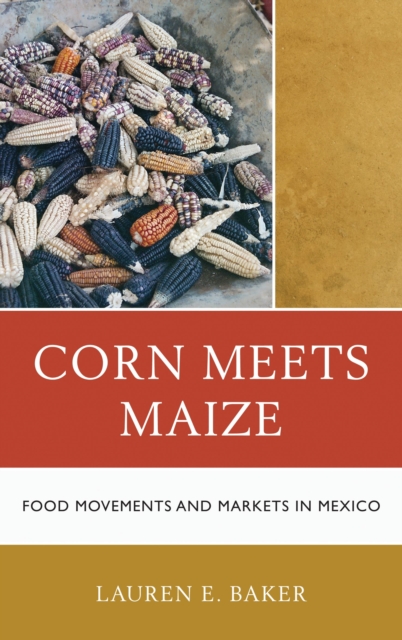
Corn Meets Maize
This compelling book explores the intimate connections between people and plants, agriculture and cooking, and the practical work of building local food networks and transnational social movements. Lauren E. Baker uses corn and maize to consider central debates about food security and food sovereignty, biodiversity and biotechnology, culture and nature, as well as globalization and local responses, in Mexico and beyond. For the author, corn symbolizes the commoditization of agriculture and the cultural, spiritual, ecological and economic separation of people from growing, cooking, and sharing food. Conversely, maize represents emerging food movements that address contemporary health, environmental, and economic imperatives while rooted in agricultural and culinary traditions. The meeting of corn and maize reveals the challenge of, and possibilities for, reclaiming food from its commodity status in the global context of financial turmoil, food crises, and climate change.
eBook

First Evidence of Western Bean Cutworm
The western bean cutworm, Striacosta albicosta (Smith), is considered a major corn pest in North America. In 2009, it started invading the province of Quebec (northeastern Canada). To our knowledge, there has been no evidence that this pest could overwinter in this province. In the falls of 2017 and 2018, storage totes containing mature western bean cutworm larvae were placed in the soil in three agricultural regions, in Quebec, where western bean cutworm invasions are frequent and crop damage is often significant. The goal was to evaluate if western bean cutworm could resist the province's winter conditions. The storage totes were removed from the soil at different dates to estimate winter survival. Emergence cages were installed over the totes in the spring of the following year to determine whether western bean cutworm could complete its life cycle. In the spring of 2019, car shelters were also installed at two different sites to evaluate natural moth emergences in fields in which numerous mature western bean cutworm larvae and damage were reported in 2018. Western bean cutworm moth emergences occurred in both cases. These experiments constitute the first documented evidence that western bean cutworm can overwinter and complete its life cycle in Quebec's cold climate. It also represents the northernmost overwintering survival for this species ever documented in North America. The western bean cutworm's ability to overwinter in Quebec will have important implications for corn producers. Pest monitoring and management programs in the province of Quebec will need to be adapted accordingly. Key words: sandy soil, survival, winter, cold climate, corn
Journal Article

Natural Prevalence, Molecular Characteristics, and Biological Activity of Metarhizium rileyi Larvae in Mexico
Entomopathogenic fungi have been considered potential biological control agents against the fall armyworm Spodoptera frugiperda (J. E. Smith), the world’s most important pest of maize. In this study, we evaluated the natural infection, molecular characteristics, and biological activity of Metarhizium rileyi (Farlow) isolated from S. frugiperda larvae of this insect, collected from maize crops in five Mexican locations. Natural infection ranged from 23% to 90% across all locations analyzed. Twenty-four isolates were evaluated on S. frugiperda second instars at a concentration of 1.0 × 10[sup.8] conidia/mL, causing 70% to 98.7% mortality and 60.5% to 98.7% sporulation. Isolates T9-21, Z30-21, PP48-21, and L8-22 were selected to determine their phylogenetic relationships by β-tubulin gene analysis and to compare median lethal concentration (CL[sub.50]), median lethal time (LT[sub.50]), and larval survival. These isolates were grouped into three clades. The T9-21, PP48-21, and J10-22 isolates were closely related (clade A), but phylogenetically distant from Z30-21 (clade B) and L8-22 (clade C) isolates. These genetic differences were not always reflected in their pathogenicity characteristics since no differences were observed among the LC[sub.50] values. Furthermore, isolates T9-21, J10-22, and L8-22 were the fastest to kill S. frugiperda larvae, causing lower survival rates. We conclude that native M. rileyi isolates represent an important alternative for the biocontrol of S. frugiperda.
Journal Article
The Csub.2Hsub.2 Transcription Factor Con7 Regulates Vegetative Growth, Cell Wall Integrity, Oxidative Stress, Asexual Sporulation, Appressorium and Hyphopodium Formation, and Pathogenicity in Colletotrichum graminicola and Colletotrichum siamense
The Colletotrichum genus is listed as one of the top 10 important plant pathogens, causing significant economic losses worldwide. The C[sub.2]H[sub.2] zinc finger protein serves as a crucial transcription factor regulating growth and development in fungi. In this study, we identified two C[sub.2]H[sub.2] transcription factors, CgrCon7 and CsCon7, in Colletotrichum graminicola and Colletotrichum siamense, as the orthologs of Con7p in Magnaporthe oryzae. Both CgrCon7 and CsCon7 have a typical C[sub.2]H[sub.2] zinc finger domain and exhibit visible nuclear localization. Disrupting Cgrcon7 or Cscon7 led to a decreased growth rate, changes in cell wall integrity, and low tolerance to H[sub.2]O[sub.2]. Moreover, the deletion of Cgrcon7 or Cscon7 dramatically decreased conidial production, and their knockout mutants also lost the ability to produce appressoria and hyphopodia. Pathogenicity assays displayed that deleting Cgrcon7 or Cscon7 resulted in a complete loss of virulence. Transcriptome analysis showed that CgrCon7 and CsCon7 were involved in regulating many genes related to ROS detoxification, chitin synthesis, and cell wall degradation, etc. In conclusion, CgrCon7 and CsCon7 act as master transcription factors coordinating vegetative growth, oxidative stress response, cell wall integrity, asexual sporulation, appressorium formation, and pathogenicity in C. graminicola and C. siamense.
Journal Article

Persistencias del sistema familiar mesoamerieano: una aproximación cuantitativa con base en el Censo de Población y Vivienda 2020
La residencia posmarital en el hogar del varón y la herencia de la vivienda por el ultimogénito en México son prácticas culturales de reproducción social que han sido eoneeptualizadas como parte del sistema familiar mesoamericano (SFM). Este articulo tiene como propósito establecer un valor aproximativo del volumen del SFM con base en los datos del cuestionario ampliado del Censo de Población y Vivienda de 2020. Se manejaron tres indicios empíricos del SFM como variables en un modelo estadístico de análisis de componentes principales, lo que permitió calcular un número índice de la presencia del SFM a escala municipal y estatal. Individualmente, los rasgos indicadores del SFM tienen una relación positiva con el porcentaje de hablantes de lengua indígena, el grado de marginación y el número de productores de maíz sobre la población total por municipio. Se encontró que 14.2% de la población del país reside en municipios con grados alto o muy alto del SFM. Se concluye que la presencia del SFM se distribuye en el territorio que, grosso modo, coincide con el territorio convencionalmente definido como el área cultural mesoamericana.
Journal Article
Corn Stunt Pathosystem and Its Leafhopper Vector in Brazil
Direct and indirect injury caused by Dalbulus maidis (Hemiptera: Cicadellidae) in corn is an ever-increasing concern in Brazil and other corn-producing countries of the Americas. This highly efficient vector transmits corn stunting pathogens and is of economic concern in the Neotropics, including temperate regions where epidemic outbreaks are now common. Despite the progress made so far, Brazilian corn growers continue to struggle with this pest and its associated pathosystem. In this review, we gathered relevant and updated information on the bioecology, population dynamics, and damaging potential of D. maidis. Our goal was to better understand its intimate association and complex interactions with the host crop and transmitted pathogens. Based on available scientific literature, we identified factors which explain the recent increase in D. maidis occurrence in South America, including the cultivation of corn during multiple growing seasons, overlapping of susceptible crops, and widespread use of genetically modified hybrids. The reasons for the overall inefficiency of current suppression strategies aimed at this pest are also summarized. Finally, a management program for D. maidis and corn stunt disease is proposed, combining strategies such as eradicating volunteer corn, reducing the planting period, using tolerant hybrids, and applying chemical and/or fungal insecticides. Prospects regarding the pest's status are also outlined. Overall, the information presented here will serve as a decision-making guide within Brazilian and South American corn production systems, as well as paving the way for devising novel strategies aimed at suppressing D. maidis populations and limiting the spread of corn stunt disease.
Journal Article

Multi-Stage Corn Yield Prediction Using High-Resolution UAV Multispectral Data and Machine Learning Models
Timely and cost-effective crop yield prediction is vital in crop management decision-making. This study evaluates the efficacy of Unmanned Aerial Vehicle (UAV)-based Vegetation Indices (VIs) coupled with Machine Learning (ML) models for corn (Zea mays) yield prediction at vegetative (V6) and reproductive (R5) growth stages using a limited number of training samples at the farm scale. Four agronomic treatments, namely Austrian Winter Peas (AWP) (Pisum sativum L.) cover crop, biochar, gypsum, and fallow with sixteen replications were applied during the non-growing corn season to assess their impact on the following corn yield. Thirty different variables (i.e., four spectral bands: green, red, red edge, and near-infrared and twenty-six VIs) were derived from UAV multispectral data collected at the V6 and R5 stages to assess their utility in yield prediction. Five different ML algorithms including Linear Regression (LR), k-Nearest Neighbor (KNN), Random Forest (RF), Support Vector Regression (SVR), and Deep Neural Network (DNN) were evaluated in yield prediction. One-year experimental results of different treatments indicated a negligible impact on overall corn yield. Red edge, canopy chlorophyll content index, red edge chlorophyll index, chlorophyll absorption ratio index, green normalized difference vegetation index, green spectral band, and chlorophyll vegetation index were among the most suitable variables in predicting corn yield. The SVR predicted yield for the fallow with a Coefficient of Determination (R2) and Root Mean Square Error (RMSE) of 0.84 and 0.69 Mg/ha at V6 and 0.83 and 1.05 Mg/ha at the R5 stage, respectively. The KNN achieved a higher prediction accuracy for AWP (R2 = 0.69 and RMSE = 1.05 Mg/ha at V6 and 0.64 and 1.13 Mg/ha at R5) and gypsum treatment (R2 = 0.61 and RMSE = 1.49 Mg/ha at V6 and 0.80 and 1.35 Mg/ha at R5). The DNN achieved a higher prediction accuracy for biochar treatment (R2 = 0.71 and RMSE = 1.08 Mg/ha at V6 and 0.74 and 1.27 Mg/ha at R5). For the combined (AWP, biochar, gypsum, and fallow) treatment, the SVR produced the most accurate yield prediction with an R2 and RMSE of 0.36 and 1.48 Mg/ha at V6 and 0.41 and 1.43 Mg/ha at the R5. Overall, the treatment-specific yield prediction was more accurate than the combined treatment. Yield was most accurately predicted for fallow than other treatments regardless of the ML model used. SVR and KNN outperformed other ML models in yield prediction. Yields were predicted with similar accuracy at both growth stages. Thus, this study demonstrated that VIs coupled with ML models can be used in multi-stage corn yield prediction at the farm scale, even with a limited number of training data.
Journal Article

The synergistic effects of microcredit access and agricultural technology adoption on maize farmer’s income in Kenya
Addressing global food security demands urgent improvement in agricultural productivity, particularly in developing economies where market imperfections are perverse and resource constraints prevail. While microcredit is widely acknowledged as a tool for economic empowerment, its role in facilitating agricultural technology adoption and improving agricultural incomes remains underexplored. This study examines the synergistic effects of microcredit access and agricultural technology adoption on the incomes of maize farmers in Kenya. Using household-level data, we employ an endogenous switching regression framework to control possible endogeneity in access to microcredit. Our findings shows that microcredit access positively influences the adoption of advanced agricultural technologies. Key determinants, including marital status, use of fertilizer application, access to extension services, and cooperative membership, are identified as significant determinants of microcredit access. Notably, the Average Treatment Effect on the Treated (ATT) indicates a 40.52% increase in income among farmers who access microcredit, mainly driven by the timely adoption of high-quality seeds, improved agricultural technologies, and enhanced inputs. These results highlight microcredit’s role in promoting allocative efficiency and enhancing Total Factor Productivity (TFP) within agricultural systems. Robustness checks, including propensity score matching and sensitivity analyses, corroborate these findings. The study recommends the implementation of targeted financial policies and educational initiatives meant to promote credit access, encourage savings, and enhancing financial literacy, particularly for credit-constrained households. Integrating these measures could strengthen rural financial markets and drive sustainable agricultural development across the regions.
Journal Article