
Catalogue Search | MBRL


Are you sure you want to remove the book from the shelf?

{{itemTitle}}
6,384
result(s) for
"Cornwall"
Sort by:


Production and Consumption in English Households, 1600-1750
This economic, social and cultural analysis of the nature and variety of production and consumption activities in households in Kent and Cornwall yields important new insights on the transition to capitalism in England.
eBook

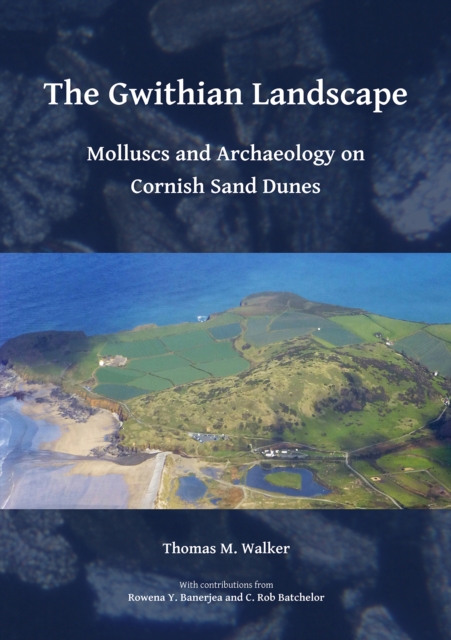
The Gwithian landscape: molluscs and archaeology on Cornish sand dunes
Gwithian, on the north coast of Cornwall, is a multiperiod archaeological site. The present work explores the palaeoenvironment of the area around the settlement sites, from the Neolithic, when sand dunes initially developed in the Red River valley, to the present post-industrial landscape.
eBook


Later Prehistoric Settlement in Cornwall and the Isles of Scilly
Later prehistoric settlement in Cornwall and the Isles of Scillyreports on the excavation between 1996 and 2014 of five later prehistoric and Roman period settlements. All the sites were multi-phased, revealing similar and contrasting occupational patterns stretching from the Bronze Age into the Iron Age and beyond.
eBook

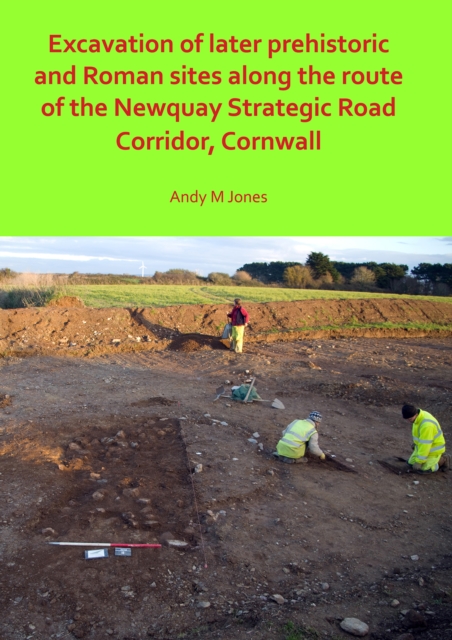
Excavation of Later Prehistoric and Roman Sites along the Route of the Newquay Strategic Road Corridor, Cornwall
During November and December 2014, Cornwall Archaeological Unit undertook a programme of archaeological excavation in advance of construction of a road corridor to the south of Newquay. Evidence for Middle Bronze Age occupation took the form of a hollow-set roundhouse; however, the majority of the excavated features have been dated to the Iron Age and Roman periods. The area was enclosed as fields associated with extensive settlement activity throughout the last centuries cal BC into the third century AD.
The excavations revealed the character of settlement-related activity during the later prehistoric and Roman periods. The evidence strongly suggests growing intensification of agriculture, with ditched fields and enclosures appearing in the landscape from the later Iron Age and into the Roman period.
The results shed light on later prehistoric and Roman practices involving the division of the landscape with ditched fields and enclosed buildings. Many of the structures and pits were found to be set within their own ring-ditched enclosures or hollows, and the field system ditches were in some instances marked by 'special' deposits. As has previously been demonstrated for Middle Bronze Age roundhouses, structures could be subject to formal abandonment processes. Gullies and hollows were deliberately infilled, so that they were no longer visible at surface. However, unlike the abandoned Bronze Age roundhouses, the later structures appear to have been flattened and not monumentalized. In other words, buildings could be both etched into and subsequently erased from the landscape and thereby forgotten.
This volume takes the opportunity presented by investigations on the Newquay Strategic Road to discuss the complexity of the archaeology, review the evidence for 'special' deposits and explore evidence for the deliberate closure of buildings especially in later prehistoric and Roman period Cornwall. Finally, the possible motives which underlie these practices are considered.
Includes contributions by Ryan S Smith, Dana Challinor, Julie Jones, Graeme Kirkham, Anna Lawson-Jones, Henrietta Quinnell and Roger Taylor.
eBook


The Gwithian Landscape
Gwithian, on the north coast of Cornwall, is a multiperiod archaeological site. The present work explores the palaeoenvironment of the area around the settlement sites, from the Neolithic, when sand dunes initially developed in the Red River valley, to the present post-industrial landscape.
eBook