
Catalogue Search | MBRL


Are you sure you want to remove the book from the shelf?

{{itemTitle}}
493
result(s) for
"Corporations Finance Case studies."
Sort by:

Working Capital Management
Stay liquid, think global, and better manage resources with this authoritative guide Working Capital Management is a comprehensive primer on keeping your business financially competitive in the face of limited access to short-term funds. With detailed insight applicable to each phase in the business cycle, this authoritative guide helps managers revamp current practices for more efficient use of assets and liabilities, including more stringent monitoring and planning of collections, disbursements, and balances. Readers will learn how to minimize investments in idle resources, and how to maximize the use of forecast data to better identify risk and the optimal use of available funds. Case studies illustrate the practical applications of the ideas presented, with particular attention given to cash budgeting, forecasting, banking relationships and other common scenarios with specific requirements. Managing a company's short-term resources is both an art and a science. Effectively maintaining funds for ongoing activities – and keeping those funds liquid, mobile, and available – is a masterful skillset lacking in business. Working Capital Management offers practical advice for managers in this challenging position, providing guidance that helps them: * Learn the specific metrics at work in capital management, and the problems that they can cause * Improve cash management with robust fraud protection and better use of short-term instruments * Manage the issues that arise from accounts receivable, inventory, payables, information management, and international sources * Develop an effective management system for key points in the working capital cycle The recent liquidity crisis in the U.S. has thrown the spotlight onto those companies that have adjusted well to credit contraction and the weakened economy, and these success stories – some of which are noted in the book – demonstrate that a positive business outcome can be accomplished. Working Capital Management provides a clear look at a complex issue, with practical, actionable, sustainable advice.
eBook

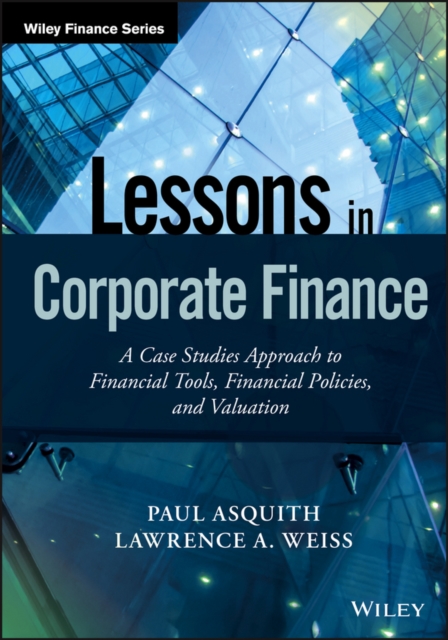
Lessons in corporate finance
\"Lessons in Corporate Finance explains the fundamentals of the field in an intuitive way, using a unique Socratic question and answer approach. Written by award-winning professors at M.I.T. and Tufts, this book draws on years of research and teaching to deliver a truly interactive learning experience. Each case study is designed to facilitate class discussion, based on a series of increasingly detailed questions and answers that reinforce conceptual insights with numerical examples. Complete coverage of all areas of corporate finance includes capital structure and financing needs along with project and company valuation, with specific guidance on vital topics such as ratios and pro formas, dividends, debt maturity, asymmetric information, and more. Corporate finance is a complex field composed of a broad variety of sub-disciplines, each involving a specific skill set and nuanced body of knowledge. This text is designed to give you an intuitive understanding of the fundamentals to provide a solid foundation for more advanced study\"--Publisher's website.
eBook


Working capital management : applications and cases
Stay liquid, think global, and better manage resources with this authoritative guide Working Capital Management is a comprehensive primer on keeping your business financially competitive in the face of limited access to short-term funds. With detailed insight applicable to each phase in the business cycle, this authoritative guide helps managers revamp current practices for more efficient use of assets and liabilities, including more stringent monitoring and planning of collections, disbursements, and balances. Readers will learn how to minimize investments in idle resources, and how to maximize the use of forecast data to better identify risk and the optimal use of available funds. Case studies illustrate the practical applications of the ideas presented, with particular attention given to cash budgeting, forecasting, banking relationships and other common scenarios with specific requirements. Managing a company's short-term resources is both an art and a science. Effectively maintaining funds for ongoing activities - and keeping those funds liquid, mobile, and available - is a masterful skillset lacking in business. Working Capital Management offers practical advice for managers in this challenging position, providing guidance that helps them: Learn the specific metrics at work in capital management, and the problems that they can cause Improve cash management with robust fraud protection and better use of short-term instruments Manage the issues that arise from accounts receivable, inventory, payables, information management, and international sources Develop an effective management system for key points in the working capital cycle The recent liquidity crisis in the U.S. has thrown the spotlight onto those companies that have adjusted well to credit contraction and the weakened economy, and these success stories - some of which are noted in the book - demonstrate that a positive business outcome can be accomplished. Working Capital Management provides a clear look at a complex issue, with practical, actionable, sustainable advice.
eBook


The role of banks in monitoring firms
This book is a timely examination of banks and corporate finance. It addresses such issues as credit constraints, the supervisions of managers and the stabilization of share prices
Book

Disorganized crimes : why corporate governance and government intervention failed, and what we can do about it
\"Disorganized crimes--outbreaks of corporate misgovernance which grow out of the inherent conflict of interest between managers and shareholders--are no new thing. Economists since Adam Smith have been aware of the dilemma of having professional managers in charge of 'other people's money'. However, neither current corporate governance practices nor government regulation have prevented major financial fiascos arising out of this conflict ... This book explains how and why these disruptions occur and how we can modify current governance practices and government regulation to reduce the losses to shareholders and avoid serious macroeconomic disturbances\"-- Provided by publisher.
Book
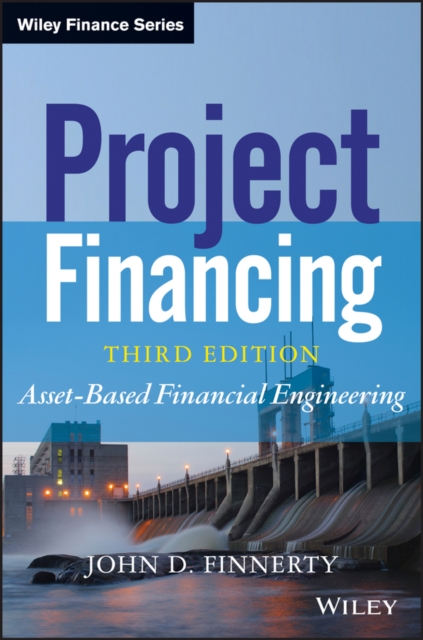
Project financing
A timely update to one of the most well-received books on project financing As an effective alternative to conventional direct financing, project financing has become one of the hottest topics in corporate finance. It's being used more and more frequently—and more successfully—on a wide variety of high-profile corporate projects, and has long been used to fund large-scale natural resource projects. But the challenges of successful project financing are immense, and the requirements of the process can easily be misunderstood. That's why John Finnerty has returned with the Third Edition of Project Financing. Drawing on his vast experience in the field, Finnerty takes you through the process step by step. Using updated examples and case studies that illustrate how to apply the analytical techniques described in the book, he covers the rationale for project financing, how to prepare the financial plan, assess the risks, design the financing mix, raise the funds, and much more. * Includes completely new chapters that cover the financing of sustainable projects as well as Sharia-compliant (Islamic) project financing * New material has been added to the discussion of financial modeling and international debt financing * Explores today's most innovative financing techniques and analyzes the shortcomings of unsuccessful project financing attempts Whether you're a corporate finance professional, project planner, or private investor, Project Financing, Third Edition demystifies the complexities of project financing and provides an invaluable guide for anyone who wants to master innovation in corporate finance today.
eBook