
Catalogue Search | MBRL


Are you sure you want to remove the book from the shelf?

{{itemTitle}}
641
result(s) for
"Cosmetics industry History."
Sort by:

Beauty imagined : a history of the global beauty industry
\"This book provides the first authoritative history of the global beauty industry from its emergence in the nineteenth century to the present day, exploring how today's global giants grew. It shows how successive generations of entrepreneurs built brands which shaped perceptions of beauty, and the business organizations needed to market them. They democratized access to beauty products, once the privilege of elites, but they also defined the gender and ethnic borders of beauty, and its association with a handful of cities, notably Paris and later New York. The result was a homogenization of beauty ideals throughout the world. Today globalization is changing the beauty industry again; its impact can be seen in a range of competing strategies. Global brands have swept into China, Russia, and India, but at the same time, these brands are having to respond to a far greater diversity of cultures and lifestyles as new markets are opened up worldwide\"--Provided by publisher.
Book

Selling beauty : cosmetics, commerce, and French society, 1750-1830
Rather than disappearing along with the Old Regime, the commerce of cosmetics, reimagined and redefined, flourished in the early 19th century, as political ideals and Enlightenment philosophies radically altered popular sentiment.
eBook

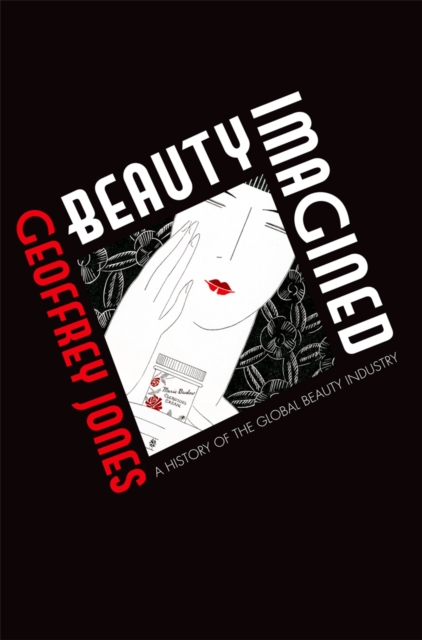
Beauty imagined : a history of the global beauty industry
The global beauty business permeates our lives, influencing how we perceive ourselves and what it is to be beautiful. This book provides the first authoritative history of the global beauty industry from its emergence in the 19th century to the present day, exploring how today's global giants such as Avon, Coty, Estée Lauder, and L'Oréal, grew.
eBook

Pretty iconic : a personal look at the beauty products that changed the world
\"Over 200 iconic products that are among the best and most influential in the beauty world - past, present and future. Packed full of beauty wisdom, Pretty Iconic takes us from the evocative smell of Johnson's baby lotion through to Simple Face wipes, NARS Orgasm and beyond, looking at the formative role beauty plays in our lives. Considering which much-hyped beauty buys are worth the buzz, and who they might be best suited for, in Pretty Iconic Sali Hughes uses her witty, inclusive and discerning style to look at some of the most significant products in beauty - from treasured classics such as Chanel No 5, to life-changers such as Babyliss Big Hair, and the more recent releases from Charlotte Tilbury, Sunday Riley and others that are shaping the beauty industry today. Delving into the products that are simply the best at what they do, the inventions that changed our perception of beauty and the launches that completely broke the mould, Pretty Iconic is a treasure trove of knowledge from Britain's most trusted beauty writer.\"--Wheelers.co.nz.
Book

Beauty imagined
Scent and Paris -- How do I look? -- Cleanliness and civilization -- Beauty amid war and Depression -- The television age -- Global ambitions meet local markets -- The uncertain identity of beauty -- Challenges from new quarters -- Globalization and tribalization
Book


History of Natural Ingredients in Cosmetics
There has been interest in the history of cosmetics for the last several decades. In part, this renewed curiosity is probably due to the revolutionizing natural movement in the cosmetic industry. In this article, we provide an overview of the historical aspects of the use of natural ingredients in cosmetics, which mostly come from botanical and mineral sources. We begin with an introduction to the art and science of cosmetics in the ancient world, which includes accounts of Egyptian, Mesopotamian, Greek, and Roman cosmetics as well as Traditional Chinese Medicine and Ayurvedic Medicine. These dermatological and cosmetic practices, which were advanced for the time, paved the way for the current revolution of natural ingredients in cosmetic products. Without providing a comprehensive historical account, we surveyed selected cultures during different periods of time to provide some perspective of our current understanding of natural ingredients in cosmetics. Attention is also given to the rich contributions of body art by tribal societies to our knowledge base, especially in the areas of dyes and pigments. Finally, we offer some perspective of natural ingredient cosmetics in the Information Age.
Journal Article

Madam C.J. Walker : inventor and businesswoman
\"Madam C.J. Walker wasn't just an inventor. She was also a political activist and businesswoman.Young readers will discover that she was not only fought for civil rights, but became one of the most successful African-American business owners ever\"-- Provided by publisher.
Book

Nennu and Shunu: Gender, Body Politics, and the Beauty Economy in China
This essay analyzes recent discourse on two emerging representations of women in China, \"tender\" women (nennu) and \"ripe\" women (shunu), in order to examine the relationships among gender, body politics, and consumerism. The discourse of nennu and shunu suggests that older, ripe women become younger and more tender by consuming fashions, cosmetic surgery technologies, and beauty and health care products and services because tender women represent the ideal active consumership that celebrates beauty, sexuality, and individuality. This discourse serves to enhance consumers' desire for beauty and health and to ensure the continued growth of China's beauty economy and consumer capitalism. Highlighting the role of the female body, feminine beauty, and feminine youth in developing consumerism, this discourse downplays the contributions of millions of beauty and health care providers (predominantly laid-off female workers and rural migrant women) and new forms of gender exploitation. Such an overemphasis on gender masks intensified class division. This essay suggests that women and their bodies become new terrains from which post-Mao China can draw its power and enact consumerism. Gender constitutes both an economic multiplier to boost China's consumer capitalism and a biopolitical strategy to regulate and remold women and their bodies into subjects that are identified with the state's political and economic objectives. Since consumerism has been incorporated into China's nation-building project, gender thus becomes a vital resource for both consumer capitalist development and nation building. This essay shows that both gender and the body are useful analytic categories for the study of postsocialism.
Journal Article