
Catalogue Search | MBRL


Are you sure you want to remove the book from the shelf?

{{itemTitle}}
32,215
result(s) for
"Cosmic physics"
Sort by:


A Model for Cosmic Magnetic Field Amplification: Effects of Pressure Anisotropy Perturbations
Magnetic field amplification in the early universe is a long-standing problem that has been extensively studied through theoretical and numerical approaches, focusing on turbulent dynamos and the growth of collisionless plasma instabilities. In the post-recombination era, pressure anisotropy drives plasma instabilities, and magnetic field amplification through these instabilities can be faster than that driven by turbulent dynamos. By considering the balance between isotropization through magnetic field amplification and anisotropy generation by external sources such as turbulence and anisotropic cosmic-ray scattering, it is reasonable to assume that the system evolves around an equilibrium anisotropy value. To improve the theoretical modeling of magnetic field amplification in such systems, this study specifically examines pressure anisotropy perturbations near the equilibrium anisotropy value, which may destabilize the system. By analyzing the effects of pressure anisotropy perturbations and their damping rates on the time evolution of cosmic magnetic fields, we highlight the importance of these perturbations in driving plasma instabilities and boosting cosmic magnetic field amplification.
Journal Article


Solar cycle prediction
A review of solar cycle prediction methods and their performance is given, including early forecasts for Cycle 25. The review focuses on those aspects of the solar cycle prediction problem that have a bearing on dynamo theory. The scope of the review is further restricted to the issue of predicting the amplitude (and optionally the epoch) of an upcoming solar maximum no later than right after the start of the given cycle. Prediction methods form three main groups.
Precursor methods
rely on the value of some measure of solar activity or magnetism at a specified time to predict the amplitude of the following solar maximum. The choice of a good precursor often implies considerable physical insight: indeed, it has become increasingly clear that the transition from purely empirical precursors to
model-based methods
is continuous. Model-based approaches can be further divided into two groups: predictions based on surface flux transport models and on consistent dynamo models. The implicit assumption of precursor methods is that each numbered solar cycle is a consistent unit in itself, while solar activity seems to consist of a series of much less tightly intercorrelated individual cycles.
Extrapolation methods,
in contrast, are based on the premise that the physical process giving rise to the sunspot number record is statistically homogeneous, i.e., the mathematical regularities underlying its variations are the same at any point of time, and therefore it lends itself to analysis and forecasting by time series methods. In their overall performance during the course of the last few solar cycles, precursor methods have clearly been superior to extrapolation methods. One method that has yielded predictions consistently in the right range during the past few solar cycles is the polar field precursor. Nevertheless, some extrapolation methods may still be worth further study. Model based forecasts are quickly coming into their own, and, despite not having a long proven record, their predictions are received with increasing confidence by the community.
Journal Article

A history of solar activity over millennia
Presented here is a review of present knowledge of the long-term behavior of solar activity on a multi-millennial timescale, as reconstructed using the indirect proxy method. The concept of solar activity is discussed along with an overview of the special indices used to quantify different aspects of variable solar activity, with special emphasis upon sunspot number. Over long timescales, quantitative information about past solar activity can only be obtained using a method based upon indirect proxies, such as the cosmogenic isotopes
14
C and
10
Be in natural stratified archives (e.g., tree rings or ice cores). We give an historical overview of the development of the proxy-based method for past solar-activity reconstruction over millennia, as well as a description of the modern state. Special attention is paid to the verification and cross-calibration of reconstructions. It is argued that this method of cosmogenic isotopes makes a solid basis for studies of solar variability in the past on a long timescale (centuries to millennia) during the Holocene. A separate section is devoted to reconstructions of strong solar energetic-particle (SEP) events in the past, that suggest that the present-day average SEP flux is broadly consistent with estimates on longer timescales, and that the occurrence of extra-strong events is unlikely. Finally, the main features of the long-term evolution of solar magnetic activity, including the statistics of grand minima and maxima occurrence, are summarized and their possible implications, especially for solar/stellar dynamo theory, are discussed.
Journal Article

Conjuring the universe : the origins of the laws of nature
The marvellous complexity of the Universe emerges from several deep laws and a handful of fundamental constants that fix its shape, scale, and destiny. There is a deep structure to the world which at the same time is simple, elegant, and beautiful. Where did these laws and these constants come from? And why are the laws so fruitful when written in the language of mathematics? Peter Atkins considers the minimum effort needed to equip the Universe with its laws and its constants. He explores the origin of the conservation of energy, of electromagnetism, of classical and quantum mechanics, and of thermodynamics, showing how all these laws spring from deep symmetries. The revolutionary result is a short but immensely rich weaving together of the fundamental ideas of physics. With his characteristic wit, erudition, and economy, Atkins sketches out how the laws of Nature can spring from very little. Or arguably from nothing at all.
Book

Radiation dose of aircrews during a solar proton event without ground-level enhancement
A significant enhancement of radiation doses is expected for aircrews during ground-level enhancement (GLE) events, while the possible radiation hazard remains an open question during non-GLE solar energetic particle (SEP) events. Using a new air-shower simulation driven by the proton flux data obtained from GOES satellites, we show the possibility of significant enhancement of the effective dose rate of up to 4.5 μSv h−1 at a conventional flight altitude of 12 km during the largest SEP event that did not cause a GLE. As a result, a new GOES-driven model is proposed to give an estimate of the contribution from the isotropic component of the radiation dose in the stratosphere during non-GLE SEP events.
Journal Article

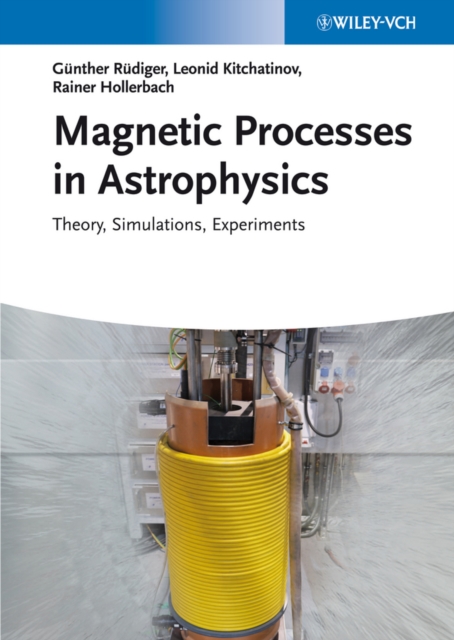
Magnetic processes in astrophysics
In this work the authors draw upon their expertise in geophysical and astrophysical MHD to explore the motion of electrically conducting fluids, the so-called dynamo effect, and describe the similarities and differences between different magnetized objects. They also explain why magnetic fields are crucial to the formation of the stars, and discuss promising experiments currently being designed to investigate some of the relevant physics in the laboratory. This interdisciplinary approach will appeal to a wide audience in physics, astrophysics and geophysics.
This second edition covers such additional topics as small-scale dynamos, while also presenting the latest results and experiments.
eBook