
Catalogue Search | MBRL


Are you sure you want to remove the book from the shelf?

{{itemTitle}}
7
result(s) for
"Costume Private collections."
Sort by:

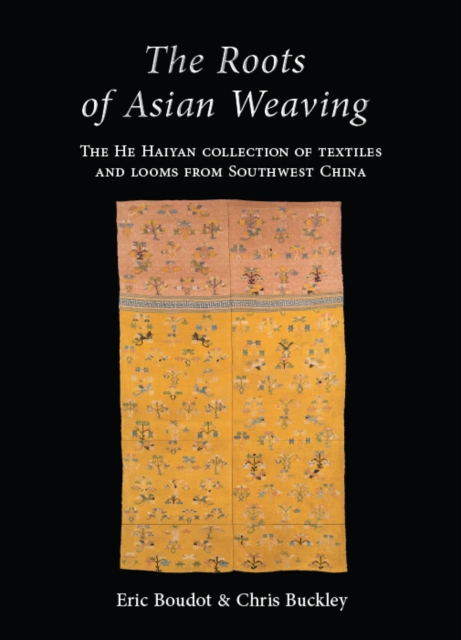
The roots of Asian weaving : the He Haiyan collection of textiles and looms from Southwest China
This ground-breaking book documents the weaving traditions and textiles of one of Asia's most ethnically diverse areas, placing them in a regional context. Based on more than a decade of first-hand study in the field, the authors record the traditions of Miao, Yao, Buyi, Dong, Zhuang, Maonan, Dai and Li weavers from Guizhou to Hainan Island.
eBook

Collecting fashion : nostalgia, passion, obsession
An indispensable survey of the most important archival collections assembled by fashion's key players. In order for fashion to march forward, it must possess the ability to look back. For the fashion obsessed, one's archive is surely a testament to the act of preservation and, of course, a sophisticated symbol of taste. Archives take time to build, wardrobes or storage units packed to the brim with rare, archival shoes, dresses, and handbags, some never worn, are only perfected after countless hours spent on Ebay and in the depths of obscured vintage sales. The results end up being remarkable representations of fashion history. This book gathers the preeminent collections of archival obsessives, capturing the closets of an impressive list of fashion and design talent. Readers will get an in-depth look at Michèle Lamy's extensive Comme des Garçon archive, Sarah Andelman's covetable (and colorful) sneaker and t-shirt collection, ENDYMA's growing Helmut Lang archive, Zaha Hadid's fabulous footwear assemblage, and more. This tome, over 300 pages long, painstakingly showcases the subject's archive while showing off top-tier labels and hard-to-obtain seasons: Issey Miyake, Maison Martin Margiela, Thierry Mugler, John Galliano, and Alexander McQueen, among others, and serves as an indispensable reference for those interested in fashion history and building their own archive. Essays throughout by leading thinkers and writers provide insightful commentary alongside each collection featured in this new, enlightening fashion bible.-- Amazon.
Book

Navajo Textiles
Navajo Textilesprovides a nuanced account the Navajo weavings in the Crane Collection at the Denver Museum of Nature & Science-one of the largest collections of Navajo textiles in the world. Bringing together the work of anthropologists and indigenous artists, the book explores the Navajo rug trade in the mid-nineteenth century and changes in the Navajo textile market while highlighting the museum's important, though still relatively unknown, collection of Navajo textiles.
In this unique collaboration among anthropologists, museums, and Navajo weavers, the authors provide a narrative of the acquisition of the Crane Collection and a history of Navajo weaving. Personal reflections and insights from foremost Navajo weavers D. Y. Begay and Lynda Teller Pete are also featured, and more than one hundred stunning full-color photographs of the textiles in the collection are accompanied by technical information about the materials and techniques used in their creation. An introduction by Ann Lane Hedlund documents the growing collaboration between Navajo weavers and museums in Navajo textile research.
The legacy of Navajo weaving is complex and intertwined with the history of the Diné themselves.Navajo Textilesmakes the history and practice of Navajo weaving accessible to an audience of scholars and laypeople both within and outside the Diné community.
eBook

Walk this way : footwear from the Stuart Weitzman collection of historic shoes
\"Famous for his trademark use of unique materials and his creation of one-of-a-kind, \"million dollar\" shoes for Oscar nominees, American designer Stuart Weitzman's personal collection of antique shoes features a similarly eclectic range. Lavishly illustrated with one hundred color photographs from the Stuart Weitzman Collection, this new volume explores the impact of twentieth-century design and culture on the evolution of women's shoes from 1870-1980. It is a must-have for all shoe fans. Edward Maeder is the founding director of the Bata Shoe Museum in Toronto. Stuart A. Weitzman is the founder of the eponymous ,o shoe company Stuart Weitzman\"-- Provided by publisher.
Book

Why the French Don't Like Headscarves
The French government's 2004 decision to ban Islamic headscarves and other religious signs from public schools puzzled many observers, both because it seemed to infringe needlessly on religious freedom, and because it was hailed by many in France as an answer to a surprisingly wide range of social ills, from violence against females in poor suburbs to anti-Semitism.Why the French Don't Like Headscarvesexplains why headscarves on schoolgirls caused such a furor, and why the furor yielded this law. Making sense of the dramatic debate from his perspective as an American anthropologist in France at the time, John Bowen writes about everyday life and public events while also presenting interviews with officials and intellectuals, and analyzing French television programs and other media.
Bowen argues that the focus on headscarves came from a century-old sensitivity to the public presence of religion in schools, feared links between public expressions of Islamic identity and radical Islam, and a media-driven frenzy that built support for a headscarf ban during 2003-2004. Although the defense oflaïcité(secularity) was cited as the law's major justification, politicians, intellectuals, and the media linked the scarves to more concrete social anxieties--about \"communalism,\" political Islam, and violence toward women.
Written in engaging, jargon-free prose,Why the French Don't Like Headscarvesis the first comprehensive and objective analysis of this subject, in any language, and it speaks to tensions between assimilation and diversity that extend well beyond France's borders.
eBook
