
Catalogue Search | MBRL


Are you sure you want to remove the book from the shelf?

{{itemTitle}}
42,346
result(s) for
"Cotton textiles"
Sort by:


Cotton
Today's world textile and garment trade is valued at a staggering $425 billion. We are told that under the pressure of increasing globalisation, it is India and China that are the new world manufacturing powerhouses. However, this is not a new phenomenon: until the industrial revolution, Asia manufactured great quantities of colourful printed cottons that were sold to places as far afield as Japan, West Africa and Europe. Cotton explores this earlier globalised economy and its transformation after 1750 as cotton led the way in the industrialisation of Europe. By the early nineteenth century, India, China and the Ottoman Empire switched from world producers to buyers of European cotton textiles, a position that they retained for over two hundred years. This is a fascinating and insightful story which ranges from Asian and European technologies and African slavery to cotton plantations in the Americas and consumer desires across the globe.
eBook

Fabric : the hidden history of the material world
From our earliest ancestors to babies born today, fabric is a necessary part of our everyday lives, but it's also an opportunity for creativity, symbolism, culture and connection. Traveling across the world and bringing history to life, bestselling author Victoria Finlay investigates how and why people have made and used cloth. A century ago in Wales, women would sew their own funeral clothes over tea with friends. In Papua New Guinea, bark is stripped from trees and beaten into cloth. Harris Tweed has a particular smell, while Guatemalan weavers use dazzling colors. Uncovering the stories of the fabrics people wear and use from sacking to silk, Fabric combines science, history, tradition and art in a captivating exploration of how we live, work, craft and care.
Book

Environmental Profile Study of Ozone Decolorization of Reactive Dyed Cotton Textiles by Utilizing Life Cycle Assessment
Research approaches on the use of ecotechnologies like ozone assisted processes for the decolorization of textiles are being explored as against the conventional alkaline reductive process for the color stripping of the cotton textiles. The evaluation of these ecotechnologies must be performed to assess the environmental impacts. Partial “gate to gate” Life Cycle Assessment (LCA) was implemented to study the ozone based decolorization process of the reactive dyed cotton textiles. Experiments were performed to determine input and output data flows for decolorization treatment of reactive dyed cotton textile using the ozonation process. The functional unit was defined as “treatment of 40 g of reactive dyed cotton fabric to achieve more than 94% color stripping”. Generic and specific data bases were also used to determine flows, and International Life Cycle Data system (ILCD) method was selected to convert all flows into environmental impacts. The impact category “Water resource depletion” is the highest for all the ozonation processes as it has the greatest relative value after normalization amongst all the impact indicators. Electricity and Oxygen formation were found to be the major contributors to the environmental impacts. New experimental conditions have been studied to optimize the impacts.
Journal Article

Strategic Development of Export Potential for Cotton-Textile Clusters through Green Technologies and Sustainable Practices
Eco-innovations and regulatory compliance represent a fundamental resource in sustainable trade development and export diversification. This work applies a multi-method assessment of green investments, eco-certifications, and circular economy adoption in Uzbekistan’s cotton-textile sector in order to explore strategic export enhancement pathways and analyze the economic feasibility, environmental impact, and international trade potential. By integrating the AHP-based sustainability indicators characterizing firm-level performance for export potential, we offer a comprehensive framework of sustainable transformation practices. The selected sustainability variables are compared with export performance metrics as a benchmark, extracted from the State Committee on Statistics, and modeled at regional and firm size levels, through both a regression-based estimation and a multi-criteria decision analysis approach. In order to achieve green-oriented export development, this article constructs an analytical framework based on the theory of sustainable trade transition, collects data by means of policy analysis and industry feedback, and uses the method of comparative evaluation to verify the proposed model. Meanwhile, the stakeholder engagement and certification mechanisms have a moderating effect on the relationship between eco-innovation practices and the textile sector’s export performance, but strengthen the positive correlation between environmental audits and the industry’s trade resilience. Findings about the efficiency of circular economy integration are statistically significant and context- specific. By applying a proposed sustainability-oriented trade framework to the Uzbekistan cotton-textile system, a capacity-building model applicable to emerging economies is implemented. This model may help to reduce the frequency of export disruptions and enable structured support for managing trade resilience.
Journal Article
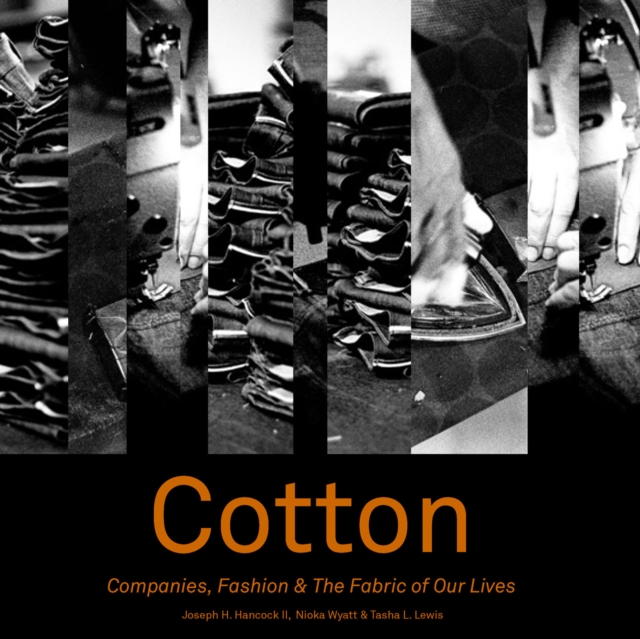
Cotton
This book explores the importance of cotton as a major resource for US fashion businesses. It is rooted in an investigative research project that deployed undergraduate and graduate students and faculty researchers to US fashion businesses that rely on cotton to understand how the resource is sourced, priced, transported, manipulated and sold.
eBook

Chronic Lung Function Decline in Cotton Textile Workers: Roles of Historical and Recent Exposures to Endotoxin
Background: Long-term occupational exposure to cotton dust that contains endotoxin is associated with chronic respiratory symptoms and excessive decline in forced expiratory volume in 1 sec (FEV₁), but the mechanisms of endotoxin-related chronic airflow obstruction remain unclear. Objective: In the current study, we examined temporal aspects of the exposure-response relationship between airborne endotoxin exposure, longitudinal change in FEV₁, and respiratory symptoms in a cohort of Chinese cotton textile workers. Methods: This prospective cohort study followed 447 cotton textile workers from 1981 to 2006. at approximately 5-year intervals. We used a generalized estimating equations approach to model FEV₁ level and respiratory symptoms as a function of past exposure (cumulative exposure up to the start of the most recent 5-year survey interval) and cumulative exposure (within the most recent interval) to endotoxins, after adjusting for other covariates. Models were stratified by active versus retired work status and by years employed before the baseline survey (< 5 and > 5 years). Results and Conclusions: Past exposure to endotoxin was associated with reduced FEV₁ level among retired cotton workers. Among all cotton workers, past exposure was more strongly associated with reduced FEV₁ for those hired < 5 years before baseline than for those who were hired > 5 years after baseline. Recent endotoxin exposure was significantly associated with byssinosis, chronic bronchitis, and chronic cough.
Journal Article

King cotton in modern America
King Cotton in Modern America places the once kingly crop in historical perspective, showing how \"cotton culture\" was actually part of the larger culture of the United States despite many regarding its cultivation and sources as hopelessly backward. Leaders in the industry, acting through the National Cotton Council, organized the various and often conflicting segments to make the commodity a viable part of the greater American economy. The industry faced new challenges, particularly the rise of foreign competition in production and the increase of man-made fibers in the consumer market.Modernization and efficiency became key elements for cotton planters. The expansion of cotton- growing areas into the Far West after 1945 enabled American growers to compete in the world market. Internal dissension developed between the traditional cotton growing regions in the South and the new areas in the West, particularly over the USDA cotton allotment program. Mechanization had profound social and economic impacts. Through music and literature, and with special emphasis placed on the meaning of cotton to African Americans in the lore of Memphis's Beale Street, blues music, and African American migration off the land, author D. Clayton Brown carries cotton's story to the present.
eBook

Fire Performance of Cotton Fabrics Coated with 10- Zr-Based Metal-Organic Frameworks
We investigated the performance of cotton fabrics coated with DOPO-HQ and Zr-based Metal–organic Frameworks when exposed to fire. The chemical structure of the cotton fabrics before and after the coating was characterized using FTIR spectroscopy, and the surface morphology of cotton and their combustion residues was probed via scanning electron microscopy. In our experiments, we used flammability tests and thermogravimetric methods to understand the burning behavior of the coated fibers, as well as their thermal stability. The cotton fabrics coated with DOPO-HQ and Zr MOFs exhibited shorter combustion times, had better thermal degradation properties, promoted the creation of heat-insulating layers, and exhibited improved smoke suppression behavior.
Journal Article

Dyeing Performance and Anti-Superbacterial Activity of Cotton Fabrics Dyed with IChamaecyparis obtusa/I
In hospitals, doctors’ and patients’ uniforms, as well as bedding and textiles, can be carriers of superbacteria. This study was conducted to test the anti-superbacterial activity of cotton fabrics dyed with extracts of Chamaecyparis obtusa (C. obtusa). The dye was extracted by boiling C. obtusa in water. The test cotton was mordant-dyed three times with the solution at a 1:17 dyeing bath ratio and at an 8.69% (o.w.f) dye concentration for 15 min at 40 °C. C. obtusa dyeing demonstrated a high dyeing affinity in the absence of mordant (K/S value = 14.62). The K/S value of the dyed fabric increased in the order of Cu-mordanted, Fe-mordanted, non-mordanted, and Al-mordanted cotton. Dry cleaning, perspiration and rubbing fastness were determined to be good (Grade 4–5). The dyed fabrics appeared to have a high deodorizing ability compared to the control fabric. They showed not only antibacterial activity against Staphylococcus aureus (S. aureus) and Klebsiella pneumoniae (K. pneumoniae), known to be frequently found in fabrics, but also higher antibacterial activity against the superbacteria methicillin-resistant Staphylococcus aureus (MRSA) (reduced by 99.7%). These results suggest that fabric dyed with C. obtusa extract may be used in clothes and bed linens for inpatients, given its high anti-superbacterial activity. Furthermore, such fabrics may contribute to inhibiting pathogenic infections when used in hospital uniforms or operation gowns for doctors or nurses in hospitals.
Journal Article