
Catalogue Search | MBRL


Are you sure you want to remove the book from the shelf?

{{itemTitle}}
10,907
result(s) for
"Counseling Practice."
Sort by:


Deficient Counseling on Physical Activity among Nephrologists
Background: An evaluation of exercise counseling practices among nephrologists in 2001 demonstrated few clinicians assessing patients' levels of physical activity (PA) and counseling to increase activity. Recent Kidney Disease Outcomes Quality Initiative (KDOQI) cardiovascular guidelines recommended that nephrologists counsel patients to increase PA. Our objective was to ascertain whether nephrologists' counseling practices have changed. Methods: We administered a 30-item survey regarding exercise counseling to nephrologists attending the ASN meeting in 2007. Some questions were adapted from a prior survey administered in 2001 to assess differences in practice patterns compared to 6 years earlier. Results: Participants answered questions regarding opinions and practices relevant to PA (n = 198), KDOQI guidelines, self-reported PA, and demographic information (n = 173). Participants were 44 ± 11 years of age, 48% practicing in the USA, and 76% male. In multivariate analysis, older nephrologists (OR; 95% CI) (3.3; 1.2-9.0) and those more physically active (5.5; 2.0-14) were more likely to ask and counsel patients about PA. Opinions associated with less counseling behavior included lack of confidence in ability to discuss PA (0.2; 0.05-0.5). Multivariate comparison to previous respondents (n = 503) showed current nephrologists were not asking and counseling more (1.2; 0.81-1.8). Conclusion: Despite new guidelines, counseling behavior has not increased. Published guidelines are insufficient to reach younger nephrologists. Copyright © 2010 S. Karger AG, Basel [PUBLICATION ABSTRACT]
Journal Article


Avoiding acute kidney injury in primary care: attitudes and behaviours of general practitioners and community pharmacists in Hawke’s Bay
INTRODUCTION: Awareness of the effect of acute kidney injury on patient outcomes and health systems is growing internationally. New Zealand’s approach focuses on stopping consumption of ‘at-risk’ medicines when acute kidney injury has been established and raising awareness of the risks associated with the Triple Whammy drug combination.AIM: To explore current practices and views of Hawke’s Bay general practitioners (GPs) and community pharmacists regarding patient education about medicines with potential for contributing to community-acquired acute kidney injury, with a focus on community pharmacists providing patient education regarding when to temporarily withhold ‘at-risk’ medicines during acute dehydrating illnesses.METHODS: Two tailored cross-sectional online anonymous surveys of GPs and community pharmacists working in Hawke’s Bay were administered between 2015 and 2016. Descriptive statistics were generated from the closed-question responses and manifest content analysis was applied to the free-text responses.RESULTS: Twenty-two percent (37/167) of GPs and 34% (32/95) of pharmacists responded. Most respondents, GPs (34/37) and pharmacists (25/32), self-reported expertise to educate patients on temporarily withholding ‘at-risk’ medicines during acute dehydrating illnesses. Twenty-nine (78%) GPs had confidence in pharmacists providing this patient education and 20 (54%) welcomed pharmacist contact regarding a Triple Whammy prescription. However, for a variety of reasons, pharmacists did not routinely provide this education or contact GPs.DISCUSSION: Both GPs and community pharmacists reported they had expertise to provide useful patient education about ‘at-risk’ medicine use during acute dehydrating illnesses. Dialogue to clarify the role of the two groups would be beneficial to achieve a more coordinated approach to patient care. Relevant strategies and frameworks already exist, but national interprofessional leadership and local application would be beneficial.
Journal Article


Blank Minds and Sticky Moments in Counselling
The goal of this book is to help students and practitioners see difficult moments as learning experiences and to empower them to be imaginative, creative and flexible counsellors. It uses illustrations, humour and a common sense approach, making it stand out from the competition.
eBook

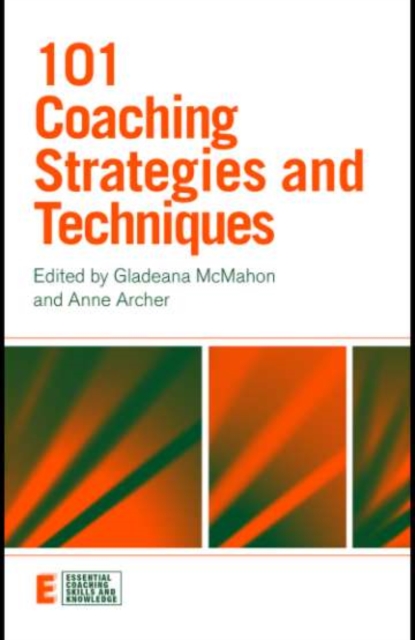
101 Coaching Strategies and Techniques
101 Coaching Strategies and Techniques provides focused, practical strategies to help the coach with their work. Each point provides a detailed explanation of the strategy together with potential pitfalls and solutions.
Contributors from a range of coaching backgrounds are brought together to cover a number of issues faced by professional coaches including:
confidence building
developing specific skills and strategies
group coaching
problem solving and creativity
self awareness
the stuck client.
101 Coaching Strategies and Techniques will be a handy reference tool for busy coaches; the bite-sized strategies will also provide a useful guide for those in training.
Part I: Confidence Building. Dickers , A Strengths and Skills Exercise. Dunbar , Achieving an Outcome by Exploring Metaphors. Swinburne , Acting Positively in Difficult Situations. Swinburne , Building General Confidence and Self-Esteem. McGeever , Celebration and Reward. McMahon , Coping Imagery. Dunbar , Creating a Stronger Feeling of Confidence (Or Any Other Positive Feeling or Resource) Using Clean Language. Melrose , Hold up A Mirror and The Client will Do The Rest. Shola Arewa , Moving Beyond Comfort Zones. McGeever , Power Music. McMahon , Rescue Remedy Breathing Exercise. McMahon , The Stand-Back Strategy. McMahon , The Step-Up Technique. Warner , Transition to a New Level of Responsibility. O’Connor , Unblocking Resistance or Fear. Part II: Developing as a Coach. Archer , Adding to the Data - Feelings. Cusack , Bringing Yourself into the Room. Melrose , Help your Client to Learn for Themselves, Not Doing The Work Yourself. Cooper , Managing and Maximizing Relationship with a Third Party Sponsor. Stevens , Managing Yourself During a Coaching Session. McGeever , Pre-Coaching Ritual. Campbell , Redefining the Meaning of Feedback and Creating a Unique Feedback Pattern. Cusack , Rusty or Out of Practice. Melrose , Sometimes Coping is as Good as It Gets. Shola Arewa , Three-Part Breathing Exercise. Part III: Developing Specific Skills and Strategies. Hicks , Attitude Awareness – Impact and Influencing. Warner , Building a High Performing Team. Stevens , Coaching for Confidence in Delivering Presentations. Hicks , Confidence Building with Body Language. Hicks , Creating an Impact at Work - Appearance. McGeever , Decisions by Intuition. Campbell , Enriching a Leader’s Influencing Style Through a Deepening Understanding of Their Impact on Others. Swinburne , Handling Poor Performance / Unacceptable Behaviour. Hicks , Impact – Voice. Grimley , Multi-Level Modeling. Hogbin-Mills , Success Role Modeling. Gorce-Bourge , The Frame Game. Grimley , The Swish Model. McMahon , Time Projection Imagery. Part IV: Focusing on the Future. Dunbar , Action Planning. Hogbin- Mills , Career Choice. Hogbin-Mills , Career Visioning. Champion , Future Vision. Grimley , New Behaviour Generator. Dickers , Visualizing Future Goals. Part V: Group Coaching. Adams , Box Process. Adams , Disruptive Thinking / Disruptive Marketing. Adams , Issue Processing. Archer , Leading As A Team. Adams , More / Less / Stop. Adams , Unlocking Creativity. Part VI: Problem Solving and Creativity. Dunbar , Finding your Niche (Using Clean Language). Hogbin-Mills , Job Decision Making. Cusack , Letting them Draw their Own Conclusions. Champion , Mind Mapping for Insight and Problem Solving Based on the Work of Tony Buzan. Warner , Well-Formed Outcomes. Part VII: Relationships. Gorce-Bourge , I’m Right – You’re Wrong. O’Connor , Influencing Strategy: Stepping into the Other Person’s Shoes. Grimley , The Meta Mirror. Hicks , The Meta Mirror. Gorce-Bourge , The Rope Game. Swinburne , Understanding Difference in Communication / Influencing Styles. Part VIII: Self-Awareness. Tod , A Life of Choice? Dickers , Articulating own Goals, Developing Goal-Setting Strategies. Hogbin-Mills , Career MOT. Hogbin-Mills , Career Reputation. Stevens , Coaching Glass Ceiling Clients. Campbell , Coordinated Management of Meaning. Dickers , Developing Independent Skills. Gorce-Bourge , Feed Back or Fight Back. Archer , Finding what Makes you Tick at Work. Champion , Force Field Analysis For Organizations and Individuals in Transition. Warner , Foxy Donkey Guide to Organizational Politics. Stevens , From Manager to Leader: The Transition Struggle. Swinburne , Identifying Work-Based Skills. Tod , Improving Performance by Accessing Emotions. Shola Arewa , Journal Writing. Dunbar , Noticing and Paying Attention to Metaphors. Melrose , People Will Not Change Unless They Want To - Locate the Desire to Change First. McGeever , Question of the Week. Cooper , Raising Awareness at the Start of a Coaching Relationship – Using 360-Degree Feedback. Champion , Stakeholder Mapping for Success and Influence. Campbell , The Daisy Model: A Framework to Generate a Vision of Who the Coachee Strives to be as A Successful Professional. Grimley , The Meta Model. O’Connor , Try an Experiment: What Happens When you Try. Cooper , Understanding how Life Previous Life Experiences Have an Impact on the Client and the Connection to the Behavioural Patterns They Demonstrate. O’Connor , Using Metaphor to Unlock your Thinking. O’Connor , Using Words to Connect with Thoughts and Feelings. Stevens , When a Client or Coach gets Stuck. Swinburne , Work / Life Balance: Changing Life Habits. Part IX: When a Client Gets Stuck. Dickers , Being Stuck is Part of the Creative Process. Shola Arewa , Get Out of Your Head and into Your Body. Cooper , Helping a Coachee become ‘Unstuck’. Shola Arewa , Recognize and Release Fear. Cusack , Reframing. Tod , Stuck. Champion , The Art of Reflective Practice. Gorce-Bourge , The Ball (Part 1) and the Mud (Part 2). Melrose , The Presenting Issue Isn’t Always the Real Issue. Cusack , Unsticking the Stuckness. Cooper , When a Client is Stuck.
\"The book is a great list of coaching techniques and suggestions. In my opinion, the addition of therapeutic perspectives has a lot of potential for deepening the coaching process and so could provide long-lasting change for coaching clients. I expect the book to be very helpful for people working as coaches; counsellors working with EAPs or other short-term counselling might also find some of the activities useful.\" - Sue Lewis, Therapy Today, October 2010
\"Practitioners, coaches, managers, marketers, counsellors, politicians, public figures and non-scholars will learn from this book. No prerequisites are needed. Coaches who have to train players, new employees (or teenagers) will find here some inspiration, just like young parents who have to manage a crisis.\"— Yves Laberge, Division of Clinical Psychology
Gladeana McMahon is Fellow and Chair of the Association for Coaching, UK. Her publications include Achieving Excellence in Your Coaching Practice and Essential Skills for Setting up a Counselling or Psychotherapy Practice . Gladeana was listed as one of the UK's 'top ten coaches' in the Independent on Sunday
Anne Archer develops leadership and change capability in organisations in both the public and the private sector. She also facilitates coach training programmes, open and in-house, and provides 1:1 and group supervision. Anne works with leaders and coaches across the globe. She is Editor of the Association for Coaching bulletin and is a member of the ICF
eBook

Changing roles for a new psychotherapy
\"Psychotherapy is not a 'one size fits all approach.' As author John Miller describes in Changing Roles for a New Psychotherapy, all theoretical orientations have their uses and merits in different situations and with different clients. Through a varied personal life and professional career, in which he developed a creative psychotherapeutic approach that allows the adaptation of diverse roles with clients, Dr. Miller has gained insights through working in academia, the sciences, management consulting, and a state hospital. He applies these insights, along with those he gained working various summer jobs, to take readers beyond the standard medical model of diagnosis and treatment by drawing on the roles of other professionals. He examines 11 different occupations and explores how the insights gained in each field can enhance therapeutic possibilities. How does cooking relate to psychotherapy? Can accounting change the way psychotherapy is performed? Read on to find out!\"-- Provided by publisher.
Book

What Counseling Theories Work in China: A Six-Year (2018–2023) Content Analysis of Mental Health Outcome Studies in China
There is an increasing need for efficacious and culturally sensitive mental health services in China. A 6-year (2018–2023) content analysis of mental health outcome research was conducted to investigate the efficacy of applying counseling theories to the Chinese population. The study explored the publication trends, types of counseling theories, the efficacy of counseling theories, research methods, and studied issues and populations about the mental health outcome research in China that was published in the last six years. Implications were also provided for psychotherapy researchers, practitioners serving the Chinese population, the Chinese counseling profession, and educators training future mental health practitioners in China.
Journal Article