
Catalogue Search | MBRL


Are you sure you want to remove the book from the shelf?

{{itemTitle}}
102
result(s) for
"Counterinsurgency India."
Sort by:

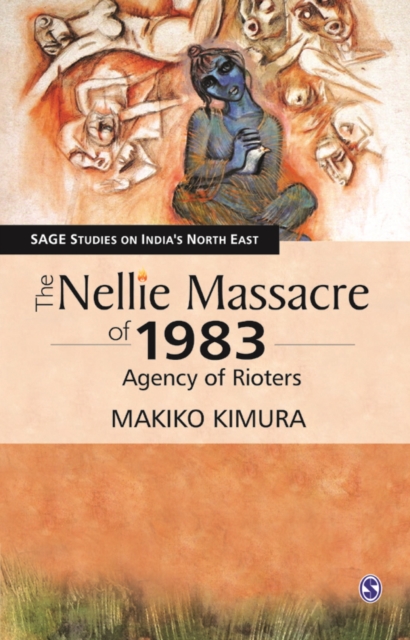
The Nellie massacre of 1983 : agency of rioters
The Nellie incident, involving the massacre of about 2,000 Muslim villagers, took place during the antiforeigner movement in Assam, in order to drive out illegal Bangladeshi and Nepali immigrants. Unlike the communal \"riots\" in the other parts of India from the 1980s to 2000s, this was an incident which took place in rural areas. The attackers were part of the indigenous tribal population, and Assamese Hindus of lower strata. The Nellie Massacre of 1983 is an attempt to search for clues from the narratives of attackers and survivors of the incident, which are fragmented and sometimes contradictory to each other. The key focus of the book is on the local decision-making processes of the riot agents in deciding to use collective violence against another group/community/ethnicity especially in the context of rural India. By using the case study of the Nellie massacre, the author attempts to argue that rioters have their own agency and decision-making power, and were not mere puppets of ideology and structural causes. Instead, they interpreted the circumstances in their own way and decided to riot.
eBook

Fiscal Incentives for Conflict: Evidence from India's Red Corridor
Can tax regimes shape the incentives to engage in armed conflict? Indian mining royalties benefit the States, but are set by the central government. India's Maoist belt is mineral-rich, and States are responsible for counterinsurgency operations. We exploit the introduction of a 10% ad valorem tax on iron ore that increased royalty collections of the affected states by a factor of 10. We find that the royalty hike was followed by a significant intensification of violence in districts with important iron ore deposits. The royalty increase was also followed by an increase in illegal mining activity in iron mines.
Paper

Towards a Burma-inclusive South Asian Studies: A Roundtable
Burma, or Myanmar as it was renamed in 1989, is largely ignored within the discipline of South Asian Studies, despite its cultural, religious, economic, and strategic significance for the wider worlds of Asia. Burma is often studied either in isolation or alongside Southeast Asian countries such as Thailand, Vietnam, and Malaysia, despite its equally important historical and cultural connections to communities, states, and networks across what is now India, Bangladesh, Sri Lanka, or Nepal. In this Roundtable, four scholars of South Asia discuss Burma's erasure within the discipline, the origins and limitations of traditional area studies frameworks, and the possibilities afforded by Burma's inclusion within a more expansive conception of South Asia.
Journal Article

Israel Is Trying to Hijack the Baloch Struggle
As Israel loudly beat the drums of war one day before its unprovoked surprise attack on Iran, a small but significant piece of news slipped by almost unnoticed: The announcement of a new research project on the website of a Washington DC think tank. On June 12, the Middle East Media Research Institute (MEMRI) announced the launch of the Balochistan Studies Project (BSP). Significantly, in addition to mentioning Balochistan's abundance of natural resources \"such as oil, gas, uranium, copper, coal, rare earth elements and the two deep seaports of Gwadar and Chabahar,\" MEMRI's statement justifies the project's necessity by identifying the region as \"the perfect outpost to counter and keep under control Iran, its nuclear ambitions, and its dangerous relations with Pakistan, which may provide Tehran with tactical nukes.\" MEMRI is well known for its selective translation of snippets of Arabic, Persian and Turkish-language media, screenshots from which often end up being shared as memes on social media platforms.
Journal Article

India–Thailand Security Cooperation
In the past, India’s resolve to connect with countries further to its east centred on its relationship with ASEAN as a group and lacked a holistic outlook as it emphasised on a lopsided approach that left out the security dimension. The bilateral relationship between Bangkok and New Delhi marks an emerging departure from this past trend. In the recent past, Thailand has emerged as a bright spot in India’s vast array of security relationships, with growing focus on maritime security, counterinsurgency and counterterrorism operations, joint patrols and exchange of personnel in training. Besides boosting interoperability, increasing joint actions seek to marry India’s Act East policy with Thailand’s Look West policy, both of which emerged in the past decade of the twentieth century. Both countries look to strengthening their resolve in the Indo-Pacific, even as the region’s stability gets further complicated by sharpening Great Power politics. This article scrutinises the India–Thailand relationship from a security perspective and tests the compatibility of this emerging bilateral relationship with a regional security architecture conceptualisation in the Indo-Pacific. As such, this article seeks to fulfil two important goals: fill the literature deficit in India–Thailand relations that has often been eclipsed and subsequently neglected by the overarching canvass of India–ASEAN relations and analyse India–Thailand bilateral relations from the perspective of an emerging security partnership in the complex labyrinth of relationships in the Indo-Pacific.
Journal Article

The village as Cold War site: experts, development, and the history of rural reconstruction
This article examines ‘the village’ as a category of development knowledge used by policymakers and experts to remake the ‘Third World’ during the Cold War. The idea of the village as a universal category of underdevelopment, capable of being remade by expert-led social reform, structured efforts to win the ‘hearts and minds’ of people from Asia to Latin America and Africa. Rooted in a transnational interwar movement for rural reconstruction, village projects were transformed in the 1950s and 1960s by a scientization of development that narrowed the range of experts in the field and by Cold War politics that increasingly tied development to anti-communism and counterinsurgency. From India to Central America, strategic efforts to control rural populations won out over concerns for rural welfare.
Journal Article

“Every death matters?”: Combat casualties, role conception, and civilian control
How do combat missions, defined as an armed confrontation that causes casualties, shape civil-military relations and military’s role conception? This article argues that militaries that incur combat casualties gain a stronger hand in the civil-military equilibrium. This is because casualties affect domestic political opinion and give prominence to the views expressed by military officials. Civilians are then more deferential to professional military advice. In turn, the military obtains considerable operational freedom, and can pick and choose missions which they find desirable. Second, the military’s role conception – an important determinant of military missions, is shaped most prominently by its combat experience. Militaries sustaining casualties obtain leverage vis-à-vis civilians and based on their institutional preference, they either prioritise or avoid non-traditional missions. While making these arguments, this article examines combat casualties, role conception, and civilian control in India. These concepts as a whole and, the Indian case study especially are surprisingly understudied considering it is among the few non-Western democracies with firm civilian control, a record of overseas intervention operations and a military with varying roles and missions. Analysing India’s experience therefore adds to the literature and illuminates the mechanism through which casualties affect civil-military relations.
Journal Article

'Winning Hearts and Minds': emotional wars and the construction of difference
Exploring an ongoing civil war between Maoist guerrillas and the Indian government, this article looks at how emotions are mobilised, conscripted and engendered by both sides. The focus is, however, on the state's performance of emotion, including outrage, hurt and fear-inducing domination, as part of its battle for legitimacy. Intrinsic to this is the privileging of certain kinds of emotions-fear, anger, grief-and the emotions of certain kinds of people over others. Subject populations are distinguished from citizens by the differential public acknowledgement of their emotional claims.
Journal Article