
Catalogue Search | MBRL


Are you sure you want to remove the book from the shelf?

{{itemTitle}}
2,100
result(s) for
"Countertransference (Psychology)"
Sort by:

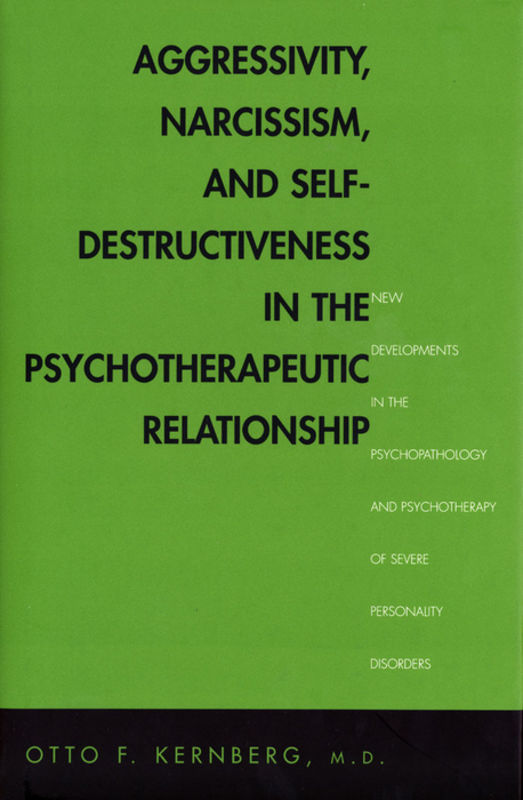
Aggressivity, Narcissism, and Self-Destructiveness in the Psychotherapeutic Relationship
In this book a leading psychoanalytic clinician and theoretician presents his thoughts on the latest psychodynamic developments and insights related to treatment of severe personality disorders. Dividing his discussions into two sections, one on psychopathology and the other on psychotherapy, Dr. Otto Kernberg examines borderline personality disorder, narcissism, sexual inhibition, transference and countertransference, suicidal behaviour, and eating disorders. In each chapter he integrates the ideas of European and Latin American psychoanalytic thinkers, bringing them to the attention of English-speaking readers. This book includes a selection of recently published journal articles. Their collection into one volume makes readily available Dr. Kernberg's present thinking on an important subject.
eBook


Countertransference towards suicidal patients: a systematic review
Countertransference towards suicidal patients may blur healthcare professionals’ clinical judgment and lead to suboptimal decision-making. We conducted a systematic review of the quantitative studies on this topic. Following PRISMA guidelines, various databases were searched for studies measuring countertransference in healthcare professionals treating suicidal patients. Two authors independently performed screening and the quality of included studies was formally assessed. Ten studies were identified (3/5/2 of low/intermediate/high quality, respectively). Cross-sectional studies showed evidence for specific and adverse countertransference (e.g., disinterest, anxiety, overwhelming, rejection, helplessness or distress) towards suicidal patients. Furthermore, countertransference was prospectively associated with suicidal behavior and ideation in studies that explored this issue, but the meaning of this association remains to be clarified. Healthcare professionals’ characteristics (e.g. professional background, gender, personality traits) influenced countertransference. Suicidal patients elicit adverse countertransference, which should be addressed in clinical practice and through dedicated training.
Journal Article


Towards a better use of psychoanalytic concepts: a model illustrated using the concept of enactment
It is well known that there is a lack of consensus about how to decide between competing and sometimes mutually contradictory theories, and how to integrate divergent concepts and theories. In view of this situation the Project Committee on Conceptual Integration developed a method that allows comparison between different versions of concepts, their underlying theories and basic assumptions. Only when placed in a frame of reference can similarities and differences be seen in a methodically comprehensible and reproducible way. We used \"enactment\" to study the problems of comparing concepts systematically. Almost all psychoanalytic schools have developed a conceptualization of it. We made a sort of provisional canon of relevant papers we have chosen from the different schools. The five steps of our method for analyzing the concept of enactment will be presented. The first step is the history of the concept; the second the phenomenology; the third a methodological analysis of the construction of the concept. In order to compare different conceptualizations we must know the main dimensions of the meaning space of the concept, this is the fourth step. Finally, in step five we discuss if and to what extent an integration of the different versions of enactment is possible.
Journal Article


Transference and countertransference: A review
Originally a psychodynamic concept, the therapeutic relationship (also therapeutic alliance, helping alliance or simply alliance) has become a pan-theoretical model for the professional relationship between a therapist and his or her client (Kivlighan, 1995). With the development of this concept in the latter half of the 20th century, psychotherapeutic theory and practice saw a paradigm shift away from strict adherence to technique with little room for responsive, individual behavior from the therapist and toward the \"authentic\" human relationship at the core of therapy. This meant that more consideration was given to the idea of mutual influence from patient and therapist to the success of therapy (Safran & Muran, 2006). This article aims to provide a comprehensive overview of the complex and shifting research on the therapeutic relationship to promote a greater understanding of the concept.
Journal Article


Moments of Uncertainty in Therapeutic Practice
One of therapy's greatest challenges is the moment of transference, when a patient unconsciously transfers emotion or desire to a new and present object-in some cases the therapist. During the course of treatment, a patient's projections and the analyst's struggle to divert them can stress, distort, or contaminate the therapeutic relationship. It may lead to various forms of enactment, in which the therapist unconsciously colludes with the client in interpretation and treatment, or it can lead to projective identification, in which the client imposes negative feelings and behaviors onto the therapist, further interfering with analysis and intervention.
Drawing on decades of clinical case experience, Robert Waska leads practitioners through the steps of phantasy and transference mechanisms and their ability to increase, oppose, embrace, or neutralize analytic contact. Operating from a psychoanalytic perspective, he explains how to cope professionally with moments of transference and maintain an objective interpretive stance within the ongoing matrix of projective identification, countertransference, and enactment. Each chapter discusses a wide spectrum of cases and clinical situations, describing in detail the processes that invite a playing out of the patient's phantasies and the work required to reestablish balance. Refreshingly candid, Waska recognizes the imperfections of analysis yet reaffirms its potential for greater psychological integration and stability for the patient. He acknowledges the limits and frequent roadblocks of working with difficult patients, such as those who suffer from psychic retreat, paranoid phantasies, and depressive anxieties, yet he indicates an effective path for resetting the clinical moment and redirecting the course for treatment.
eBook