
Catalogue Search | MBRL


Are you sure you want to remove the book from the shelf?

{{itemTitle}}
10,943
result(s) for
"Country homes"
Sort by:

Living upriver : artful homes, idyllic lives
'Living Upriver' showcases the artisanal country way of life inspiring readers to bring nature home, be true to oneself, and foster a warm, welcoming community. The book documents thirteen homes belonging to the new pioneers: creative individuals who embrace a slower lifestyle combining nostalgic remote living with modern connectivity.
Book

The Philadelphia country house : architecture and landscape in colonial America
A highly readable, beautifully illustrated study of the homes built by elite colonial Philadelphians as retreats—which balanced English models with developing local taste.
Colonial Americans, if they could afford it, liked to emulate the fashions of London and the style and manners of English country society while at the same time thinking of themselves as distinctly American. The houses they built reflected this ongoing cultural tension. By the mid-eighteenth century, Americans had developed their own version of the bourgeois English countryseat, a class of estate equally distinct in social function and form from townhouses, rural plantations, and farms. The metropolis of Philadelphia was surrounded by a particularly extraordinary collection of country houses and landscapes. Taken together, these estates make up one of the most significant groups of homes in colonial America.
In this masterly volume, Mark Reinberger, a senior architectural historian, and Elizabeth McLean, an accomplished scholar of landscape history, examine the country houses that the urban gentry built on the outskirts of Philadelphia in response to both local and international economic forces, social imperatives, and fashion. What do these structures and their gardens say about the taste of the people who conceived and executed them? How did their evolving forms demonstrate the persistence of European templates while embodying the spirit of American adaptation?
The Philadelphia Country House explores the myriad ways in which these estates—which were located in the country but responded to the ideas and manners of the city—straddled the cultural divide between urban and rural. Moving from general trends and building principles to architectural interiors and landscape design, Reinberger and McLean take readers on an intimate tour of the fine, fashionable elements found in upstairs parlors and formal gardens. They also reveal the intricate working world of servants, cellars, and kitchen gardens. Highlighting an important aspect of American historic architecture, this handsome volume is illustrated with nearly 150 photographs, more than 60 line drawings, and two color galleries.
eBook

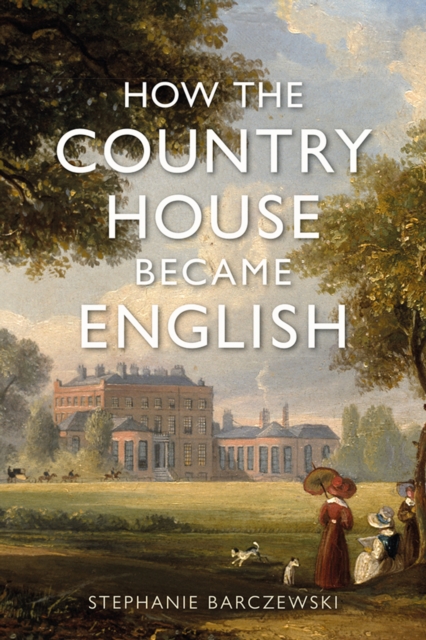
How the Country House Became English
The story of how the country house, historically a site of violent disruption, came to symbolize English stability during the eighteenth century. Country houses are quintessentially English, not only architecturally but also in that they embody national values of continuity and insularity. The English country house, however, has more often been the site of violent disruption than continuous peace. So how is it that the country how came to represent an uncomplicated, nostalgic vision of English history? This book explores the evolution of the country house, beginning with the Reformation and Civil War, and shows how the political events of the eighteenth century, which culminated in the reaction against the French Revolution, led to country houses being recast as symbols of England's political stability.
eBook


City Farmhouse Style
\"With Leggett's guidance, these visits into farmhouse decorated homes provide the do-it-yourselfer with ideas for decorating their own abodes.\" -- Library Journal Come along on the hunt to coveted country sources and the best secret antiquing spots, and learn how to create country farmhouse style in your city dwelling.
eBook


Home country influence in cross-border mergers and acquisitions by emerging market firms: a systematic review
Purpose
Emerging market firms (EMFs) are increasingly expanding their global presence through cross-border mergers and acquisitions (CBMAs). While such deals are distinct from those by advanced market firms, there is a need for a comprehensive understanding of how emerging home markets form this distinctiveness. This study aims to remedy this gap.
Design/methodology/approach
The authors conduct a systematic literature review of 84 empirical papers. Through a broad search string and seven exclusion criteria, the authors carefully select studies on country-level home factors of CBMAs by EMFs.
Findings
After summarizing paper volumes, journals and context factors of home/host countries and industries, the authors highlight different strands of institutional theory as the prevailing perspective and pre-M&A issues as the foremost theme. CBMAs by EMFs are influenced by distinct home-exclusive factors, and the mechanisms linking home-country factors to CBMAs by EMFs show significant inconsistencies across studies.
Originality/value
This review focuses on home country influence and thus goes beyond general characteristics of CBMAs by EMFs. The authors highlight more diverse types of home country factors and CBMA outcomes and, more importantly, take a closer look at involved mechanisms. Doing so, the authors identify gaps and disparities that have limited the understanding of home country influence in CBMAs by EMFs. To correct this, the authors offer a comprehensive roadmap for future research, contributing to EMF studies in particular and CBMA and international business research in general.
Journal Article
Re-estimation of the savings retention coefficient in OECD countries: a new measure of home country bias
The recent home bias is primarily related to the equity bias as measured by the international capital asset pricing model (CAPM); this measure has declined over the past two decades amid financial globalization, but remains high in most developed countries. The key to understanding this puzzling phenomenon lies in how accurately this indicator can be predicted. In this paper, we propose to use the savings retention coefficient estimated by the Feldstein–Horioka (F–H) regression as a cross-country measure of home bias. We re-estimate the savings retention coefficient based on an estimation model in which the FH regression is embedded in the model derived from Tobin's q-theory of saddle-road dynamics of investment under convex adjustment costs. We then use dynamic panel estimation to estimate the new measure in OECD countries. The main empirical results are as follows. The new measure of home country bias, such as the equity bias measure, declined steadily until 2008, but recovered to the level of the 60 s and 70 s after the 2008 financial crisis. Interestingly, people expected home country bias to be very high after the financial crisis, but in fact it simply returned to its previous level.
Journal Article