Search Results Heading

MBRLSearchResults

mbrl.module.common.modules.added.book.to.shelf
Title added to your shelf!
View what I already have on My Shelf.
Oops! Something went wrong.
While trying to add the title to your shelf something went wrong :( Kindly try again later!
Are you sure you want to remove the book from the shelf?

Oops! Something went wrong.
While trying to remove the title from your shelf something went wrong :( Kindly try again later!
    Done
    Filters
    Reset
  • Discipline
      Discipline
      Clear All
      Discipline
  • Is Peer Reviewed
      Is Peer Reviewed
      Clear All
      Is Peer Reviewed
  • Series Title
      Series Title
      Clear All
      Series Title
  • Reading Level
      Reading Level
      Clear All
      Reading Level
  • Year
      Year
      Clear All
      From:
      -
      To:
  • More Filters
      More Filters
      Clear All
      More Filters
      Content Type
    • Item Type
    • Is Full-Text Available
    • Subject
    • Publisher
    • Source
    • Donor
    • Language
    • Place of Publication
    • Contributors
    • Location
7 result(s) for "Cover versions Discography."
Sort by:
Encyclopedia of great popular song recordings
From John Philip Sousa to Green Day, from Scott Joplin to Kanye West, from Stephen Foster to Coldplay, The Encyclopedia of Great Popular Song Recordings covers the vast scope of its subject with virtually unprecedented breadth and depth. Approximately 1,000 key song recordings from 1889 to the present are explored in full, unveiling the stories behind the songs, the recordings, the performers, and the songwriters. Beginning the journey in the era of Victorian parlor balladry, brass bands, and ragtime with the advent of the record industry, readers witness the birth of the blues and the dawn of jazz in the 1910s and the emergence of country music on record and the shift from acoustic to electrical recording in the 1920s. The odyssey continues through the Swing Era of the 1930s; rhythm blues, bluegrass, and bebop in the 1940s; the rock oll revolution of the 1950s; modern soul, the British invasion, and the folk-rock movement of the 1960s; and finally into the modern era through the musical streams of disco, punk, grunge, hip-hop, and contemporary dance-pop. Sullivan, however, also takes critical detours by extending the coverage to genres neglected in pop music histories, from ethnic and world music, the gospel recording of both black and white artists, and lesser-known traditional folk tunes that reach back hundreds of years. This book is ideal for anyone who truly loves popular music in all of its glorious variety, and anyone wishing to learn more about the roots of virtually all the music we hear today. Popular music fans, as well as scholars of recording history and technology and students of the intersections between music and cultural history will all find this book to be informative and interesting.
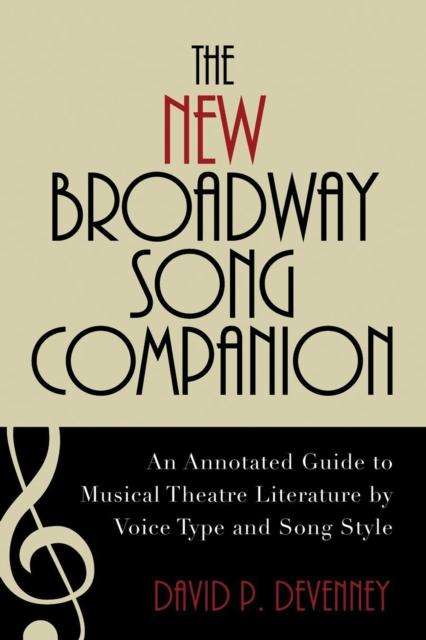
The New Broadway Song Companion
This is a completely revised and expanded second edition of The Broadway Song Companion, the first complete guide and access point to the vast literature of the Broadway musical for the solo performer. Designed with the working actor in mind, the volume lists every song from over 300 Broadway shows, including at least 90 more than the first edition. Organized by show, each song is annotated with the name of the character(s) who sing(s) the song, the vocal range, and a style category, such as uptempo, narrative ballad, swing ballad, moderate character piece, etc. Several indexes are supplied, organizing the songs by voice type (soprano, baritone, etc.) and song style, vocal arrangement (duets, trios, chorus, etc.), and composer and lyricist, allowing increased access to the repertoire. For instance, a soprano looking for a ballad to sing will find every song in that category in the index. All solos, duets, and trios are indexed in this manner, with quartets and larger ensembles listed by voice type. Furthermore, the instant breakdowns (how many lead characters, who sings what song, and the range requirements of each character) will be a valuable resource to directors and producers.
Tin Pan alley and the Philippines
In this innovative resource, Thomas P. Walsh has compiled a unique collection of some 1,400 published and unpublished American musical compositions related to the Philippines during the American colonial era from 1898 to 1946. For the guide, Walsh surveyed a wide array of sources: published songs listed in WorldCat, online catalogs of sheet music collections of university libraries and major public and private research libraries, bibliographic compilations of popular music, periodical literature on music and popular culture, published collections of “soldier songs,” and sheet music listed for sale on commercial auction websites. The guide also identifies from song registrations in the U.S. Copyright Office’s Catalog of Copyright Entries (CCE) forty-eight years of musical compositions relating to the Philippines. By systematically going through the CCE, year by year, Walsh discovered hundreds of unpublished songs written by average Americans expressing their varied views about historical events and personal experiences in America’s faraway Southeast Asian colony. Although most of the chronologically listed songs will be new to scholars and students, songs like “Ma Little Cebu Maid,” “My Own Manila Sue,” “My Fillipino Belle,” “Down on the Philippine Isles,” “Beside the Pasig River,” “My Philippino Pearl,” and “I Want a Filipino Man” were all published and widely promoted by Tin Pan Alley, as well as performed on stage, and listened to on records and piano rolls across America. The lyrics often illustrate popular American attitudes, from shrilly patriotic numbers about the Battle of Manila Bay and the later Fall of Bataan and Corregidor to wistful, romantic, and even charming reminiscences of happy days spent in “old” Manila to racially charged pieces rife with deprecating stereotypes of Filipinos. The book reprints a number of hard-to-find song lyrics, making them available to readers for the first time in more than a century. It also provides copyright registration numbers and dates of registration for many published and unpublished songs. Finally, more than 700 notes on particular songs and numerous links provide direct access to bibliographic records or digital copies of sheet music in libraries and collections. Exhaustive in scope, Tin Pan Alley and the Philippines is an invaluable resource for scholars and students of American history, Pacific studies, popular culture, and ethnomusicology.
Hit Songs, 1900-1955
This is a chronology of the most famous songs from the years before rock 'n' roll.The top hits for each year are described, including vital information such as song origin, artist(s), and chart information.For many songs, the author includes any web or library holdings of sheet music covers, musical scores, and free audio files.
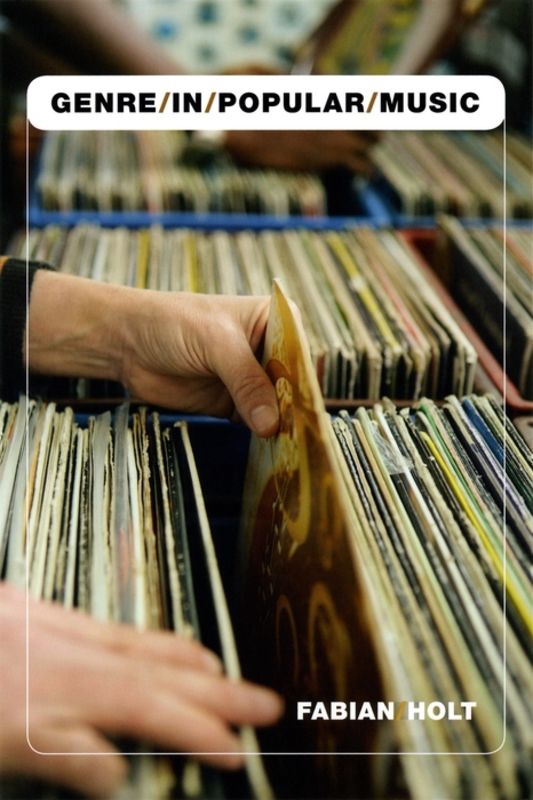
Genre in popular music
The popularity of the motion picture soundtrack O Brother, Where Art Thou? brought an extraordinary amount of attention to bluegrass, but it also drew its share of criticism from some aficionados who felt the album’s inclusion of more modern tracks misrepresented the genre. This soundtrack, these purists argued, wasn’t bluegrass, but “roots music,” a new and, indeed, more overarching category concocted by journalists and marketers. Why is it that popular music genres like these and others are so passionately contested? And how is it that these genres emerge, coalesce, change, and die out? In Genre in Popular Music, Fabian Holt provides new understanding as to why we debate music categories, and why those terms are unstable and always shifting. To tackle the full complexity of genres in popular music, Holt embarks on a wide-ranging and ambitious collection of case studies. Here he examines not only the different reactions to O Brother, but also the impact of rock and roll’s explosion in the 1950s and 1960s on country music and jazz, and how the jazz and indie music scenes in Chicago have intermingled to expand the borders of their respective genres. Throughout, Holt finds that genres are an integral part of musical culture—fundamental both to musical practice and experience and to the social organization of musical life.