
Catalogue Search | MBRL


Are you sure you want to remove the book from the shelf?

{{itemTitle}}
20
result(s) for
"Craniometry History."
Sort by:

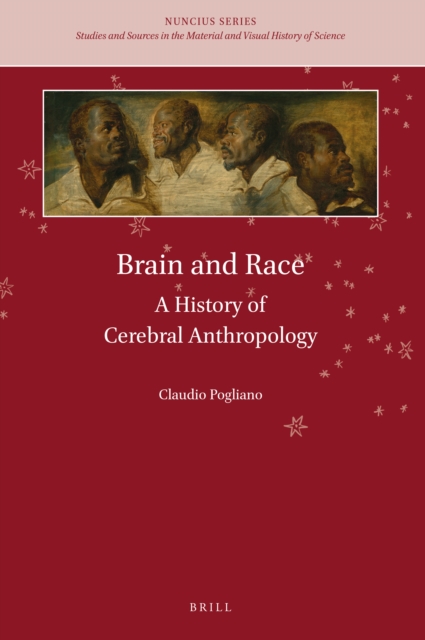
Brain and race : a history of cerebral anthropology
For nearly two centuries, the racial significance of the human brain has absorbed a huge amount of scientific energy, despite the frequency of shortcomings and disappointing results. This book tries to show and explain the resilience of such a thorny issue.
eBook


Are the small human-like fossils found on Flores human endemic cretins?
Fossils from Liang Bua (LB) on Flores, Indonesia, including a nearly complete skeleton (LB1) dated to 18 kyr BP, were assigned to a new species, Homo floresiensis. We hypothesize that these individuals are myxoedematous endemic (ME) cretins, part of an inland population of (mostly unaffected) Homo sapiens. ME cretins are born without a functioning thyroid; their congenital hypothyroidism leads to severe dwarfism and reduced brain size, but less severe mental retardation and motor disability than neurological endemic cretins. We show that the fossils display many signs of congenital hypothyroidism, including enlarged pituitary fossa, and that distinctive primitive features of LB1 such as the double rooted lower premolar and the primitive wrist morphology are consistent with the hypothesis. We find that the null hypothesis (that LB1 is not a cretin) is rejected by the pituitary fossa size of LB1, and by multivariate analyses of cranial measures. We show that critical environmental factors were potentially present on Flores, how remains of cretins but not of unaffected individuals could be preserved in caves, and that extant oral traditions may provide a record of cretinism.
Journal Article

Methods of forensic facial reconstruction and human identification: historical background, significance, and limitations
Facial reconstruction is the most frequently used method for human identification in forensic examinations. It is a complex and time-consuming technique and an actively growing field with a wide array of applications. The methods of forensic facial reconstruction are helpful in those cases where other methods of identification are not applicable. Identification of the dead is always a challenging task for forensic teams in cases involving terrorists’ attacks and mass disasters where the corpses are fragmented, decomposed, and skeletonized. In such cases, only the skeletal remains and few other clues are available to establish the identity of a person. The progress of facial reconstruction was initiated in the nineteenth century, reconstructing the facial profiles of some famous and rich people. Various novel techniques for facial reconstruction have been devised in the recent past. We conducted literature search, using databases PubMed, Scopus, Web of Science, and ScienceDirect for analyzing different methods developed and practiced till date for human facial reconstruction. We outline the brief history along with a discussion regarding the different methods of forensic facial reconstruction and their limitations. We also discuss future recommendations and preferences for further research in the field of forensic facial reconstruction and human identification.
Journal Article

Relative Size versus Controlling for Size
The corpus callosum is the main tract of fibers providing communication between the left and right cerebral hemispheres. The question of a sex difference between human males and females in the size of the corpus callosum relative to the size of the brain has been actively debated for almost 20 years. One group of investigators notes that when a ratio is calculated with corpus callosum size in the numerator and brain size in the denominator, the value is, on average, larger in females. The other group argues that ratios are misleading on this question and that better statistical methods, such as analysis of covariance, do not indicate a sex difference. I show that this debate has been unnecessary. The issue is resolved by recognizing the difference between statistical control, in which focus is on a single trait for which a second trait is defined as a confounding effect, and proportionality, which focuses on the relationship between two traitsthe relationship that statistical control serves to remove. The calculation of ratios is not effective for statistical control but is essential for the evaluation of proportionality. Interpretation of the ratio is affected in important ways by dimensionalitythe units of the numerator and denominator (lengths, areas, or volumes)and this too has been mostly overlooked. A metaanalysis of published data indicates that the corpus callosum is relatively larger in females. However, the mean difference between sexes is small, males and females mostly overlap in relative size, and we do not know what the biological implications might be.
Journal Article

Geographic Patterns of Craniofacial Variation in Pre-Hispanic Populations from the Southern Cone of South America
In this study we analyzed the relationships and patterns of spatial variation from morphological cranial variability of 17 population samples representing the ancient inhabitants of the central territory of Argentina (archaeologically known as “Sierras Centrales”) and other pre-Hispanic populations from different ecological and geographic regions of the Southern Cone of South America (Argentina and Uruguay), based on the analysis of 10 craniofacial measurements. Results obtained from D2 distances can be interpreted as evidence of a similar biological history for the populations that inhabited the Sierras Centrales and the population of Santiago del Estero. Matrix correlation analysis demonstrated that craniometric variation is significantly influenced by geography, suggesting that populations that lived at lower geographical distance share more biological similarity. Global spatial autocorrelation analysis suggests a clinal pattern for the biological variation, although Moran's I estimates calculated for each variable demonstrate that only nasal height and breadth show this spatial pattern of variation. Results from spatial regression techniques show a significant effect of altitude modeling nasal shape, in agreement with previous studies suggesting that nasal morphology is strongly influenced by environment variables.
Journal Article
A Craniometric Perspective on the Transition to Agriculture in Europe
Debates surrounding the nature of the Neolithic demographic transition in Europe have historically centered on two opposing models: a “demic” diffusion model whereby incoming farmers from the Near East and Anatolia effectively replaced or completely assimilated indigenous Mesolithic foraging communities, and an “indigenist” model resting on the assumption that ideas relating to agriculture and animal domestication diffused from the Near East but with little or no gene flow. The extreme versions of these dichotomous models were heavily contested primarily on the basis of archeological and modern genetic data. However, in recent years a growing acceptance has arisen of the likelihood that both processes were ongoing throughout the Neolithic transition and that a more complex, regional approach is required to fully understand the change from a foraging to a primarily agricultural mode of subsistence in Europe. Craniometric data were particularly useful for testing these more complex scenarios, as they can reliably be employed as a proxy for the genetic relationships among Mesolithic and Neolithic populations. In contrast, modern genetic data assume that modern European populations accurately reflect the genetic structure of Europe at the time of the Neolithic transition, while ancient DNA data are still not geographically or temporally detailed enough to test continent-wide processes. Here, with particular emphasis on the role of craniometric analyses, we review the current state of knowledge regarding the cultural and biological nature of the Neolithic transition in Europe.
Journal Article

The Questionable Contribution of the Neolithic and the Bronze Age to European Craniofacial Form
Many human craniofacial dimensions are largely of neutral adaptive significance, and an analysis of their variation can serve as an indication of the extent to which any given population is genetically related to or differs from any other. When 24 craniofacial measurements of a series of human populations are used to generate neighbor-joining dendrograms, it is no surprise that all modern European groups, ranging all of the way from Scandinavia to eastern Europe and throughout the Mediterranean to the Middle East, show that they are closely related to each other. The surprise is that the Neolithic peoples of Europe and their Bronze Age successors are not closely related to the modern inhabitants, although the prehistoric/modern ties are somewhat more apparent in southern Europe. It is a further surprise that the Epipalaeolithic Natufian of Israel from whom the Neolithic realm was assumed to arise has a clear link to Sub-Saharan Africa. Basques and Canary Islanders are clearly associated with modern Europeans. When canonical variates are plotted, neither sample ties in with Cro-Magnon as was once suggested. The data treated here support the idea that the Neolithic moved out of the Near East into the circum-Mediterranean areas and Europe by a process of demic diffusion but that subsequently the in situ residents of those areas, derived from the Late Pleistocene inhabitants, absorbed both the agricultural life way and the people who had brought it.
Journal Article

Calidad de vida y dimorfismo sexual en la población prehispánica de San Pedro de Atacama (norte de Chile)
La diferencia morfológica entre sexos puede variar reflejando la calidad de vida dominante en una población. La información para San Pedro de Atacama es analizada para evaluar a partir de una muestra de 624 individuos y 35 variables craneométricas. Las diferencias entre sexos se analizaron con las pruebas ANCOVA y MANCOVA para una y dos vías con covariantes, según el caso. El análisis discriminante (DA) permitió evaluar la clasificación del sexo en cada individuo. La mayoría de las mediciones dieron valores medios mayores en los hombres con relación a las mujeres. No obtuvimos pruebas suficientes respecto de la variación del SD en el tiempo. Esto indica que los cambios en las condiciones de vida registrados durante 60 generaciones con otros marcadores no influyeron sustancialmente en el desarrollo normal del cráneo en ambos sexos.
Morphological differences between both sex, could vary reflecting the dominant life quality in a population. The information available for San Pedro de Atacama is analysed in order to assess the expression of the sexual dimorphism. A sample of 624 individuals and 35 craniometrical variables was utilised. Gender differences were analysed by ANCOVA and MANCOVA tests for one and two-way with covariates, when they apply. Discriminant analysis (DA) allowed the evaluation of the sex assignment of each individual. In most of the measurements higher values in men compared to women were observed. Even the statistical analysis proved the differences between sexes and periods, we couldn’t obtain sufficient evidence regarding its variation over time. This indicate that for 60 generations variations in conditions of quality of life, recorded using other markers, substantially not influenced the and normal development of the skull in both sexes.
Journal Article