
Catalogue Search | MBRL


Are you sure you want to remove the book from the shelf?

{{itemTitle}}
26,463
result(s) for
"Creative Arts "
Sort by:

Think big
A classroom of exuberant youngsters explores art in its most varied forms, from painting, music, and writing to cooking and performing.
Book

The Arts Therapies
The separate arts therapies - drama, art, music and dance - are becoming available to increasing numbers of clients as mental health professionals discover their potential to reach and help people. But what are the arts therapies, and what do they offer clients? This fully updated new edition of The Arts Therapies provides, in one volume, a guide to the different disciplines and their current practice and thinking in different parts of the world.
Each chapter draws on a variety of perspectives and accounts to develop understandings of the relations between theory, research and practice, offering perspectives on areas such as the client-therapist-art form relationship or on outcomes and efficacy to help articulate and understand what the arts therapies can offer specific client groups. This new edition features 'Focus on Research' highlights from music therapy, art therapy, dramatherapy and dance movement therapy, which offer interviews with researchers in China, Africa, South America, Australia, Europe and North America, exploring significant pieces of enquiry undertaken within recent years.
This comprehensive overview will be an essential text for students and practitioners of the arts therapies. It is international in scope, fully up-to-date with innovations in the field and will be relevant to new practitioners and those looking to deepen their understanding.
eBook

Design research : investigation for successful creative solutions
Design research will guide the reader through the early stages of a design project, identifying appropriate research techniques and enabling innovative solutions to be found.
Book

Leveraging the Creative Arts in Business Ethics Teaching
The purpose of this paper is to describe a way of teaching business ethics using the creative arts, especially literature and theater. By drawing on these disciplines for both method and texts, we can more easily make the connection to business as a fully human activity, concerned with how meaning is created. Students are encouraged to understand story-telling and narrative and how these tools lend insight into the daily life of businesspeople. The paper describes two main courses, Business Ethics Through Literature and Leadership, Ethics and Theater, and the rationale for each. We begin by suggesting three main leverage points that the courses engender. We then rely on the words of students who have taken the courses for insights into what they learned. We then critically assess some of the principles that have informed course design over time. We conclude by suggesting that paying attention to the creative arts gives rise to a rather different approach to business ethics, one grounded in the pragmatist tradition in philosophy.
Journal Article

Inside creative writing : interviews with contemporary writers
\"High profile writers, including Philip Pullman, Nadine Gordimer, Kate Grenville and Robert Pinsky, talk about their writing practice and ways of working. Designed with the needs of creative writers in mind, Graeme Harper explores both practice and process, asking authors questions about subjects ranging from motivation to creativity to drafting. \"-- Provided by publisher.
Book
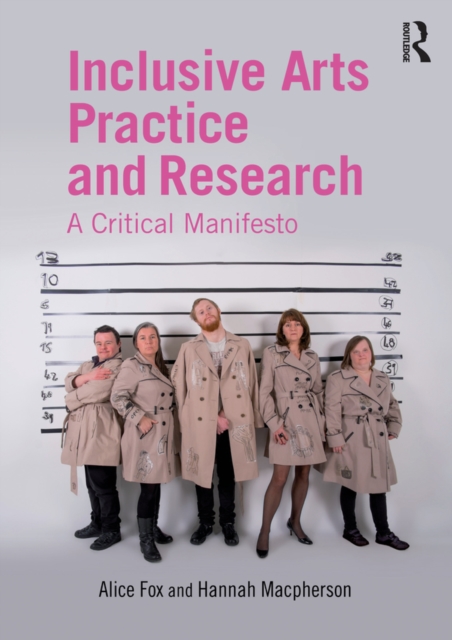
Inclusive Arts Practice and Research
Inclusive Arts Practice and Research interrogates an exciting and newly emergent field: the creative collaborations between learning-disabled and non-learning-disabled artists which are increasingly taking place in performance and the visual arts.
In Inclusive Arts Practice Alice Fox and Hannah Macpherson interview artists, curators and key practitioners in the UK and US. The authors introduce and articulate this new practice, and situate it in relation to associated approaches. Fox and Macpherson candidly describe the tensions and difficulties involved too, and explore how the work sits within contemporary art and critical theory.
The book inhabits the philosophy of Inclusive Arts practice: with Jo Offer, Alice Fox and Kelvin Burke making up the design team behind the striking look of the book. The book also includes essays and illustrated statements, and has over 100 full-colour images. Inclusive Arts Practice represents a landmark publication in an emerging field of creative practice across all the arts. It presents a radical call for collaboration on equal terms and will be an invaluable resource for anyone studying, researching or already working within this dynamic new territory.
eBook

Creative writing in the digital age : theory, practice, and pedagogy
Explores the vast array of opportunities that technology provides the Creative Writing teacher, ranging from effective online workshop models to methods that blur the boundaries of genre. From social media tools such as Twitter and Facebook to more advanced software like Inform 7, the book investigates the benefits and potential challenges these technologies present instructors in the classroom.--Provided by publisher.
Book

What psychosocial support do first year university students need? A mixed creative methods study
Higher education students need help and support to enable them to cope with the challenges of their studies. The aim of this study was to investigate the perspectives of first-year undergraduate students on predictors of psychosocial support in challenging situations. A creative art-based descriptive research design was employed utilising an individual One-Page Profile form to gather data from 240 first-year students from two different universities in Slovakia. Data was collected and analysed using a content-thematic and visual approach. Four significant individual predictors of psychosocial support were identified: emotional, instrumental, informational and appraisal. Emotional support consists of desirable mental health, defined by the students as experiencing happiness, self-satisfaction, self-development, relationships which are satisfying, loving and safe, trust, empathic acceptance, and care from others. Instrumental support varies from personnel up to material resources e.g., people, animals, and assistance such as financial services. The preferred informational support is peer-to-peer counselling, followed by professional counselling. When students describe appraisal support their needs are primarily in the areas of well-being and self-efficacy. The study makes various suggestions on how University staff can provide first-year students with support and counselling in their everyday challenges.
Journal Article

How the light gets in : writing as a spiritual practice
\"'When I begin to write, I open myself and wait. And when I turn toward an inner spiritual awareness, I open myself and wait.' With that insight, Pat Schneider invites readers to contemplate their lives through spiritual observation and exploratory writing. In seventeen concise thematic chapters that include meditations on topics such as fear, prayer, forgiveness, social justice, and death, How the Light Gets In gracefully guides readers through the philosophical and spiritual questions that face everyone in the course of meeting life's challenges. Praised as a 'fuse lighter' by author Julia Cameron and 'the wisest teacher of writing I know' by the celebrated writing guru Peter Elbow, Pat Schneider has lived a life of writing and teaching, passion and compassion. With How the Light Gets In, she delves beyond the typical 'how-to's' of writing to offer an extended rumination on two inner paths, and how they can run as one. Schneider's book is distinct from the many others in the popular spirituality and creative writing genre by virtue of its approach, using one's lived experience--including the experience of writing--as a springboard for expressing the often ineffable events that define everyday life. Her belief that writing about one's own life leads to greater consciousness, satisfaction, and wisdom energizes the book and carries the reader elegantly through difficult topics. As Schneider writes, 'All of us live in relation to mystery, and becoming conscious of that relationship can be a beginning point for a spiritual practice--whether we experience mystery in nature, in ecstatic love, in the eyes of our children, our friends, the animals we love, or in more strange experiences of intuition, synchronicity, or prescience.'\"--Provided by publisher.
Book

Transformative Learning through Creative Life Writing
Arising from a research project conducted over two years, Transformative Learning through Creative Life Writing examines the effects of fictional autobiography on adult learners' sense of self. Starting from a teaching and learning perspective, Hunt draws together ideas from psychodynamic psychotherapy, literary and learning theory, and work in the cognitive and neurosciences of the self and consciousness, to argue that creative life writing undertaken in a supportive learning environment, alongside opportunities for critical reflection, has the power to transform the way people think and learn. It does this by opening them up to a more embodied self-experience, which increases their awareness of the source of their thinking in bodily feeling and enables them to develop a more reflexive approach to learning.
Hunt locates this work within recent developments in the influential field of transformative learning. She also identifies it as a form of therapeutic education arguing, contrary to those who say that this approach leads to a diminished sense of self, that it can help people to develop a stronger sense of agency, whether for writing or learning or relations with others. Topics covered include:
Creative writing as a tool for personal and professional development
The transformative benefits and challenges of creative writing as a therapeutic activity
The relationships between literary structures and the processes of thinking and feeling
The role of cognitive-emotional learning in adult education
Collaborative learning and the role of the group
This book will interest teachers in adult, further and higher education who wish to use creative life writing as a tool for learning, as well as health care professionals seeking art-based techniques for use in their pra
eBook