
Catalogue Search | MBRL


Are you sure you want to remove the book from the shelf?

{{itemTitle}}
1,921
result(s) for
"Creative ability in business"
Sort by:

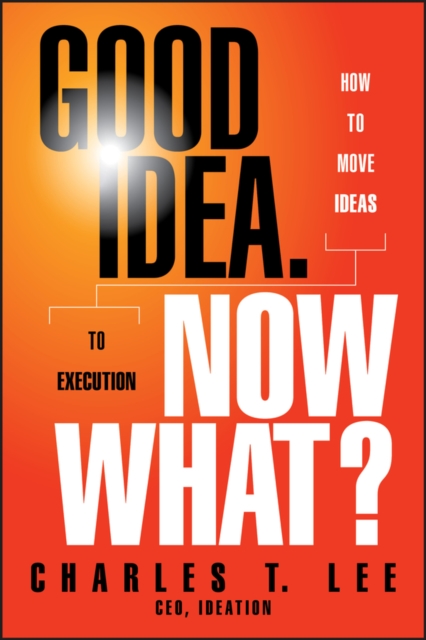
Good idea, now what?
\"Proven pathways for taking ideas to implementation. We all have ideas--things we want to do or create--but only some of us will do what it takes to see those ideas come to pass. In Good Idea. Now What? readers will discover some of the essential values and principles that guide successful idea-makers, including the leveraging of mixed environments for creativity, working through resistance and setbacks, developing a practical plan for implementation that works, navigating collaborative opportunities, and communicating your idea to make it truly remarkable.Whether you're just a creative type, or the leader of an organization, you must figure out a creative process and develop an infrastructure for implementing your ideas. Good Idea. Now What? offers systematic advice for moving your ideas to execution. It will show you: The fundamental elements of a good idea Tangible pathways to follow after initial inspiration The importance of branding and its impact on ideas Practical advice for developing a loyal tribe of supporters who will take your idea to a whole new level It's not enough to be inspired. Learn how to follow through on your ideas and discover how great an impact you can have!\"-- Provided by publisher
eBook


Continuous improvement strategies : Japanese convenience store systems
This book discusses continuous improvement strategies of Japanese convenience store operators. The study highlights the efforts of companies operating under lean management systems to identify new, dynamic, firm-specific capabilities in highly competitive markets.
eBook

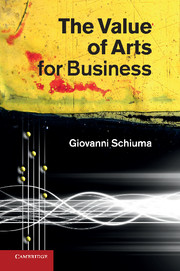
The Value of Arts for Business
The traditional view of the relationship between business and the arts is very much a one-way affair: organisations may endorse, fund or publicise the arts but the arts have nothing to offer from a business perspective. The Value of Arts for Business challenges this view by showing how the arts, in the form of Arts-based Initiatives (ABIs), can be used to enhance value-creation capacity and boost business performance. The book introduces and explains three models that show how organisations can successfully implement and manage ABIs. Firstly, the Arts Value Matrix enables managers to see how organisational value-drivers are affected by ABIs. Secondly, the Arts Benefits Constellation shows how to assess the benefits of using ABIs. Finally, the Arts Value Map shows how ABIs can be integrated and aligned with organisational strategy and operations. These models lay the foundations for a new research area exploring the links between arts and business.
eBook

The creative curve : how to develop the right idea, at the right time
\"We have been spoon-fed the notion that creativity is the province of genius -- of those favored, brilliant few whose moments of insight arrive in unpredictable flashes of divine inspiration. And if we are not a genius, we might as well pack it in and give up. Either we have that gift, or we don't. But Allen Gannett shows that simply isn't true. Recent research has shown that there is a predictable science behind achieving commercial success in any creative endeavor, from writing a popular novel to starting up a successful company to creating an effective marketing campaign. As the world's most creative people have discovered, we are enticed by the novel and the familiar. By understanding the mechanics of what Gannett calls \"the creative curve\" - the point of optimal tension between the novel and the familiar - everyone can better engineer mainstream success. Gannett reveals the four laws of creative success and identifies the common patterns behind their achievement\"-- Provided by publisher.
Book

Riding the Innovation Wave
Innovation matters – being able to create value from ideas is crucial to survival and growth. But while any organization might get lucky once being able to repeat the trick requires learning and developing particular ways of working which enable the process. Over a hundred years of research and practical experience now provides a knowledge base from which we can draw to help develop such approaches. But how do we move from prescription to implementation? And how does the innovation challenge play out over the lifetime of an organization? How does it renew its capability to innovate and do so against a background of dramatically changing markets, technologies and social trends? This book draws on a detailed history of a large German company (HELLA ), now active in over 35 countries, employing 34,000 people. It didn't start out that way, it began as an entrepreneurial start-up in the late 19th century in the (then) uncertain early days of the car industry. It moved from selling whips and other buggy accessories for horse-drawn carriages to horns and lamps for the new-fangled motor cars beginning to appear on the roads of north-western Germany. The journey since then has been one of innovation – in products and processes, in entering new markets, in adding services to its products, and in changing its underlying business models. Survival for over a hundred years is not an accident – it has been built on learning how to innovate and on constantly challenging and updating those models.
eBook


Global Innovation in Emerging Economies
In recent decades, there have been significant changes in the way corporate innovation activities are performed. They include changes in the innovation process, flexibility to outsource certain innovation activities, and by far, the most important one, wider choice in the location of innovation. What caught the most attention of is the trend towards globalization of research and development (R&D) and thereby performance of innovation activities away from the home countries.
The main concerns relate to the two new trends: First, the multinational corporations (MNCs) locating strategic innovation activities in some countries outside the industrialized world, which can be referred to as 'emerging economies'; and Second, since 2000, some companies from the emerging economies have started entering the global markets with innovative products and services, developed through their own R&D. Both these new developments have managerial implications for companies and policy implications for the host countries (where such R&D is performed), as well as for the home countries of the companies. Further, innovative products and services resulting from R&D activities in emerging economies seem to better address the needs of consumers at the bottom-of-the-pyramid in other developing countries. This book explores and analyzes these issues.
This research presented in Global Innovation in Emerging Economies is applicable to both the industrialized and developing worlds, although from different perspectives - the former would like to prevent relocation of R&D from their countries, and the latter want more of R&D-related investments.
eBook