
Catalogue Search | MBRL


Are you sure you want to remove the book from the shelf?

{{itemTitle}}
36
result(s) for
"Crete (Greece) Civilization."
Sort by:

Cultural identity in Minoan Crete : social dynamics in the Neopalatial period
Neopalatial Crete - the 'Golden Age' of the Minoan Civilization - possessed palaces, exquisite artefacts, and iconography with preeminent females. While lacking in fortifications, ritual symbolism cloaked the island, an elaborate bureaucracy logged transactions, and massive storage areas enabled the redistribution of goods. We cannot read the Linear A script, but the libation formulae suggest an island-wide koine. Within this cultural identity, there is considerable variation in how the Minoan elites organized themselves and others on an intra-site and regional basis. This book explores and celebrates this rich, diverse and dynamic culture through analyses of important sites, as well as Minoan administration, writing, economy and ritual. Key themes include the role of Knossos in wider Minoan culture and politics, the variable modes of centralization and power relations detectable across the island, and the role of ritual and cult in defining and articulating elite control.
BOOK
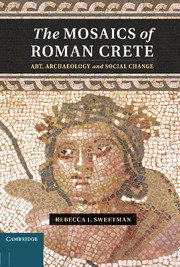
The Mosaics of Roman Crete
This book examines the rich corpus of mosaics created in Crete during the Roman and Late Antique eras. It provides essential information on the style, iconography and chronology of the material, as well as discussion of the craftspeople who created them and the technologies they used. The contextualized mosaic evidence also reveals a new understanding of Roman and Late Antique Crete. It helps shed light on the processes by which Crete became part of the Roman Empire, its subsequent Christianization and the pivotal role the island played in the Mediterranean network of societies during these periods. This book provides an original approach to the study of mosaics and an innovative method of presenting a diachronic view of provincial Cretan society.
eBook


Cultural Practices and Material Culture in Archaic and Classical Crete
Crete offers rich material for investigating questions at the heart of research on social organization in ancient Greece.The essays in these proceedings use archeological and historical approaches to analyze the processes of structural change that took place in the cities of Crete during the Archaic and Classical periods, bringing together for.
eBook

Final Neolithic Crete and the southeast Aegean
\"This book presents an archaeological study of Crete in transition from the Neolithic to the Early Bronze Age (c. 4000 to 3000 BC) within the broader South Aegean context. The study, based on the author's own fieldwork, contains a gazetteer of over 170 sites. The material from these sites will prompt archaeologists in Greece, Turkey, and the Middle East to reconsider their understanding of the foundation of Bronze Age civilization in the Aegean\"-- Provided by publisher.
Book

Thirsty Seafarers at Temple B of Kommos
The island of Crete was an important place for cultural and economic exchanges between Greeks and Near Easterners in the Aegean during the 1st millennium BC. Kommos and its temple provided materials that attest the connections between different populations, such as Greeks and Phoenicians. An examination of these objects and those from other Cretan sites such as Knossos, the Idaean Cave and Eleutherna is presented in this book. Moreover, the case of Kommos is compared to other Aegean cult structures with similar characteristics, such as the Sanctuary of Apollo in Eretria, the Heraion of Samos, the temple of Kition in Cyprus and the Temple of Vroulia in Southern Rhodes. These appear to be not just religious spaces but also economic and social meeting points, integrated into networks of commercial districts connected by land and sea routes. The book aims to understand the Phoenician presence and trade in Aegean temples, as well as how Crete shaped its role within the context of Mediterranean trade routes from the East to the West.
eBook


Political economies of the Aegean Bronze Age: papers from the Langford Conference, Florida State University, Tallahassee, 22-24 February 2007
This volume brings together an international group of researchers to address how Mycenaean and Minoan states controlled the economy. The contributions, originally delivered at the 2007 Langford Conference at the Florida State University, examine the political economies of state (and pre-state) entities within the Aegean Bronze Age, including the issues of centralization and multiple scales of production, distribution, and consumption within a polity; importance of extraregional trade; craft specialization; the role of non-elite institutions, and the political economy before the emergence of the palaces. The contributors address these issues from an explicitly comparative perspective, both within and across Minoan and Mycenaean contexts. The conclusions reached in this volume shed new light on the essential differences between and among \"Minoan\" and \"Mycenaean\" states through their political economies.
eBook
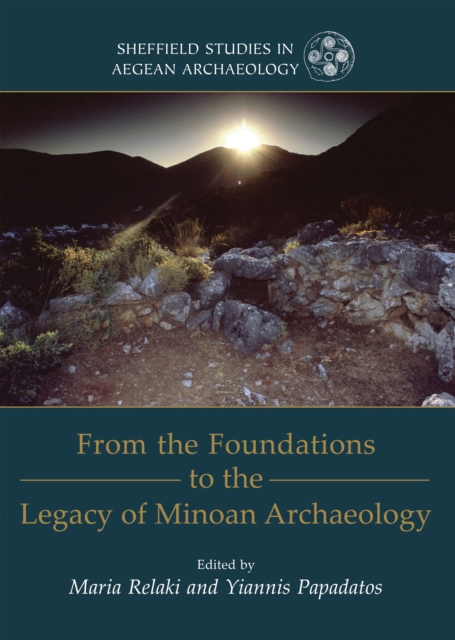
From the Foundations to the Legacy of Minoan Archaeology
From the Foundations to the Legacy seeks to examine how the developmental trajectory of a single site can offer insights into regional patterns, the importance of integrating local survey information in reconstructing general historical processes and the significance of temporal variability in the construction of space. Evaluating the general frameworks within which Minoan archaeology operates, scholars assess the usefulness of chronological horizons in understanding continuity and change and providing a critical framework for the diachronic analysis of culture, the degree to which the study of settlement patterns can reveal structural continuity through time and the political reach of territorial states. The way the power bases of Minoan society were articulated through the interplay between individual and collective social strategies is the focus of a few papers, further illustrated by in-depth considerations of the role and value of material culture from a social and technological perspective. The largest portion of discussion is devoted to mortuary practices. Some contributors focus on reassessing the significance of micro-patterns in the articulation of mortuary behavior, while others emphasize broader temporal and spatial processes that affect practices of ostentatious display in burial, all being unified under the overarching perspective provided by recent osteoarchaeological studies which throw critical light on mortuary ritual and the constitution of the social units using the cemeteries. The volume is offered in honor of Keith Branigan’s remarkable contribution to the archaeology of Bronze Age Crete and the great inroads his work has made into our understanding of Minoan society. His work has profoundly influenced subsequent generations of archaeologists.
eBook

Status in a Nutshell. A Praxeological/Phenomenological Approach to Seals as Power Accessories
In the course of their long history in Aegean societies, seals acquired a polyvalent significance that arose from their active ‘participation’ in different social spheres and manifested itself in a superb level of technique and virtuosity. This paper examines the role of Minoan and Mycenaean seals as status symbols, highlighting not their creation but rather the practices of wearing, displaying, using, and perceiving them. The discussion spans two main chronological periods: the Second Palace Period (mid-17th to mid-15th century BCE) and the Third Palace Period (14th-13th century BCE), during which seals served different functions as status mediators. In the earlier period, a notable tension in the social significance of seals is evident when comparing evidence from Crete and the Greek Mainland. While Minoan seals were used as sphragistic tools, Mycenaean seals were not. In the later period, the use of seals in Mainland Greece was driven by their role as administrative tools within the palatial sphere. This dynamic analysis sheds light on the evolving roles and transformations of seals, influenced by varying social environments and demonstrating the multiple ways these artifacts embodied and mediated power. Additionally, it shows how their symbolic potential could express individual or collective identities.
Journal Article