
Catalogue Search | MBRL


Are you sure you want to remove the book from the shelf?

{{itemTitle}}
40
result(s) for
"Crime/Thriller"
Sort by:

Citizen Kane
Citizen Kane's reputation as one of the greatest films of all time is matched only by the accumulation of critical commentary that surrounds it.What more can there be to say about a masterpiece so universally acknowledged?.
eBook
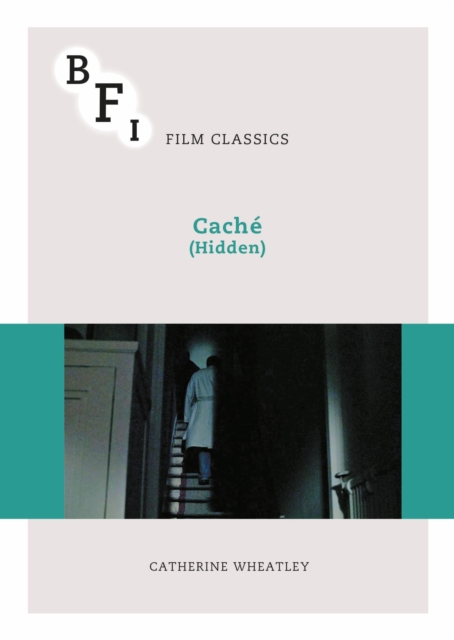
Caché
Catherine Wheatley's study of Michael Haneke's 2005 thriller Cache ('Hidden') explores how, in depicting the relationship between an affluent Parisian family and the Algerian outsider Majid, the film raises questions about home and the family, France's 'hidden' post-colonial past, spectatorship and screens.
eBook
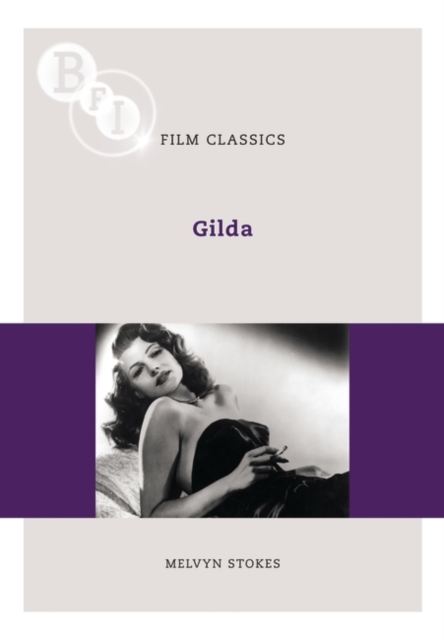
Gilda
Melvyn Stokes's study of the 1946 classic Gilda describes the film's production and reception history, as well as addressing Rita Hayworth's complex star persona and ethnicity identity; Gilda's status as a 'noir' film; and what the film had to say about relations between men and women in a world transformed by war.
eBook

Reception games of Dušan Taragel (the non-actor)
The study focuses on the various forms of a specific postmodernist literary game, whose framework and rules are primarily determined by the conventions of pop culture genres. These genre foundations serve as a substrate for creating a unique artistic expression. The transitional period of the 1990s in Slovak literature, marked by significant changes in the socio-political landscape and a shift in literary life, is identified as the typical era for such ironically subversive text-forming practices. This period also saw a shift in readers’ genre preferences toward popular culture. The article analyses the forms of literary games with genres on the works of contemporary Slovak prose writer Dušan Taragel (1961), drawing on texts spanning his entire oeuvre from his debut book Rozprávky pre neposlušné deti a ich starostlivých rodičov (Stories for naughty children and their caring parents, 1997) to his latest novel Mafiánske balady (Mafia Ballads, 2022). A more extensive interpretation is dedicated to this recent novel, as it serves, in many respects, as a bridge between the present and the author’s creatively productive decade of the 1990s.
Journal Article

The Economy of Murder: Capital, Crime, and Crisis in Peter Murphy’s and Rachael Moriarty’s Traders (2015)
The abundance of contemporary Irish fiction dealing with crime seems hard to refute. While most works have been produced in the literary field, cinema has also explored Ireland’s contemporary situation through the lens of crime fiction. The aim of this article is to analyse the relationship between crime, crisis, and capital in a contemporary Irish thriller: Peter Murphy and Rachael Moriarty’s Traders (2015). The film creates a bleak and acidic depiction of Ireland’s financial world and how in times of crisis, crime and capital are negotiated and articulated. A brief introduction of what the Celtic Tiger era and its subsequent crisis meant for Ireland will be followed by an exploration of its relation to the crime thriller. By studying crime and its intersections with class structures, economic conditions, and the shaping of its space in the film, I will attempt to undertake an economic and aesthetic reading. Moreover, I will consider how the film delineates a portrait of Ireland’s post-Celtic Tiger society and all its consequences.
Journal Article

Blood Money
Scholars have consistently applied psychoanalytic models to representations of gender in early teen slasher films such as Black Christmas (1974), Halloween (1978) and Friday the 13th (1980) in order to claim that these were formulaic, excessively violent exploitation films, fashioned to satisfy the misogynist fantasies of teenage boys and grind house patrons. However, by examining the commercial logic, strategies and objectives of the American and Canadian independents that produced the films and the companies that distributed them in the US, Blood Money demonstrates that filmmakers and marketers actually went to extraordinary lengths to make early teen slashers attractive to female youth, to minimize displays of violence, gore and suffering and to invite comparisons to a wide range of post-classical Hollywood’s biggest hits; including Love Story (1970), The Exorcist (1973), Saturday Night Fever (1977), Grease and Animal House (both 1978). Blood Money is a remarkable piece of scholarship that highlights the many forces that helped establish the teen slasher as a key component of the North American film industry’s repertoire of youth-market product.
eBook

You Are the Murderers: German Guilt in Peter Lorre's \Der Verlorene\
Peter Lorre's film, Der Verlorene (1951), was one of the first to take a critical view of the Nazi period in the post-war era. He used his extensive knowledge of the crime thriller, a genre that was largely absent from German film in the early 1950s, to examine the impact of Nazism on German society. In effect, he told a story about a mundane killing, but that crime, and the events that followed, were symbolic of the ways that the Nazi regime turned average Germans into murderers. Today the film stands as an interesting artifact of the postwar era, reflecting the anger and anxiety that victims of Nazism had toward a region that was rapidly distancing itself from a troubling past but not yet ready to examine what that history meant for the present and the future.
Journal Article

The Silence of the Lambs
Crime and horror authority Barry Forshaw closely examines the factors that contributed to the film's impact, including the revelatory performances of Jodie Foster and Anthony Hopkins in the lead roles.
eBook

Quality by design
The article concerns feature series offered by the premium televisions and streaming platforms in Poland. Although their heyday could be observed in the second decade of the 21st century, they stem from the popularity of feature series as a form of entertainment as early as in the 1960s. Polish premium TVs were already in the market in the 1990s, but they did not invest in production. It all changed with the Polish producers' engagement in the adaptations of the projects under foreign license, i.e., original series from other countries, such as In Treatment or Penoza. Their popularity resulted in triggering intense efforts to prepare original TV scripts, which engaged famous and acclaimed film and theatrical makers. Belfer (The Teach) was the first to succeed. The Polish TV series offer is characterized by high production value. These television series also undertake novel thematic fields, custom bravery, or unusual storytelling. Simultaneously, however, they are of crime and thriller provenience, as these two genres are among the Polish viewers' favourites.
Book Chapter
Selling location, selling history
Deutschland 83 and Babylon Berlin were late bloomers within a wider European trend of producing internationally recognized, high-end quality television drama serials. This chapter identifies and outlines the specific trajectories of the last ten years that enabled and attracted different players and agents in the German TV market to follow this European trend. It outlines how the markedly import-oriented market, with its stable dual broadcast system and strong, public broadcast channels, was affected by the outcomes of digitization and how this resulted in significant changes for the German TV landscape. By looking at three cases - In the Face of Crime, Deutschland 83, and Babylon Berlin - the chapter furthermore argues that German high-end drama integrates and uses particular locations and historical settings as unique selling points and as a means of raising audience engagement and international appeal.
Book Chapter