
Catalogue Search | MBRL


Are you sure you want to remove the book from the shelf?

{{itemTitle}}
49,471
result(s) for
"Crime analysis."
Sort by:

Risk terrain modeling : crime prediction and risk reduction
\"Risk terrain modeling (RTM) diagnoses the spatial attractors of criminal behavior and makes accurate predictions of where crime will occur at the micro-level. This book presents RTM as part of a larger risk management agenda that defines and measures crime problems; suggests ways in which they can be addressed through interventions; proposes measures for assessing effectiveness of treatment and sustainability of efforts; and offers suggestions for how police organizations can address vulnerabilities and exposures in the communities that they serve through strategies that go beyond specific deterrence of offenders. Technical and conceptual aspects of RTM are considered into the context of past criminological research, leading to a discussion of crime vulnerabilities and exposures, and the Theory of Risky Places. Then best practices for RTM, crime prediction, and risk reduction are set to ACTION. Case studies empirically demonstrate how RTM can be used to analyze the spatial dynamics of crime, allocate resources, and implement customized crime and risk reduction strategies that are transparent, measurable, and effective. Researchers and practitioners will learn how the combined factors that contribute to criminal behavior can be targeted, connections to crime can be monitored, spatial vulnerabilities can be assessed, and actions can be taken to reduce the worst effects\"--Provided by publisher.
Book

The technology of policing : crime mapping, information technology, and the rationality of crime control
With the rise of surveillance technology in the last decade, police departments now have an array of sophisticated tools for tracking, monitoring, even predicting crime patterns. In particular crime mapping, a technique used by the police to monitor crime by the neighborhoods in their geographic regions, has become a regular and relied-upon feature of policing. Many claim that these technological developments played a role in the crime drop of the 1990s, and yet no study of these techniques and their relationship to everyday police work has been made available. Noted scholar Peter K. Manning spent six years observing three American police departments and two British constabularies in order to determine what effects these kinds of analytic tools have had on modern police management and practices. While modern technology allows the police to combat crime in sophisticated, detail-oriented ways, Manning discovers that police strategies and tactics have not been altogether transformed as perhaps would be expected. In The Technology of Policing , Manning untangles the varying kinds of complex crime-control rhetoric that underlie much of today's police department discussion and management, and provides valuable insight into which are the most effective—and which may be harmful--in successfully tracking criminal behavior. The Technology of Policing offers a new understanding of the changing world of police departments and information technology's significant and undeniable influence on crime management.
eBook


A CRIME SCRIPT ANALYSIS OF THE ONLINE STOLEN DATA MARKET
The purpose of this study is to better understand the online black market economy, specifically relating to stolen data, using crime script analysis. Content analysis of 13 English-and Russianspeaking stolen data forums found that the different products and services offered enabled the cornmodification of stolen data. The marketplace offers a range of complementary products, from the supply of hardware and software to steal data, the sale of the stolen data itself, to the provision of services to turn data into money, such as drops, cashiers and money laundering. The crime script analysis provides some insight into how the actors in these forums interact, and the actions they perform, from setting up software to finalizing transactions and exiting the marketplace.
Journal Article

Critical reflections on evidence-based policing
Evidence-Based Practice (EBP) has over the last decade made an increasing mark in several fields, notably health and medicine, education and social welfare. In recent years it has begun to make its mark in criminal justice. As engagement with EBP has spread, it has begun to evolve from what might be regarded as a somewhat narrow doctrine and orthodoxy to something more complex and various. Often criminological research has been at odds with the assumptions, conventions and methodologies associated with first generation EBP. In that context EBP poses a challenge to the research community and existing evidence base and is, accordingly, hotly controversial. This book is a welcome and timely contribution to current debates on evidence-based practice in policing.
Book
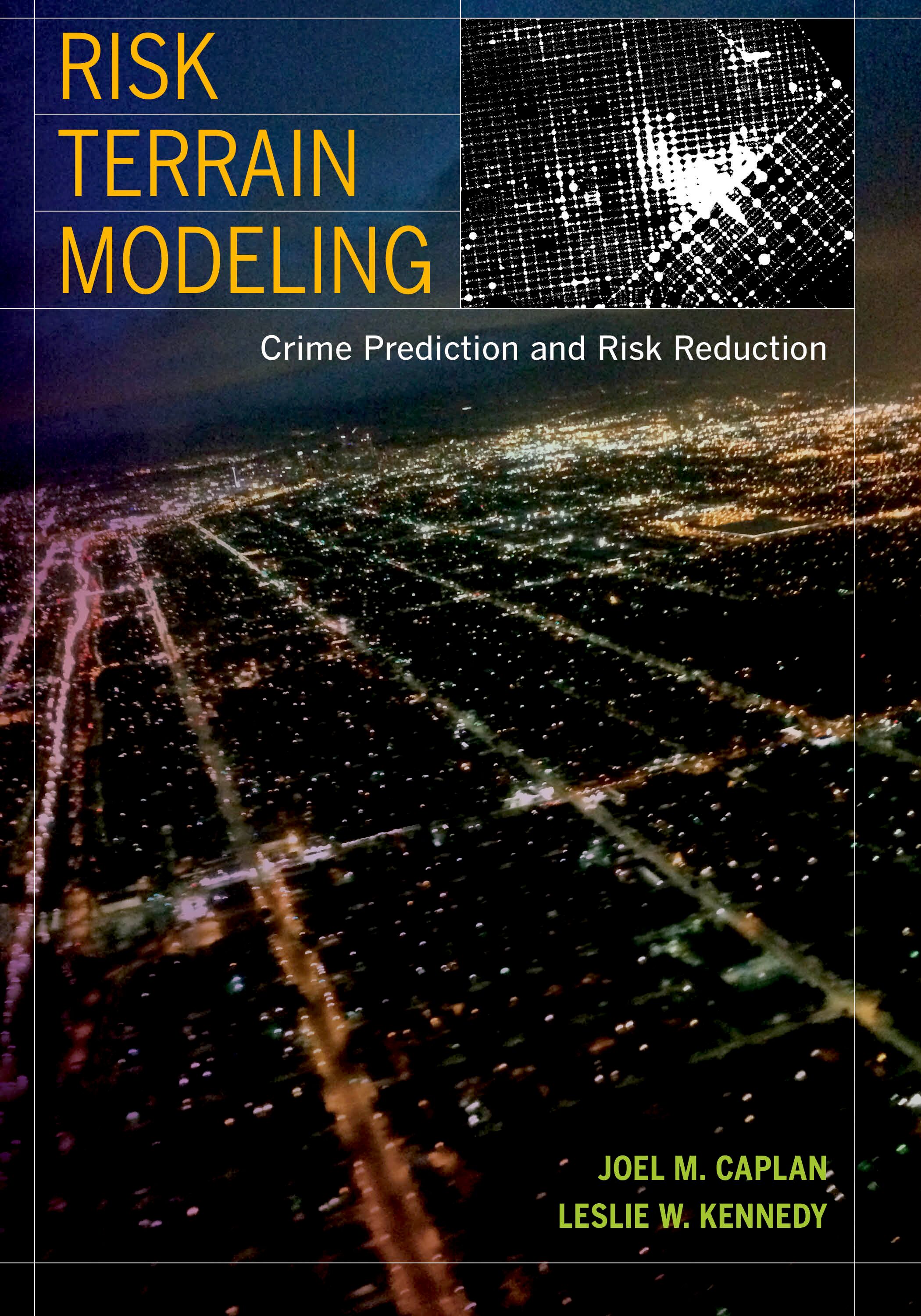
Risk terrain modeling
Imagine using an evidence-based risk management model that enables researchers and practitioners alike to analyze the spatial dynamics of crime, allocate resources, and implement custom crime and risk reduction strategies that are transparent, measurable, and effective. Risk Terrain Modeling (RTM) diagnoses the spatial attractors of criminal behavior and makes accurate forecasts of where crime will occur at the microlevel. RTM informs decisions about how the combined factors that contribute to criminal behavior can be targeted, connections to crime can be monitored, spatial vulnerabilities can be assessed, and actions can be taken to reduce worst effects.As a diagnostic method, RTM offers a statistically valid way to identify vulnerable places. To learn more, visithttp://www. riskterrainmodeling.comand begin using RTM with the many free tutorials and resources.
eBook


Preliminary Considerations for Crime Scene Analysis in Cases of Animals Affected by Homemade Ammonium Nitrate and Aluminum Powder Anti-Personnel Landmines in Colombia: Characteristics and Effects
During the armed conflict in Colombia, homemade improvised antipersonnel landmines were used to neutralize the adversary. Many active artifacts remain buried, causing damage to biodiversity by exploding. The extensive literature describes the effects and injuries caused to humans by conventional landmines. However, there is considerably less information on the behavior and effects of homemade antipersonnel landmines on fauna and good field investigation practices. Our objectives were to describe the characteristics of a controlled explosion of a homemade antipersonnel landmine (using ammonium nitrate as an explosive substance), to compare the effectiveness of some evidence search patterns used in forensic investigation, and to determine the effects on a piece of an animal carcass. The explosion generated a shock wave and an exothermic reaction, generating physical effects on the ground and surrounding structures near the point of explosion. The amputation of the foot in direct contact with the device during the explosion and multiple fractures were the main effects on the animal carcass. Finally, it was determined that finding evidence was more effective in a smaller search area. Many factors can influence the results, which must be weighed when interpreting the results, as discussed in this manuscript.
Journal Article


The contribution of forensic science to crime analysis and investigation: Forensic intelligence
The debate in forensic science concentrates on issues such as standardisation, accreditation and de-contextualisation, in a legal and economical context, in order to ensure the scientific objectivity and efficiency that must guide the process of collecting, analysing, interpreting and reporting forensic evidence. At the same time, it is recognised that forensic case data is still poorly integrated into the investigation and the crime analysis process, despite evidence of its great potential in various situations and studies. A change of attitude is needed in order to accept an extended role for forensic science that goes beyond the production of evidence for the court. To stimulate and guide this development, a long-term intensive modelling activity of the investigative and crime analysis process that crosses the boundaries of different disciplines has been initiated. A framework that fully integrates forensic case data shows through examples the capital accumulated that may be put to use systematically.
Journal Article